

Janji Zephyrunner Review: A Wind Shell Built to Move
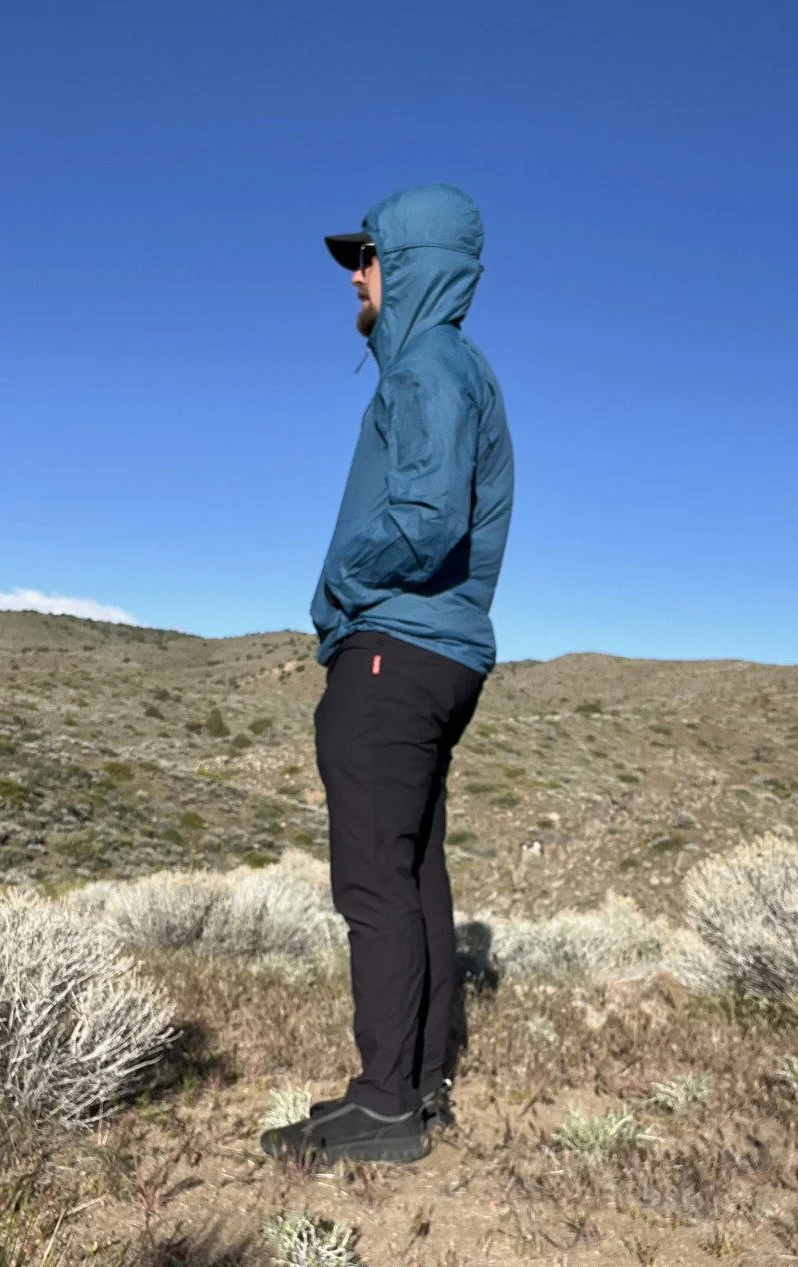
After a lot of miles in the Janji Zephyrunner, from breezy trail runs to stuffed-in-a-pack backup duty on longer days, it has become one of those layers I enjoy having along.


The Verdict:
If you want a wind shell that feels like it was made for running, not just emergency weather, the Janji Zephyrunner should be on your list to check out.
What stood out pretty quickly was how balanced it feels on runs. It blocks enough wind to matter, but without making climbs feel stuffy the way some wind shells do. The back venting works, the fabric stays surprisingly quiet while running, and the whole jacket packs down small enough that it is easy to justify bringing even when conditions are only sort of questionable. For runners, especially ultra runners, where space and weight matter, that balance is a big deal.
The compromise is weather resistance. The Zephyrunner handles cool wind, mist, and light precipitation well enough for what it is, but it does get wet through sooner than some other jackets in this category. That does not make it a bad shell. It just means you need to think of it as a high-performance wind layer first, and a just-in-case weather layer second.
Bottom line: this is one of the better wind jackets I have used for actual running. It is light, breathable, easy to stash, and versatile enough that it works well beyond race-specific use.
+What We Like
Excellent balance of wind protection and breathability
Packs down small enough to be a no-brainer on long runs
Fabric is quiet
Back venting actually helps when the effort level goes up
Useful pocket layout, including two zip hand pockets and a zip chest pocket
-What We Don’t Like
Wets through sooner than some other shells in sustained moisture
Premium price for a wind shell, with Janji currently listing it at $156
Nitty Gritty:
Shell fabric: 100% nylon with a PFC-free C0 DWR finish
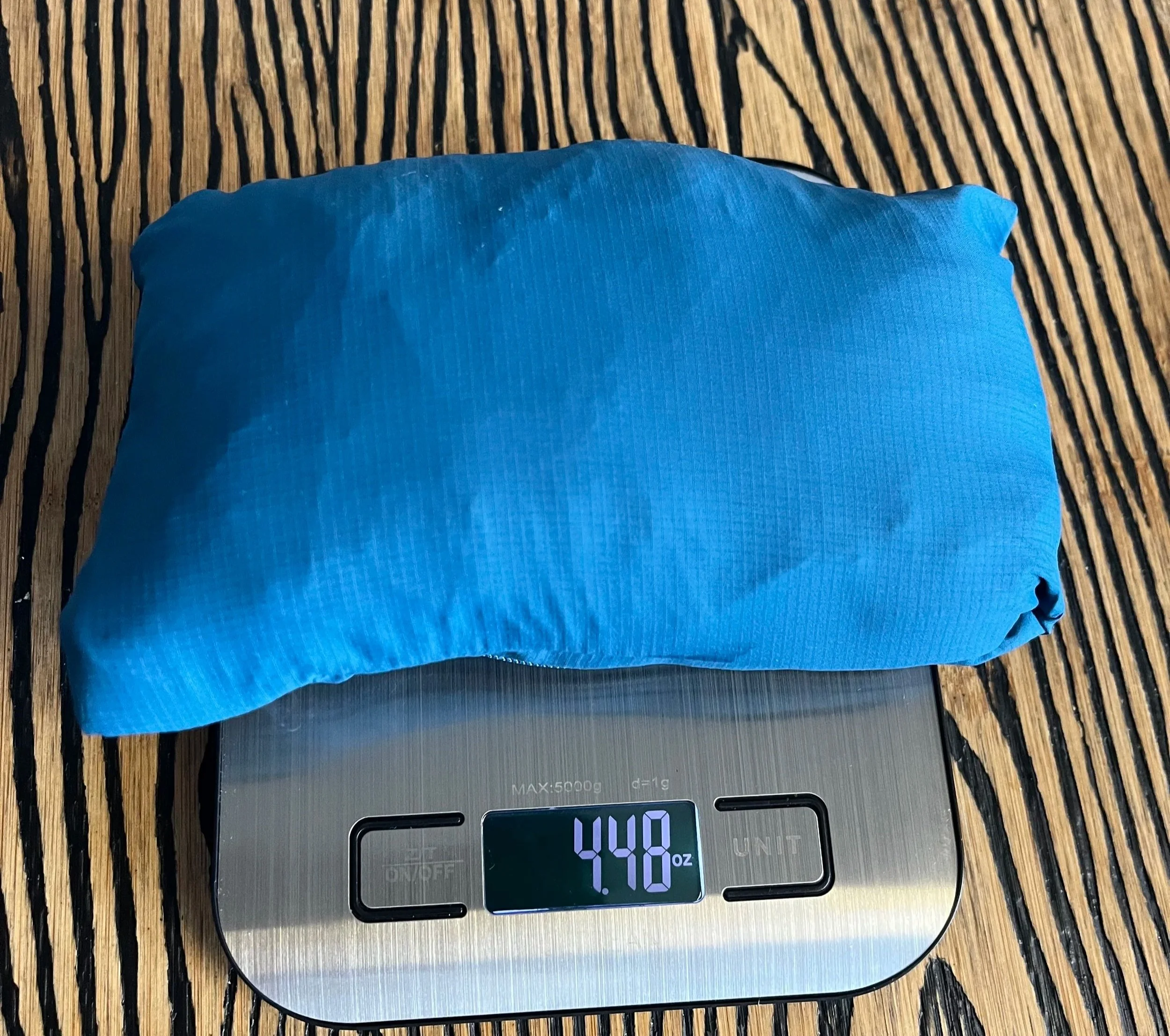
Weight: 124g / 4.4 oz in a men’s medium
Breathability: 16 CFM fabric, intended to balance wind blocking with high-output comfort
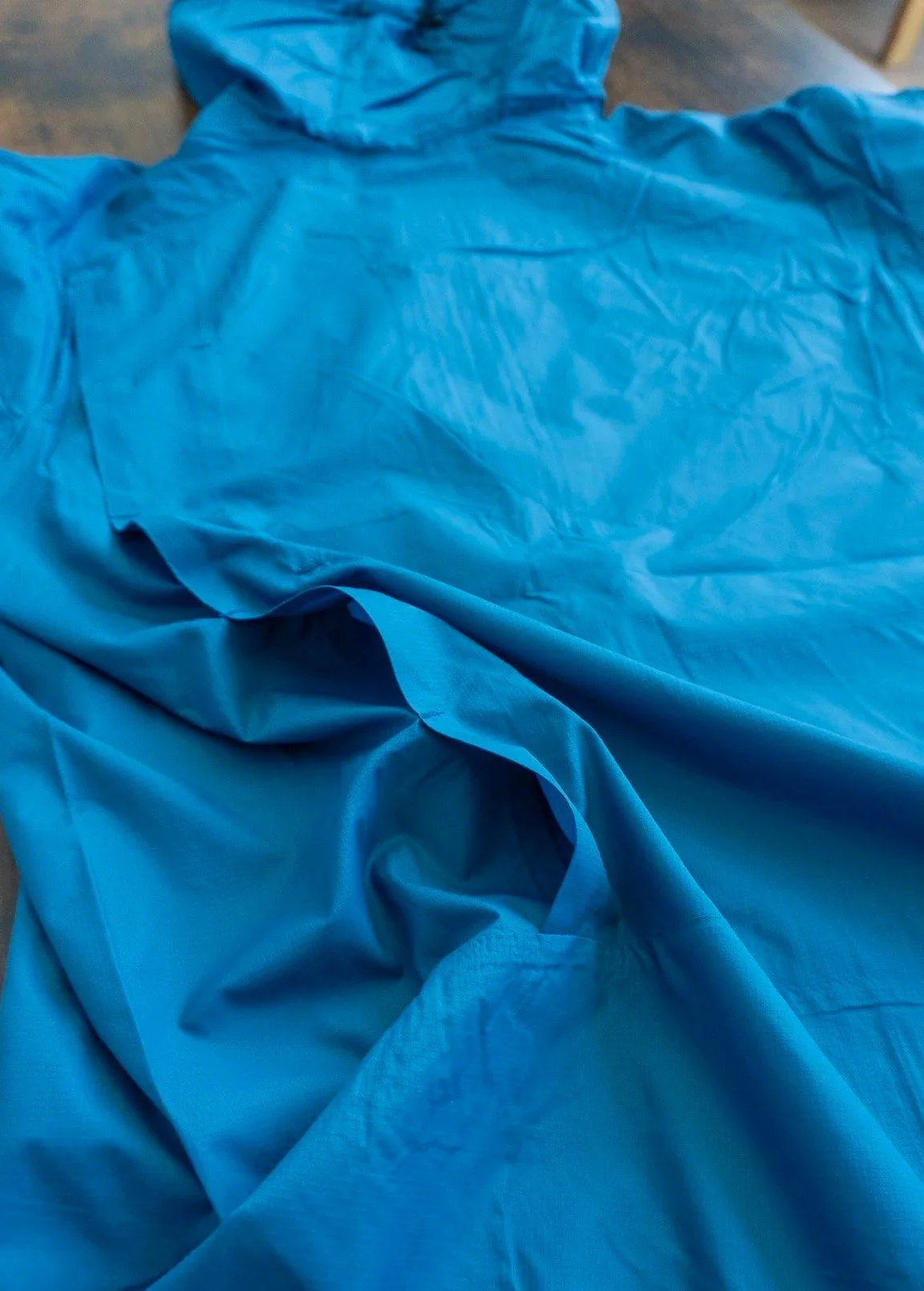
Venting: Back panel venting
Pockets: 2 zip hand pockets + 1 zip chest pocket
Packability: Stows into its chest pocket
Fit: Regular fit with bungee hem and hood toggle adjustment
Best for: Trail running, ultras, fast hiking, shoulder-season movement, travel
Price: $156
Fit & Feel Notes
The first thing I noticed with the Zephyrunner was how little it felt like a typical wind shell. A lot of jackets in this category technically do the job, but they also make their presence known every second you are wearing them. They swish loudly, feel plasticky, and remind you that you are zipped into a thin emergency layer.
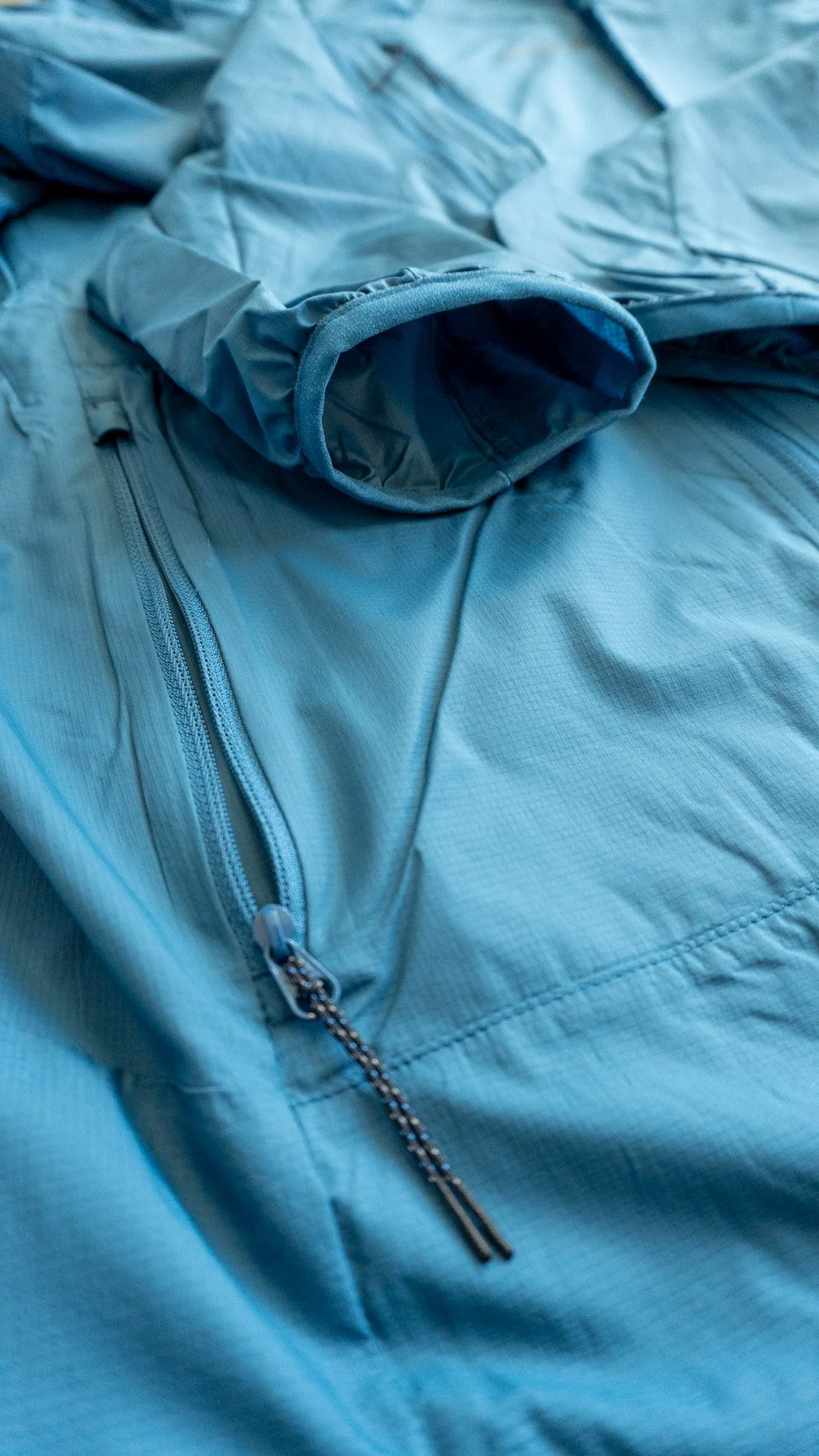
The fabric is light and clearly performance-oriented, but it does not have that loud, crinkly personality that some wind shells do. On the run, that matters more than it sounds like it would. Instead of hearing the jacket constantly moving with your arms and torso, it fades into the background. It ends up feeling less distracting, especially once the run gets longer.
The fit also makes sense for what this jacket is trying to be. Janji calls it a regular, athletic fit, and that tracks. It has enough room to move well and layer over a light top without feeling boxy or floppy. The bungee hem and hood toggle help clean things up when the wind picks up, which is useful because a jacket this light can feel a little loose and fluttery if the fit is not easy to dial.
Wind Protection & Breathability
A good running wind shell should take the edge off exposed ridgelines, chilly descents, and breezy starts without turning your internal temperature into a problem ten minutes later. That is harder to pull off than brands make it sound. Too windproof, and the jacket traps heat immediately. Too breathable, and it barely feels worth carrying.
Janji rates the fabric at 16 CFM, and in actual use, that feels believable. It cuts enough wind that your torso stays protected when the weather turns or elevation changes, but it still lets excess heat move out well enough that I did not feel eager to rip it off the second the pace went up. The back venting plays a big role there, too. It is not one of those features that only looks good on a hangtag. You can actually feel the difference once you are climbing or moving steadily.
That balance is a big reason I kept bringing it along. It feels like a jacket you’ll actually wear, not just one you stuff in a vest because conditions might change.
Weather Resistance
The Zephyrunner is water-repellent, not waterproof, and it is worth being clear about that. Janji gives it a PFC-free C0 DWR treatment and describes it as water-resistant, which feels fair based on how it performs.
In light mist, a quick passing shower, or those in-between conditions where the air is damp but not fully raining, it does its job. It buys you comfort and protection. But compared to some of the other shells in this lane, it starts to soak through a little earlier. That was one of the only real limitations I kept coming back to in testing.
For me, that is not a deal-breaker because this jacket is so clearly optimized around movement, breathability, and stashability. But it does shape who this piece is for. If you want one shell to handle true wet-weather duty, this probably is not your answer. If low weight, small pack size, and good breathability matter more than full weather protection, this is where the Zephyrunner makes the most sense.
Packability & Storage
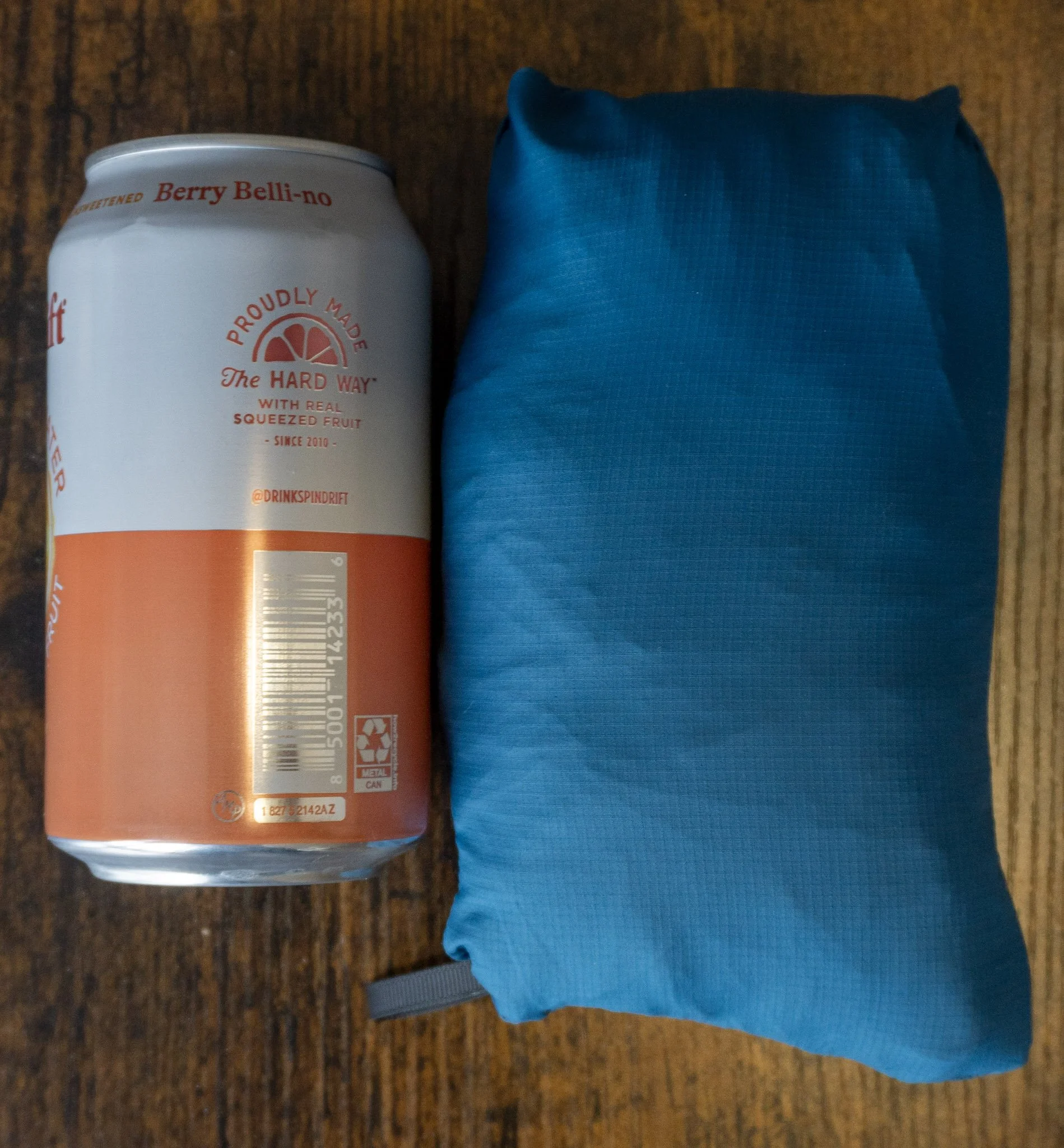
At 124 grams in a men’s medium, it is properly light, and the fact that it stows into its chest pocket makes it easy to toss into a vest, belt, running pack, or even just carry in hand for a bit and forget about it later.
That matters a lot on longer days. When a jacket packs this small, you stop debating whether it’s worth carrying. The Zephyrunner passes that test. It packs down small enough that it feels irresponsible not to have it when the forecast is uncertain or when you know the route is going to bounce between sheltered terrain and exposed wind.
I also appreciate that Janji did not strip the pocket layout down to the point of uselessness. Two zip hand pockets plus the zip chest pocket are generous for something this light.
Field Test
Most of my time in the Zephyrunner has been in the kind of conditions where a shell either proves its worth quickly or gets left behind the next time out. Cool mornings, exposed sections of trail, gusty ridgelines, shifting temps, and long efforts where you are constantly toggling between wanting a layer and not wanting one.
There have been plenty of runs where I threw it on at the trailhead because the air had a bite to it, kept it on longer than expected because it vented well enough, then stuffed it away once things warmed up and barely noticed it was in the pack. That is probably the biggest compliment I can give it. I never resented bringing it, and I never got annoyed wearing it.

I also ended up liking it for more than just running. Hikes, travel, general just-in-case layer duty, it slots into a lot of scenarios because it is light, comfortable, and not overly specialized in feel. But for running, and especially for ultra-distance use, it makes even more sense.
And the quiet fabric deserves another mention here. On longer runs, little things become big things. A jacket that constantly makes noise, traps heat, or feels clammy can wear on you faster than you would expect. The Janji avoids that. It just feels easy to wear.
Final Thoughts
It is not trying to be some overbuilt mountain shell. It is a lightweight, breathable wind layer that feels purpose-built for runners who need real protection without sacrificing comfort as effort levels rise.
It blocks wind well, vents heat better than most, packs down to a tiny size, and feels good while doing all of that. The one real drawback is that it gives up ground a bit sooner in wet conditions than some other jackets in the category. But for the way I use a shell like this, that trade makes sense.