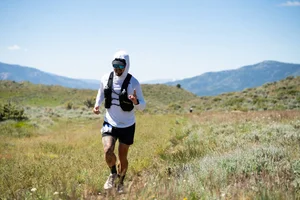

Norda 005 Trail Running Shoe Review: 200 Miles and a 50K Race
The Norda 005 is the most fun trail shoe I have run in. I would buy it again at $325, but I still wish it had the 001A’s tread.

I bought the Norda 005 at full price on April 15, 2026, while training for the Silver State 50/50. I have since put 200 miles, 20 activities, and 38 hours into them around Reno and Tahoe on smooth trails, loose-over-hardpack dirt, rocky singletrack, steep climbs, technical descents, dirt roads, and pavement.
My longest run was the Silver State 50/50. My watch recorded 32 miles and roughly 6,000 feet of climbing, with temperatures ranging from 59°F to 90°F and a moving time of 6 hours 40 minutes. Other testing spanned 45–102°F, creek crossings, light rain, easy one-hour lunch runs, and tempo intervals.
I am 5’9” and 170 pounds. I normally land around my midfoot, although I shift toward a heel strike on descents when tired. I tend to overpronate and prefer lower-drop shoes with soft midsoles and mid-to-max stack heights.
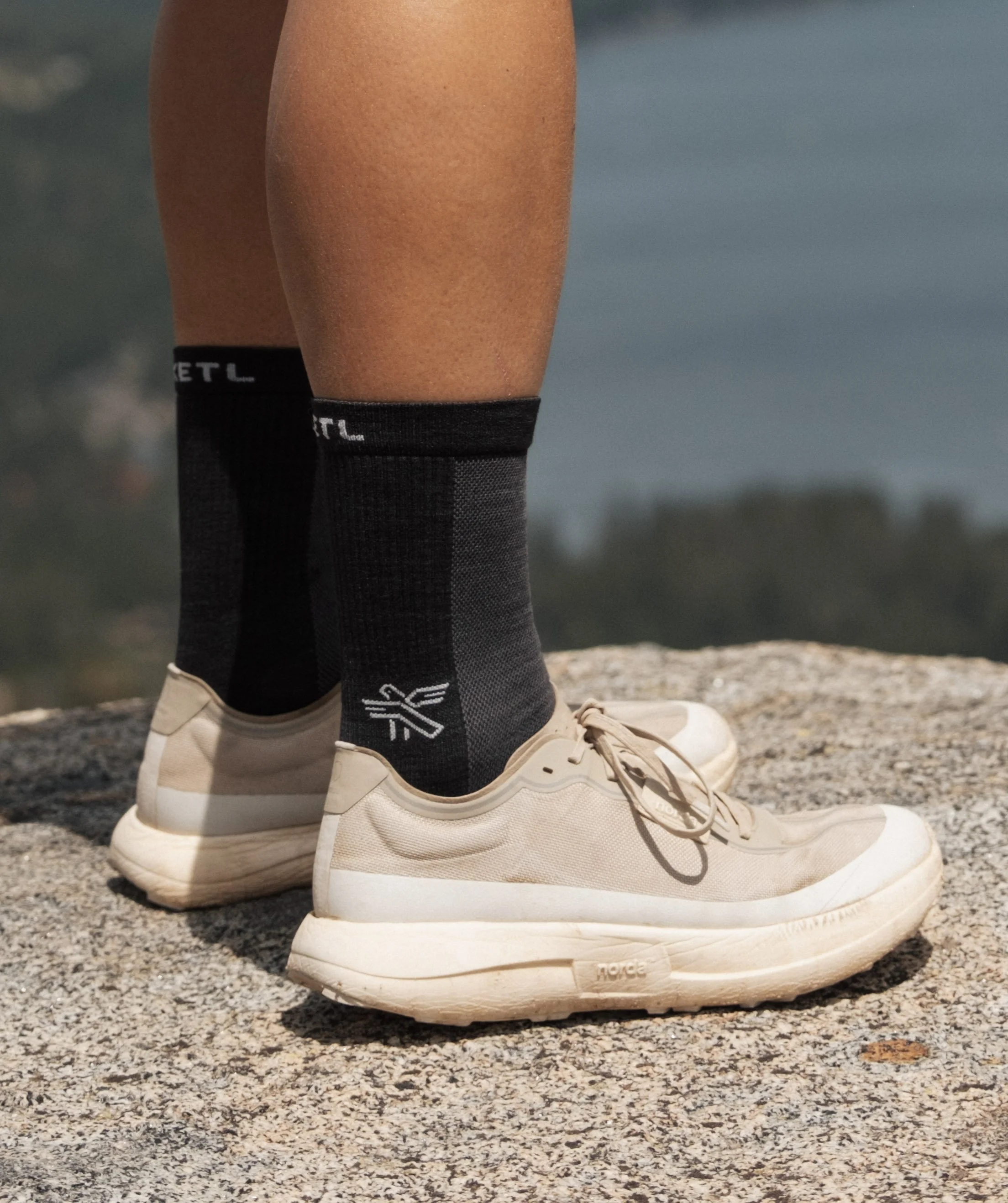
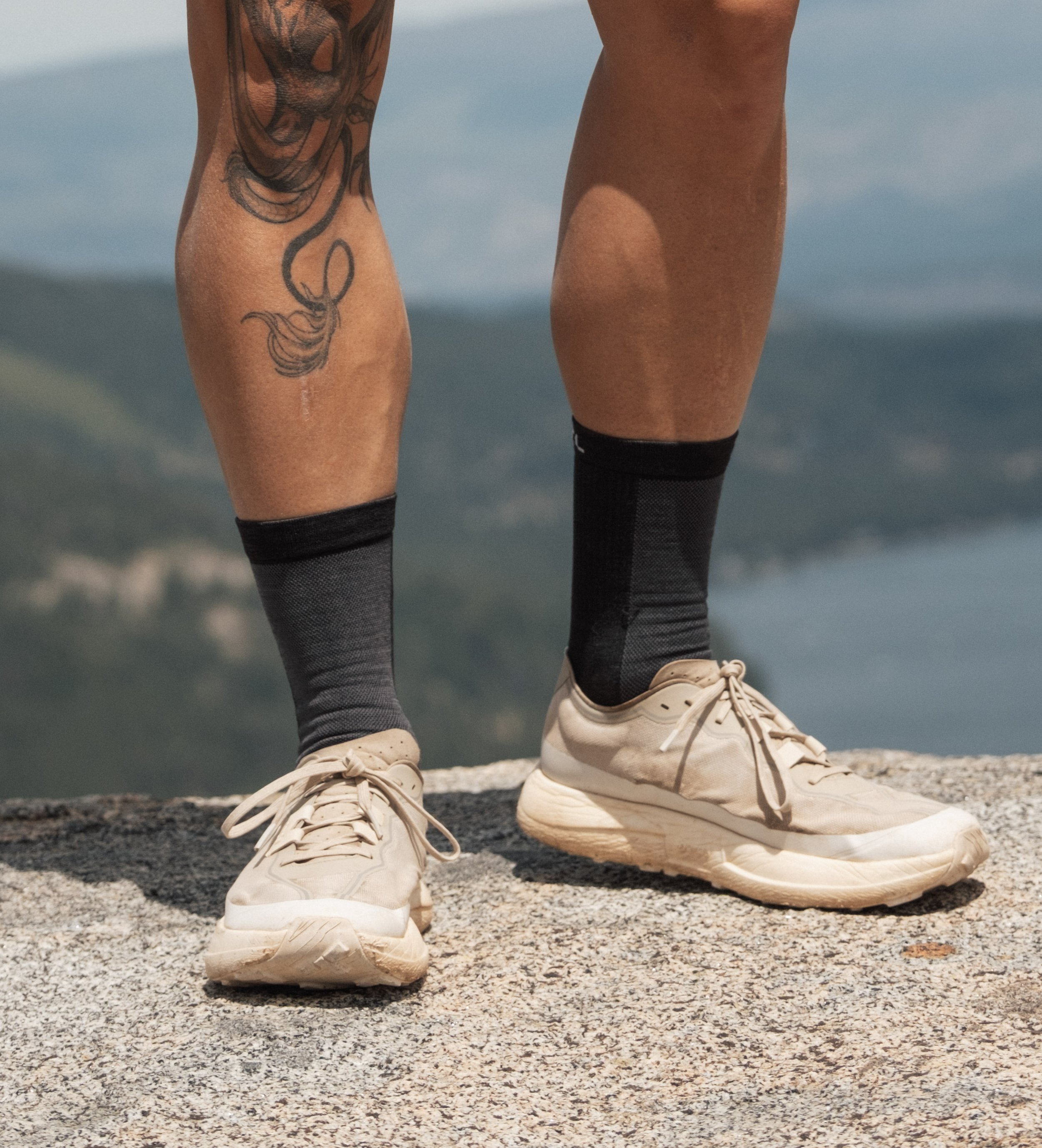
Nitty Gritty
Tested size: Men’s US 10.5
Measured weight: 240 grams per shoe after 200 miles, dry and without debris
Norda-listed weight: 214 grams per shoe, men’s US 8.5
Norda-listed stack height: 28.5mm heel, 21.5mm forefoot
Drop: 7mm
Midsole: Arnitel TPEE foam
Upper: Open-weave Bio-Dyneema
Outsole: Vibram Megagrip Elite, 4mm lugs
Rock plate: None
Tested insole: Molded TPEE
Price: $325
Norda lists two insoles: a molded TPEE training insole and a lighter die-cut race insole. My new retail pair came only with the molded insole. All testing and my measured weight reflect that setup.
Fit and Sizing
Norda recommends going up half a size, and that advice was accurate for me. I normally wear a size 10 and bought the 005 in a 10.5. It fit the way I expect a size 10 to fit in most other running shoes.
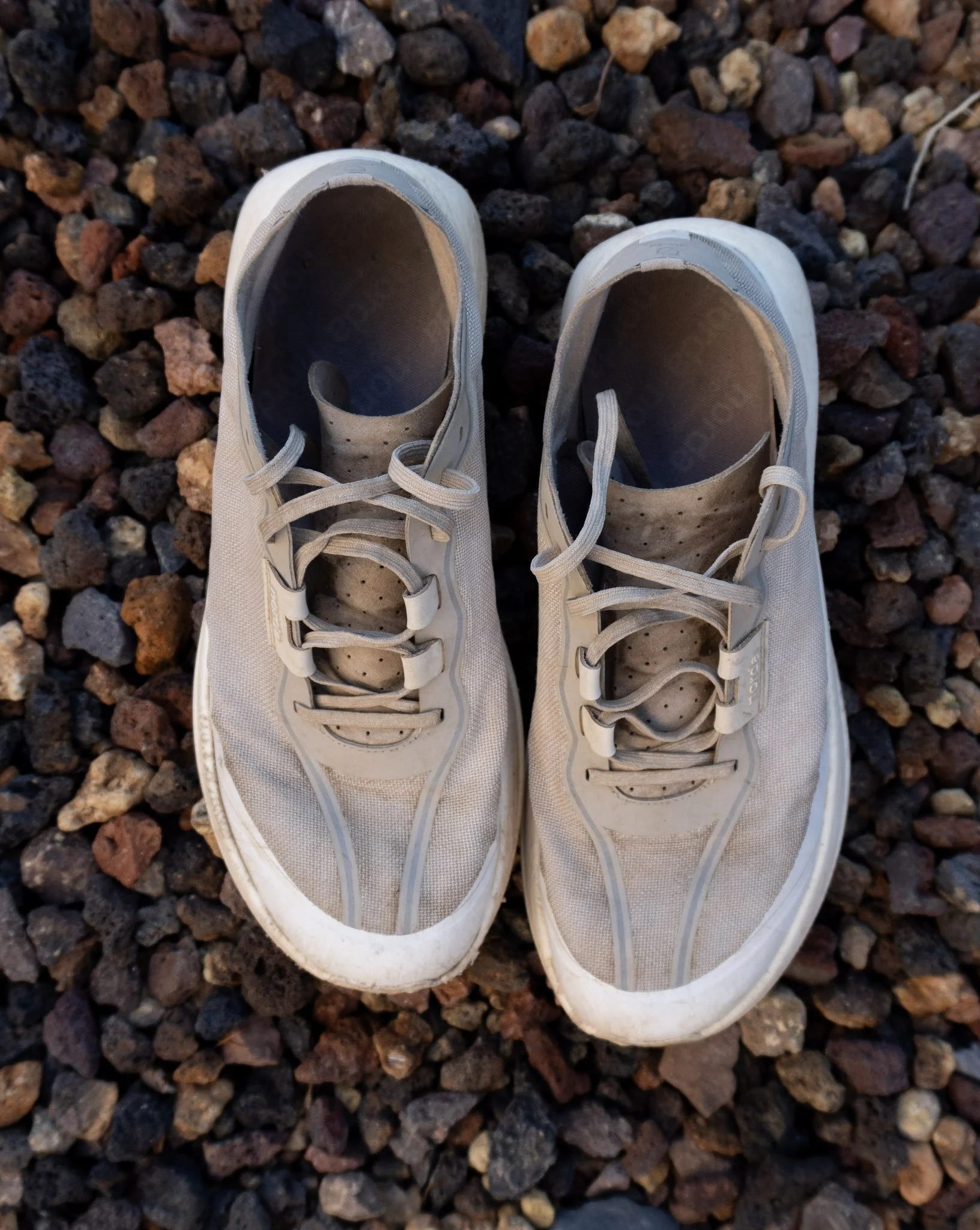
The toe box has noticeably more volume than the Norda 001 and 001A. I prefer wider toe boxes and appreciated the extra room during the Silver State 50/50. I never developed a blister, my toes never hit the front, and I did not stop to retie the shoes once during the entire race.
Runners with narrow feet should try them on before committing to the price. My foot occasionally shifted slightly from side to side on off-camber terrain. Tightening the laces more would stop it, but I did not like cinching the shoe down that hard. It never became unstable, but the extra forefoot volume will not work equally well for everyone.
The internal Fit-Lock system helps secure the roomy upper. Two ghillie-style eyelets extend into the shoe and wrap around my foot as I tighten the laces. On a rocky, loose-over-hardpack climb gaining roughly 2,500 feet in a mile, my heel did not lift, and my toes did not slide forward. I never thought about the lockdown, which may be the best compliment I can give it.
I used the original laces and insole for all 200 miles. Neither shifted, and the laces never loosened, came untied, or created pressure across my foot.
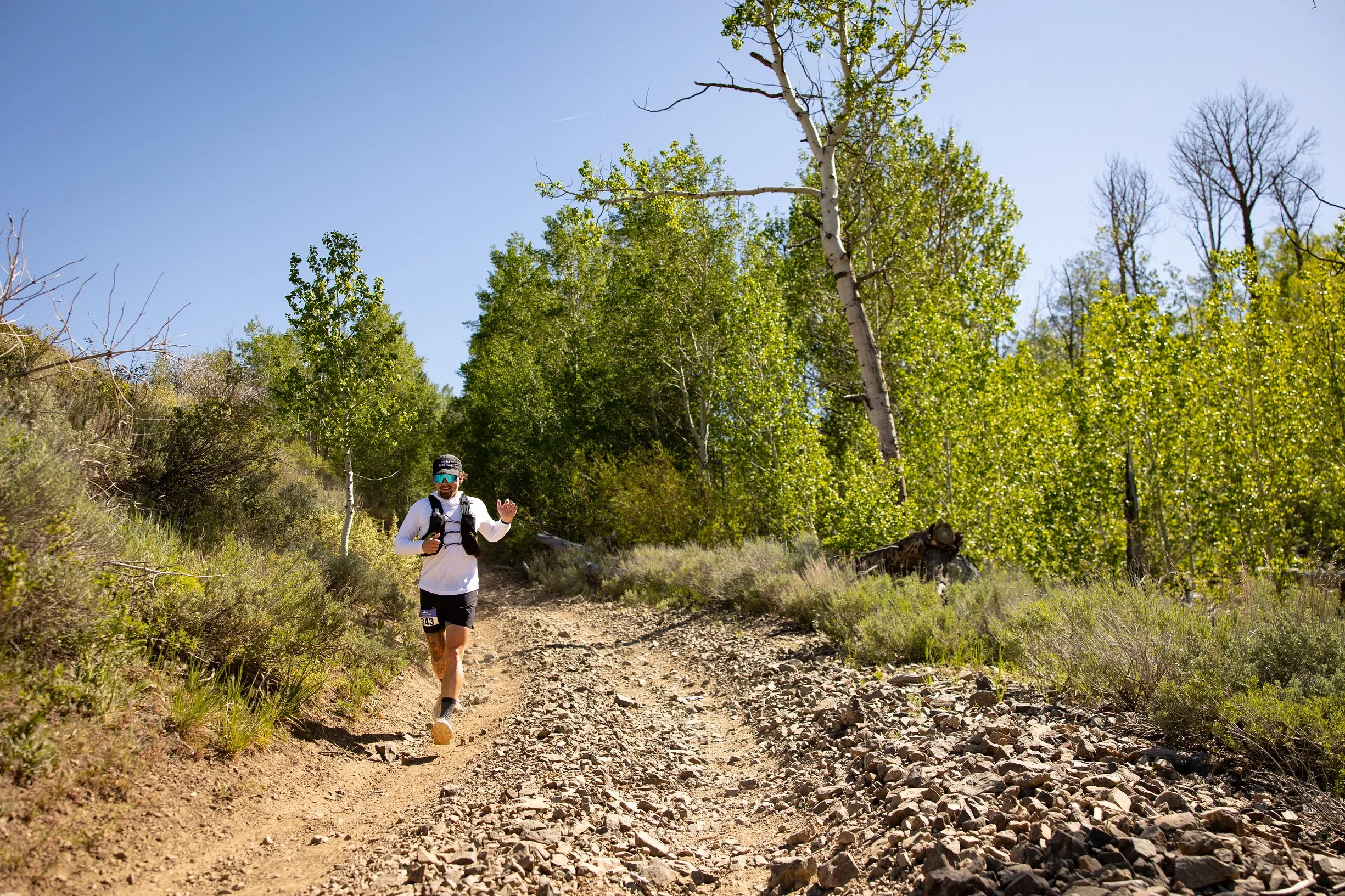
Comfortable From the First Run
The 005 felt comfortable on my first seven-mile, 1,000-foot run, with no pressure from the tongue, heel, arch, or eyelets. The upper relaxed and molded to my foot after 20–30 miles, but there was no uncomfortable break-in period.
My 001A took about 70 miles for its upper to become pliable and its foam to feel plush and responsive. The 005 felt ready immediately.
Soft and Responsive Without Feeling Unstable
The low weight caught my attention first. The soft, quick-rebounding Arnitel foam is what kept me reaching for it.
Coming from mountain biking, I compare it to lowering suspension air pressure slightly, then adding a quicker ramp-up and faster rebound. It absorbs small impacts, firms up deeper in the travel, and comes back quickly. The 001A feels firmer and more linear, with less pop but more resistance to bottoming out.
During four 10-minute tempo intervals at an 8-out-of-10 effort, my pace moved between roughly 9:00 and 6:00 per mile depending on whether the trail pointed uphill or downhill. My Nike Ultraflys felt most natural when I was running fast, then stiff or wobbly when I slowed down. The 005 stayed comfortable while I slogged uphill and felt quick on the descent.
Lighter Weight and Easier Turnover
On my usual one-hour lunch loop, I typically run around 9:30–10:00 per mile at 167–174 steps per minute in the 001A or Satisfy Rocker. In the 005, it felt easier to move toward 9:00 per mile, with cadence around 175–180 at a similar heart rate and perceived effort. I was also running faster, so this does not prove the shoe improved my running economy. What kept showing up on later runs was how easy it felt to turn my feet over, especially when tired.
My size 10.5 005 weighs 240 grams per shoe after 200 miles, versus 311 grams for my size 10.5 001A after about 100 miles. Neither was weighed new, and wear differs, but the pairs I actually run have a 71-gram difference per foot.
Stable Enough for Technical Descents
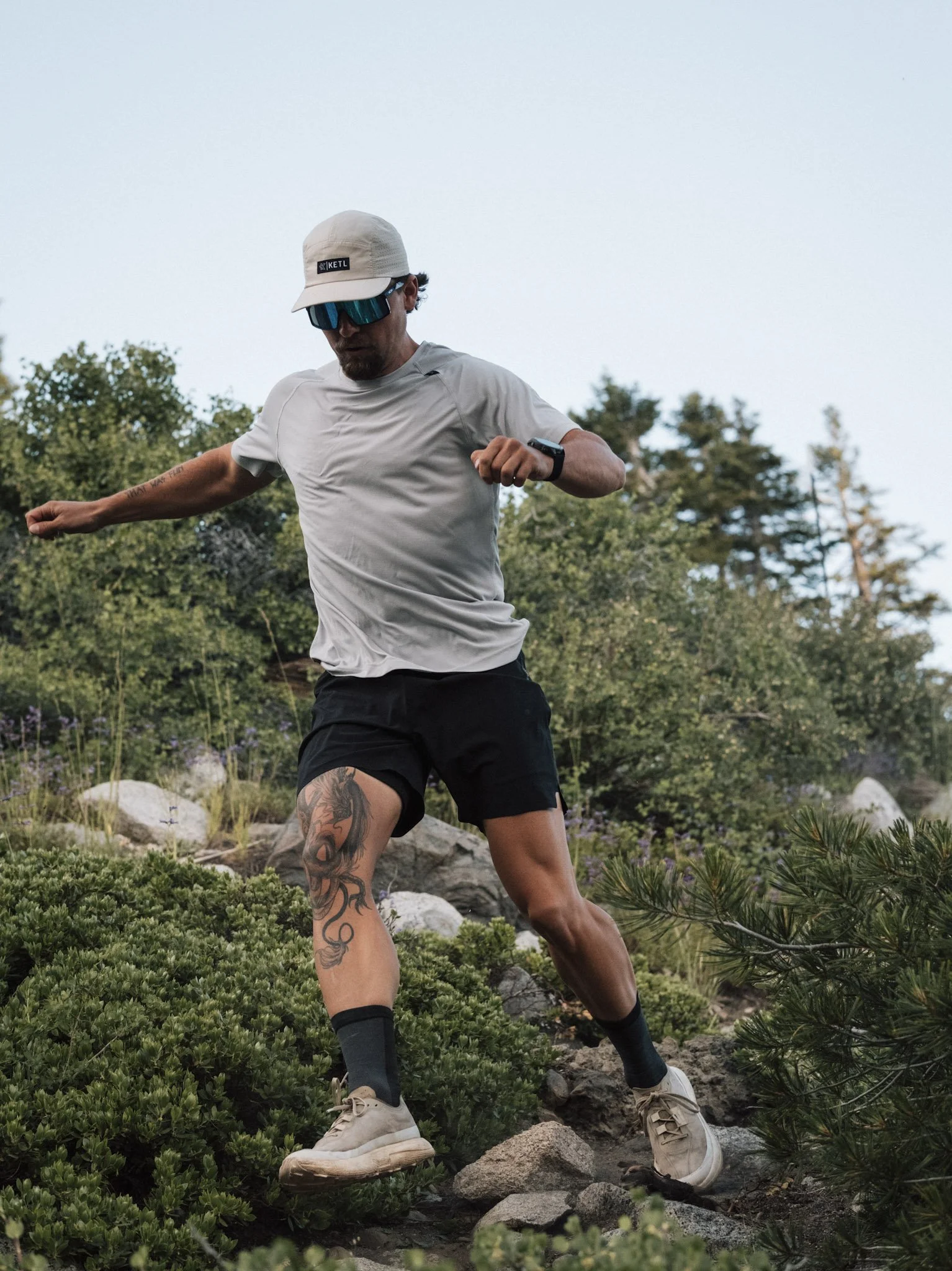
The platform feels planted when landing on angled rocks, changing direction, and cornering through switchbacks. At roughly 5:00–7:00 per mile on sustained technical descents, I never felt the shoe roll underneath me. It was far more stable on technical terrain than I expected from the soft foam and roomy fit.
I tend to overpronate, but the 005 never felt like it was rolling inward underneath me, and it did not cause any related discomfort. I would not describe the upper as corrective support. Anyone who relies on a particular insole should try the shoe with it before buying.
Enough Cushion for a 50K, With a Forefoot Limit
I chose the 005 for Silver State because I wanted something lighter and softer than the 001A. It gave me that, and I would race in it again.
My feet hurt late in the 32 miles, but this was my first time handling that volume. I cannot separate normal 50K soreness from anything caused by the shoe.
Rock impacts became more noticeable through the forefoot late in the 50K. Separately, across the full 200 miles, I had three sharp rock strikes when I was looking around instead of watching my foot placement. Each was brief. None left lingering soreness or bruising, or made me change my stride.
I never felt that same sharp impact through the heel, even when I started heel-striking on tired descents. The 005 protects me well enough for my normal rocky runs, but it has no rock plate and is not a max-cushion shoe. Anyone wanting maximum forefoot protection should look elsewhere.
Excellent Rock Grip, Less Bite in Loose Dirt
On technical descents, I sometimes deliberately stepped onto rocks because I trusted the Vibram Megagrip Elite rubber more there than on the loose dirt around them. The compound feels soft and grips dry rock extremely well.
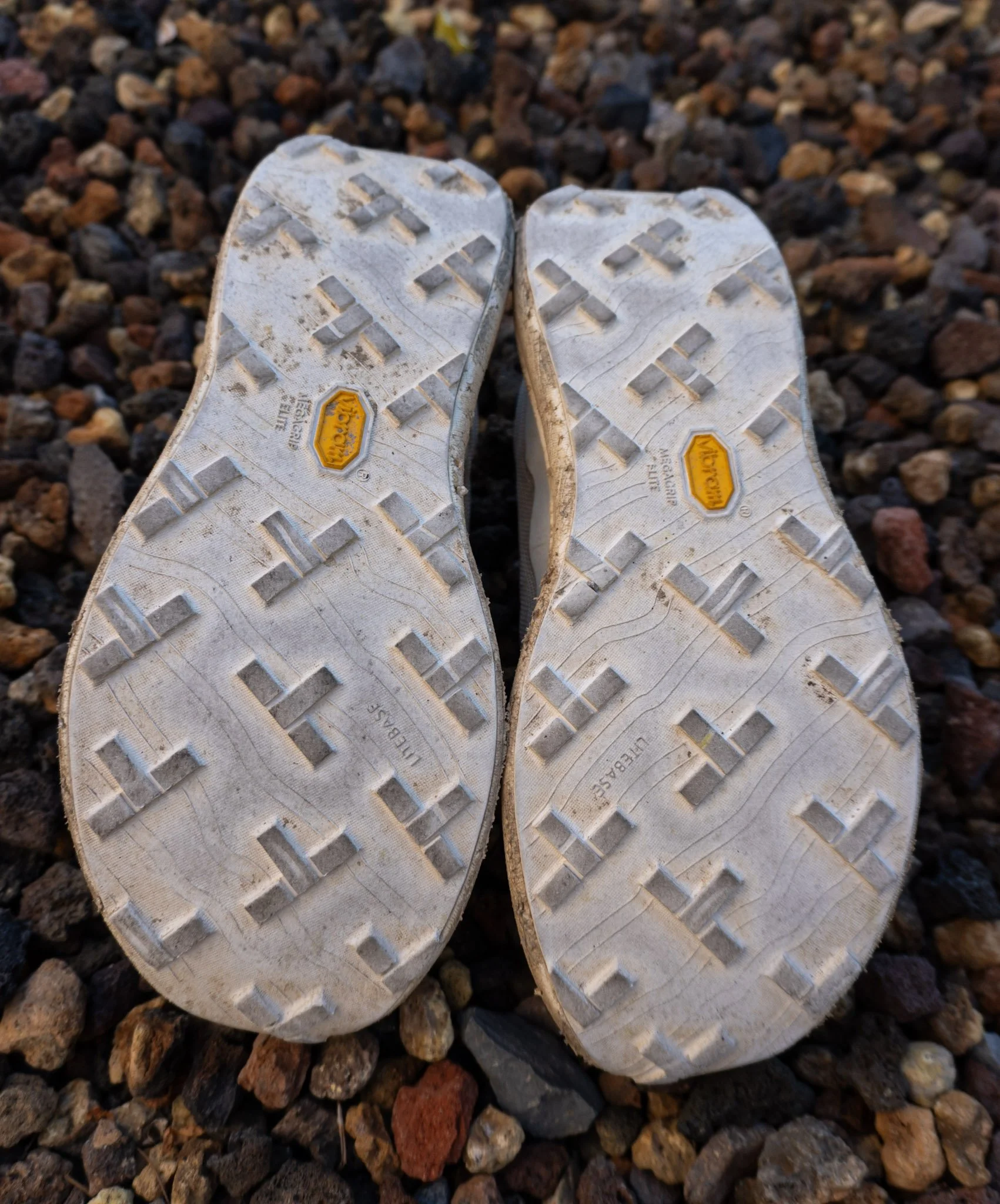
The 4mm lug pattern is the limitation. On steep, loose-over-hardpack climbs, the lugs lose purchase when I push hard through a step. My 001A grips better in the same sections despite its harder-feeling rubber. Its more aggressive pattern bites better.
If I could change one thing, I would put the 001A outsole pattern under the 005. I suspect deeper tread would add weight and feel less smooth on hardpack and pavement, but that is my inference, not Norda’s explanation.
Road-to-Trail Running
About 10–15 percent of my mileage, roughly 20–30 miles, was pavement: usually one or two miles from home or work to the trail, then the same distance back.
The 005 stayed smooth and responsive. Its soft foam makes it easier to settle into a rhythmic road pace than the 001A, which feels more obviously at home on dirt. I would willingly use the 005 for mixed road-to-trail runs instead of merely tolerating the pavement until the trail starts. It still lacks the pronounced rocker I like in a dedicated road shoe.
Breathability and Water Drainage
At 102°F, my feet never felt distractingly hot while running. Afterward, my socks were wet enough to leave footprints on asphalt, although I had not noticed the moisture while running.
The upper breathes noticeably better than the 001A, making the 005 my warm-weather choice. I would grab the 001A in winter for more warmth.
After creek crossings, the shoes drained quickly without feeling heavy or sloshing. My socks and insole did not bunch or shift, and I did not notice an immediate loss of traction. I did not time drying or test fully soaked shoes on consistently wet rock, so I cannot make a broader wet-grip or drying-time claim.
Small pebbles occasionally entered through the collar. It was uncommon, but the 005 does not have an integrated gaiter to keep mud and debris out.
Durability After 200 Miles
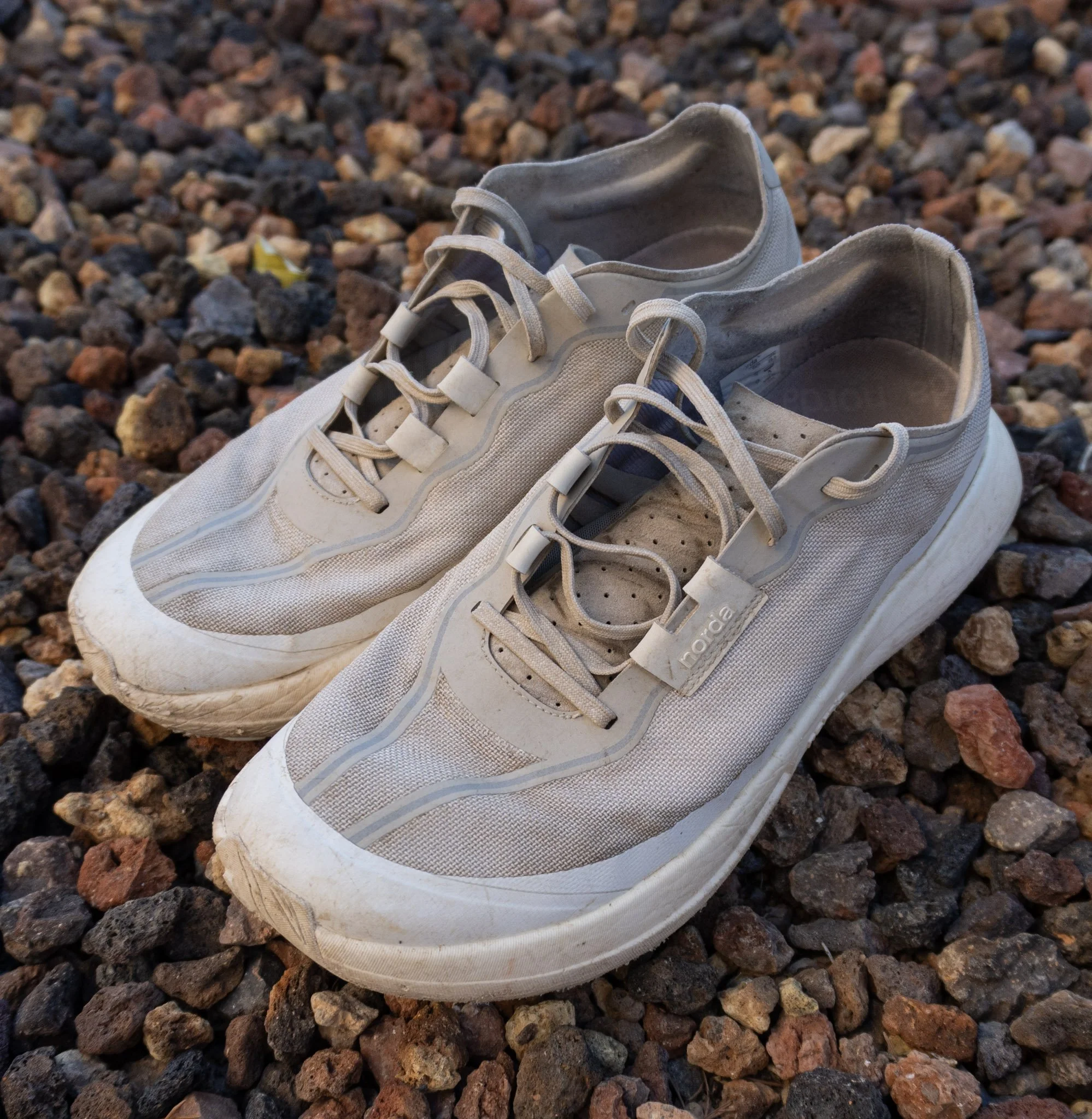
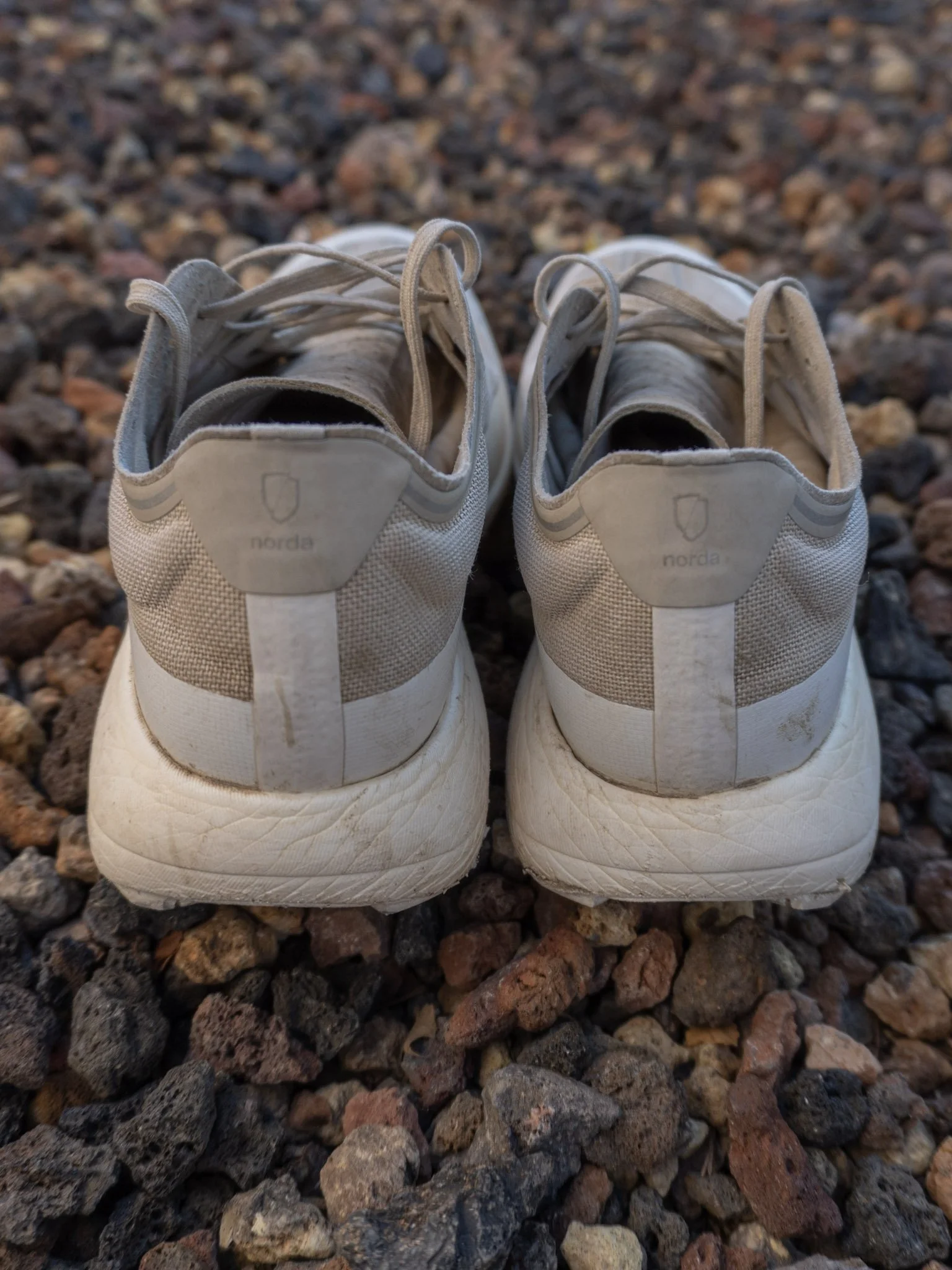
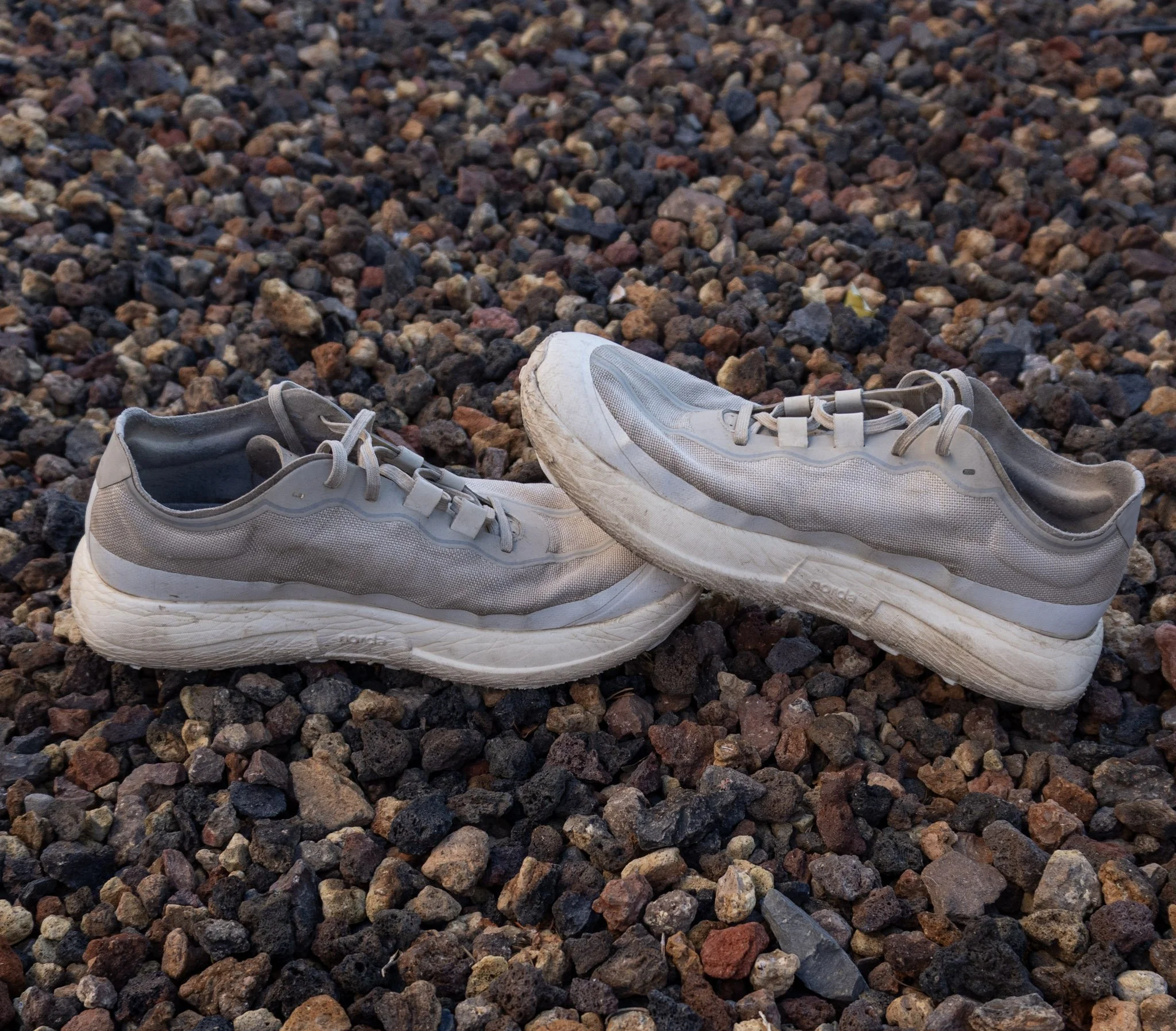
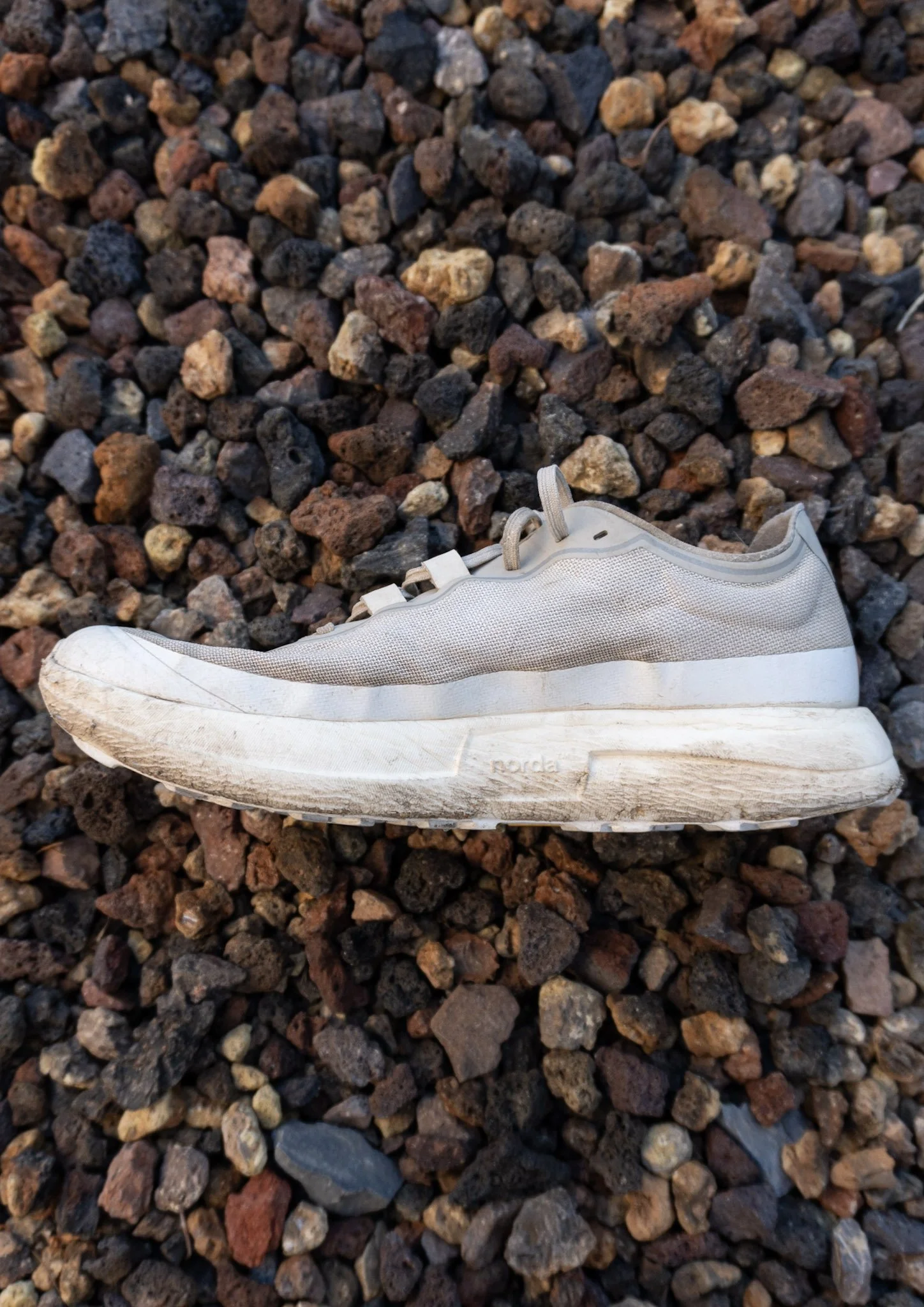
The midsole has not lost its bounce. The upper, stitching, eyelets, laces, and heel lining remain intact, and I have not washed the shoes once. The tongue has molded to my foot without structural damage.
The inner sidewall foam has scratches and cuts from sharp rocks, and the outsole lugs are rounding. Traction still feels unchanged, but the outsole looks more likely to end the shoe’s life than the upper or midsole.
I would be surprised to get another 200 miles from this pair, based on how the lugs look now. That is a projection, not a measured lifespan. I will run them until they are worn out and update the review with the final mileage.
My original Norda 001 has more than 300 miles, yet its midsole has fewer cuts, most of the lugs still retain an edge, and the outsole continues to grip well. The 005 is holding up for a lightweight race shoe, but I do not expect it to match the original 001’s lifespan.
Norda 005 vs. Norda 001A
The 005 feels like Norda lightened the stable 001A platform and gave it racing-shoe foam. It is softer, quicker to rebound, more breathable, and easier to turn over. It has largely replaced my other trail shoes.
I prefer it for everyday runs, faster efforts, and mixed-terrain races. The firmer, warmer 001A remains my choice for winter and more aggressive loose-dirt traction. My 001A only has about 100 miles, so I cannot compare its full lifespan with the 005 yet.
Norda 005 vs. Satisfy Rocker
I have 160 miles in a size 11 Satisfy Rocker on the same Reno–Tahoe routes. It feels less roomy over the front of my foot than my size 10.5 Norda 005, and the asymmetric lacing seems to contribute to that. Its PEBA-based foam feels soft and responsive, but slightly firmer than the 005.
I choose the Rocker for flatter rolling routes on pavement, dirt roads, or smooth trails. Its rocker helps maintain rhythmic turnover. Once the ground becomes rocky, the 005 is more at home. For technical terrain, quick direction changes, and long descents, I prefer its room, stability, grip, and response.
Is the Norda 005 Worth $325?
For most people getting into trail running, no.I would not steer them toward a $325 race model. It makes more sense for a regular trail runner who knows they like a soft, responsive ride and is willing to pay that price. An ultra gives you a reason to use those qualities for longer, but the shoe was just as enjoyable on my lunch runs.
After Silver State and 200 total miles, the foam still feels responsive. That helps me justify using the 005 for training as well as racing, but I cannot make a cost-per-mile argument yet. I would buy it again because of how it runs, not because I have proved it will outlast another shoe.
Who Should Skip the 005?
I would also skip the 005 for deep mud, routes dominated by loose terrain, maximum forefoot protection, or max cushioning.
Who Should Buy the Norda 005?
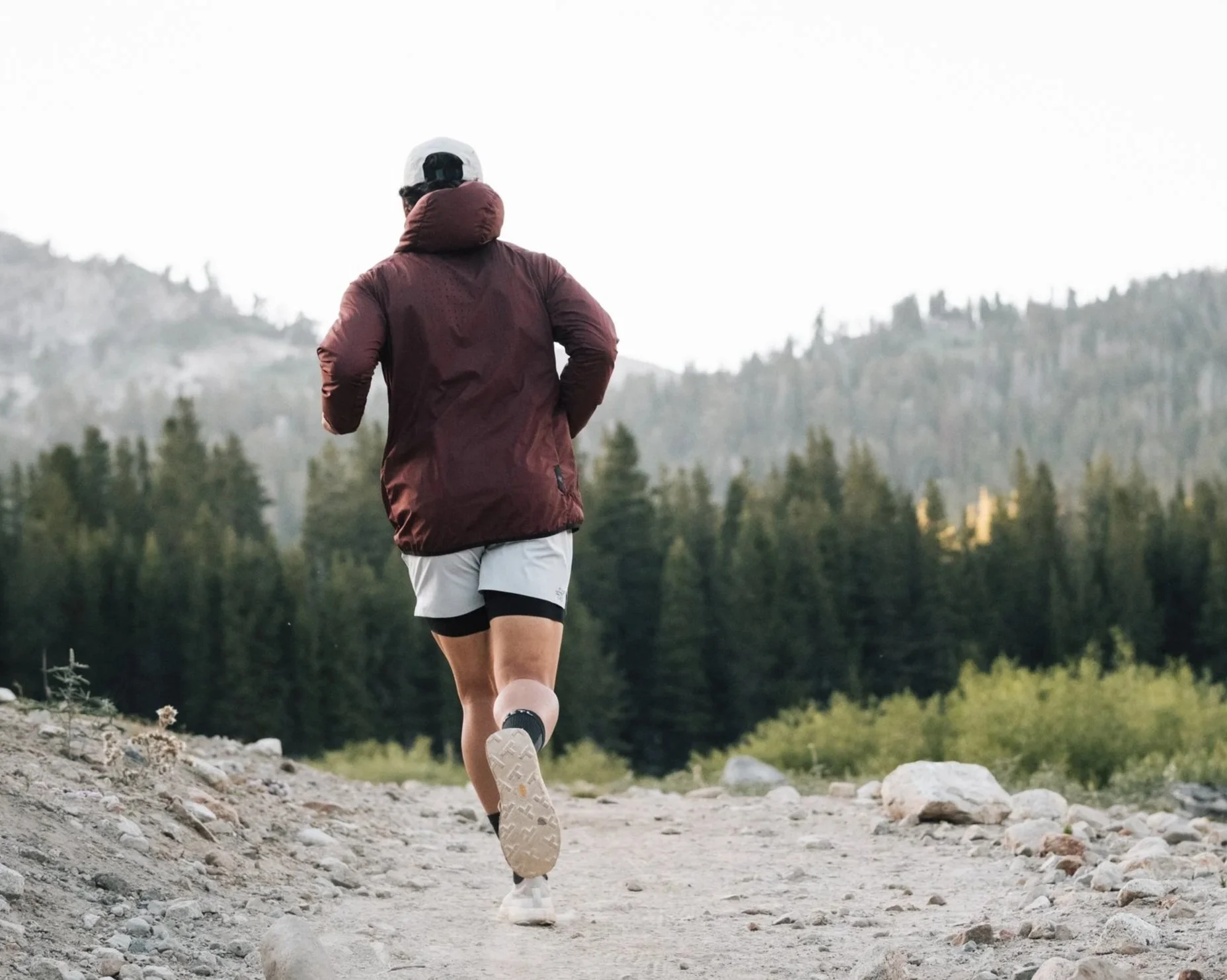
I would recommend it to someone who runs trails throughout the week and wants a lighter, softer shoe for those same runs and just want a fun and interesting ride that’s not like much other shoes out there. Runners who prefer roomy toe boxes may appreciate the fit; narrow-footed runners should try it first.
Final Verdict
The 005 is still the shoe I reach for most. The foam has kept its bounce through 200 miles, and I would race Silver State in it again. I wish it had the 001A’s loose-dirt grip, and I am watching the outsole wear. Neither has changed my answer: I would buy another pair.
Testing Limitations
Snow, deep mud, prolonged heavy rain, and sustained wet-rock conditions remain untested. I did not receive or test the lighter race insole. Remaining outsole life is an estimate based on wear at 200 miles.
Disclosure
I bought the Norda 005 at full retail from a local retailer. Norda did not provide the shoes, review this article, or influence my conclusions.