

UPF Sun Hoodies Explained: Why More Protection Doesn’t Always Mean a Better Shirt

Sun hoodies are one of those pieces that feel obvious after you spend enough time in one. They keep the sun off your arms, neck, and shoulders, they save you from chasing sunscreen around sweaty skin all day, and they make long, exposed days feel a little less cooked. For hiking, running, fishing, travel, bike rides, or just being outside for a long stretch, a good sun hoodie can be one of the easiest layers to justify.
The confusing part starts when you begin comparing the numbers. One hoodie says UPF 30. Another says UPF 50+. One feels light and airy enough for a hot desert hike, while the other looks more protective on the tag but starts to feel warmer the second you begin moving. It is easy to see the higher number and assume it is automatically the better piece, but sun protection clothing is not quite that simple.
UPF still matters. The rating indicates how much ultraviolet radiation can pass through the fabric and reach your skin. But once you are already looking at real sun-protective clothing, the jump from UPF 30 to UPF 50 is not as dramatic as the numbers make it seem. The differences in fabric feel, airflow, and heat management can be much easier to notice than the small percentage gain in UV blocking.
That does not make UPF 50 unnecessary. It just means the number on the tag is only one part of the decision. The rest comes down to heat, exposure, airflow, and whether the shirt is comfortable enough to keep on all day.


What UPF Actually Means
UPF stands for Ultraviolet Protection Factor. It is the rating used for fabrics and clothing to show how much ultraviolet radiation can pass through the material. SPF is the rating most people know from sunscreen. UPF is the version that applies to textiles.
A useful part of UPF is that it accounts for both UVA and UVB radiation. UVB is the one most people connect with sunburn. UVA penetrates deeper and is more tied to long-term skin damage and aging. A good sun garment is not only trying to keep you from getting red by dinner. It is trying to lower the overall amount of UV reaching your skin while you are outside.
The number is a ratio, which is where the rating becomes easier to understand. A UPF 30 fabric allows 1/30th of UV radiation to pass through. In normal-person terms, that means about 3.3% gets through, and about 96.7% is blocked. A UPF 50 fabric allows 1/50th through, so about 2% gets through, and about 98% is blocked.
That is the part that tends to surprise people. Thirty to fifty sounds like a huge leap. On the tag, it feels like you are getting a much more protective shirt. In reality, UPF 30 is already blocking nearly 97% of UV, and UPF 50 pushes that number to about 98%.
The Higher the Rating, the Smaller the Percentage Gain
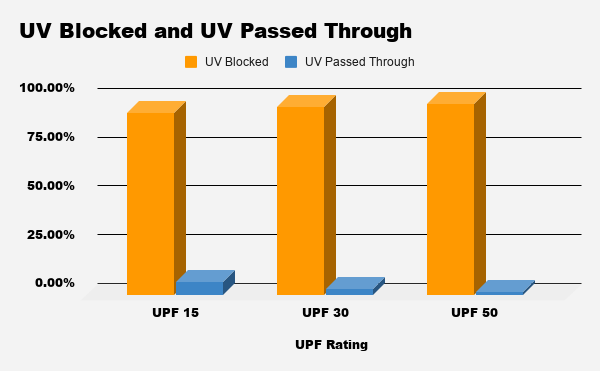
The jump from UPF 15 to UPF 30 gets you roughly 3.4 percentage points more blocked UV. The jump from UPF 30 to UPF 50 gets you about 1.3 percentage points. Protection is still improving, but the gains get smaller as the rating climbs.
There is one important detail here. Looking at the blocked percentage tells one side of the story. Looking at UV transmission tells the other. UPF 30 lets about 3.3% through, while UPF 50 lets about 2% through. So yes, UPF 50 still allows less UV to reach your skin, and that can matter over long exposure, at high elevation, around snow or water, for very fair skin, for sun-sensitive skin, or for anyone with a medical reason to be more careful.
For a lot of everyday outdoor use, though, the question is not only, “Which one blocks the most UV?” It is also, “Which one will I actually keep wearing when it is hot?” That is where breathability starts to matter more than the rating alone.
Why Higher UPF Can Feel Warmer
UPF is not a breathability rating. It does not tell you how airy a shirt feels, how quickly it dries, how clingy it gets when sweaty, or whether the hood turns into a little greenhouse on the first climb. It only tells you how much UV passes through the fabric.
To achieve a higher UPF rating, brands have a few different tools. They can use a tighter knit or weave, thicker yarns, darker colors, more saturated dyes, special treatments, UV-blocking fibers, or a design with more coverage. All of that can improve sun protection, but some of those choices can also make a garment feel warmer or less open to airflow.
A denser fabric leaves less room for UV to pass through, but it can also leave less room for air to move. A thicker fabric may block more light, but it may hold more heat. A darker color can help absorb UV, but it can also feel hotter in direct sunlight. A big hood, long sleeves, and a higher neck all add useful coverage, but they also put more fabric around your body.
This is the tradeoff most people are actually feeling. Not every UPF 50 hoodie is heavy or stuffy. Some are impressively light for the protection they offer, and fabric technology has gotten a lot better. But if two garments are similar and one is chasing a higher UPF rating, it often has to get there through a denser or more protective fabric structure. In hot weather, that can be the difference between a layer you forget you’re wearing and a layer you keep wanting to peel off.
Anyone who has worn the wrong sun hoodie on a windless climb knows the feeling. The shirt is technically doing its job, but now you are hiking in a warm, damp layer you cannot wait to take off.

Where UPF 30 Works Really Well
UPF 30 is often the sweet spot when heat is the bigger problem. Think summer hiking, desert trails, humid travel, bike rides, fishing days where you are moving around, or long days outside where you are exposed, but also generating a lot of body heat. In those conditions, a breathable sun hoodie can be the difference between staying covered and slowly talking yourself into bare arms at the worst time of day.
The protection is still legitimate. UPF 30 blocks about 96.7% of UV, which is a huge improvement over a random thin shirt with no rating. On a hot hike or summer travel day, that combination can matter more than chasing a higher number. If the shirt breathes well, dries quickly, and does not make you want to push the sleeves up every ten minutes, it is doing the thing you bought it for.
That is usually the test for me. Not whether the shirt sounds impressive on a product page, but whether I can wear it through the exposed part of the day without constantly messing with it.
A good UPF 30 piece should still feel intentional. It should not be flimsy clothing with a sun-protection claim tossed onto it. The fabric should cover well without being stretched thin, the hood should be usable, the sleeves should stay comfortable, and the whole thing should feel like something you would actually choose to wear when the forecast is hot.
That last part is the key. Long sleeves are only useful in summer if the shirt does not punish you for wearing them.
Where UPF 50 Earns Its Place
UPF 50 still has a very real place. High elevation is one of the clearest examples. If the day is cooler, longer, more exposed, or more reflective, UPF 50 starts to become the safer bet. That is especially true above treeline, on snow, around water, or for anyone who needs to be more careful with sun exposure.
Cooler temperatures also change the way a denser sun layer feels. If the air is crisp or windy, a slightly more protective hoodie may not feel like a penalty at all. It can block more UV while taking the edge off cold starts, breezy ridgelines, or that strange high-country mix where your skin is getting cooked but your hands are still cold.
UPF 50 is also the better direction for people who burn easily, have a history of skin issues, spend full workdays outside, take medications that increase sun sensitivity, or simply want the highest level of protection they can get from clothing.
Fabric Construction Tells You More Than the Tag
Two sun hoodies can both say UPF 50 and feel completely different on the trail. One might be dense, slick, and warm. Another might use a lighter synthetic yarn, a more advanced knit, a looser fit, and smart venting to feel much better in motion.
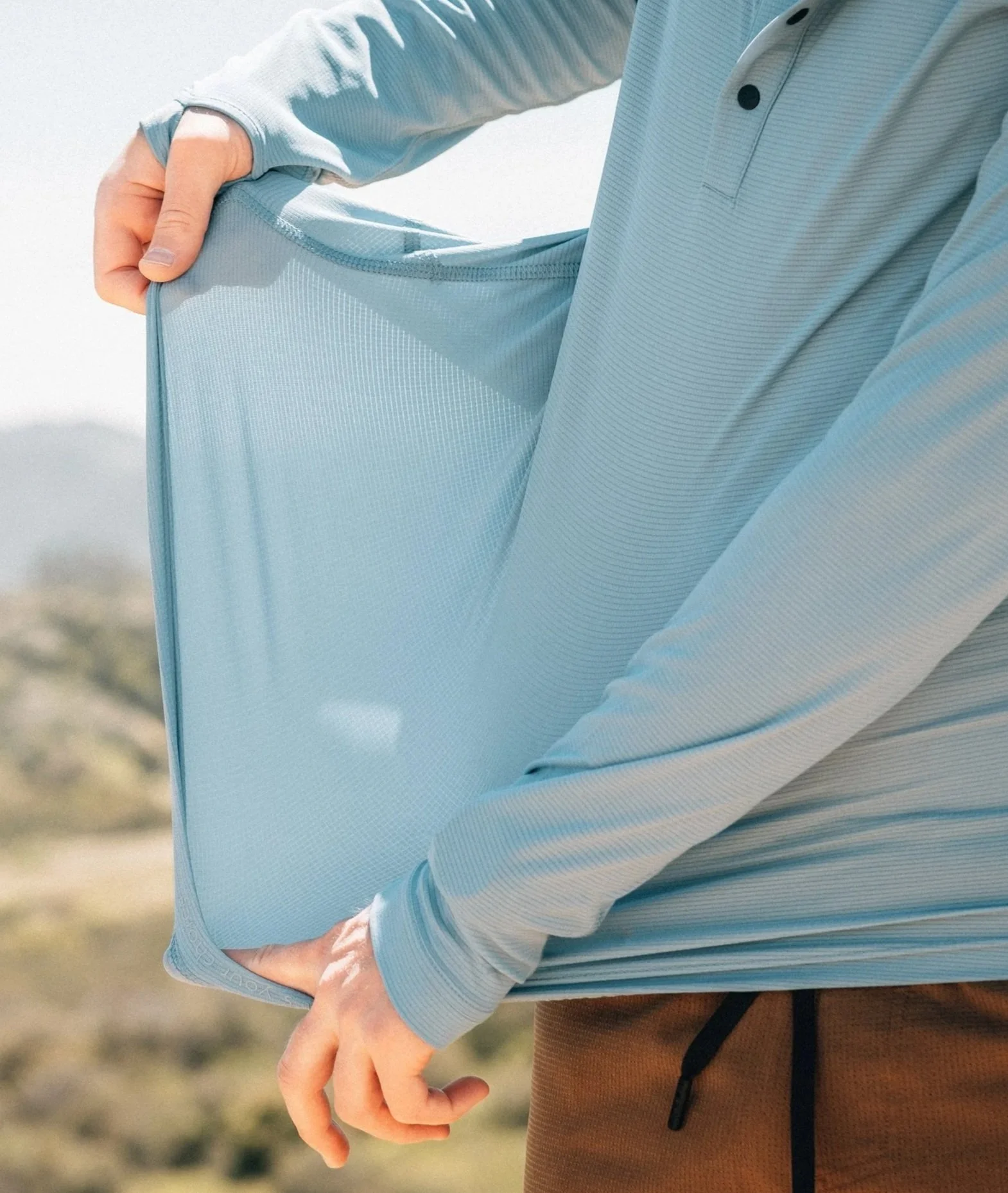
That is why the UPF number should be treated as one piece of the puzzle. Fabric weight, knit structure, stretch, color, fit, venting, dry time, and cut all affect how the garment works once you leave the product page. A great hot-weather sun hoodie usually has a light fabric, a relaxed shape that sits slightly off the skin, enough stretch to move naturally, and a hood that gives coverage without feeling restrictive.
Small design details help too. Thumb loops or longer cuffs can add hand coverage without needing gloves. A button placket, quarter zip, loose neck, mesh zones, or simply a more open-feeling fabric can help dump heat. A slightly longer hem can keep your lower back covered under a pack or while riding. None of those things changes the UPF rating on their own, but they change how useful the shirt feels after a few hours outside.
A UPF 30 hoodie with excellent airflow may be the better hot-weather piece than a UPF 50 hoodie that technically blocks a little more UV but makes you overheat. On the other side, a well-built UPF 50 hoodie can be excellent when the fabric is good and the day calls for more protection. The tag gets you in the ballpark. The way the garment feels on the trail tells the rest of the story.
Fit Can Change Protection Too
Fit is one of the easiest parts to overlook. UPF ratings are tested on fabric, but clothing does not lie flat on a test table. It stretches over shoulders, gets pulled under pack straps, soaks with sweat, rubs against brush, and gets worn over and over again.
If a shirt is stretched tight, the fibers can pull apart and allow more UV through. Wet fabric, worn fabric, faded fabric, and fabric that has been thinned out over time can also perform differently than it did when it was new. That does not mean every sun hoodie becomes useless after a season, but it is a good reminder that fit and durability are part of the protection story.
A slightly roomier fit usually works better for sun hoodies. It helps air move around your body, keeps the fabric from being maxed out across high-tension areas, and gives the shirt a better chance of maintaining coverage through movement. This is especially true with a pack, where shoulder straps and hip belts are constantly pressing fabric into sweaty skin.
A sun hoodie should not feel like a compression layer. It should feel like shade you can wear.

Coverage Still Counts
The rating only applies to the skin under the fabric. That sounds obvious, but it is easy to forget when comparing numbers. A UPF 50 short sleeve does nothing for your forearms. A great hood does not help if you never pull it up. A collar does not protect your neck if it sits wide open while the same strip of skin bakes for four hours.
This is where garment design can matter just as much as the fabric rating. Hoods, collars, long sleeves, thumb loops, longer hems, and relaxed coverage all reduce the number of exposed spots you have to manage with sunscreen. That is the main appeal of sun clothing. Once it is on, it takes a lot of the maintenance out of staying covered.
It still does not replace everything else. You still need sunscreen on exposed skin, sunglasses for your eyes, a hat for your face, and shade whenever you can get it. But a good sun hoodie takes care of a lot of surface area without needing to think about it every 90 minutes.
Why the “Highest UPF Only” Mindset Can Backfire
UPF 50+ is easy to sell because it looks like the obvious winner on a product page. Outside, things get messier. A sun hoodie that breathes well and stays on your body all day may do more good in real life than a more protective one that runs too warm, especially if you run hot, hike in high heat, travel in humid places, or spend most of the day moving.
Comfort is not just a nice bonus with sun clothing. It affects whether you use the protection at all. When a garment feels too hot, people start making compromises. Sleeves get pushed up. Hoods come down. Zippers open. Shirts come off during the brightest part of the day because overheating feels worse in the moment than sun exposure. Once the coverage is gone, the rating does not help much.
The goal is not to ignore UPF. The goal is to choose a level of protection that works with the conditions instead of fighting against them.
A Simple Way to Choose
If you are buying a sun hoodie for hot weather, start with breathability and comfort, then make sure the UPF rating is still meaningful. For most people, UPF 30 and up is a strong place to start, especially if the garment has good coverage and you are still using sunscreen on exposed areas.
If you are buying for high UV exposure, high elevation, cooler conditions, water, snow, very long days, or more sensitive skin, lean toward UPF 50 or 50+. The extra protection becomes more valuable when the exposure is higher, and the added warmth is less of a problem.

The Takeaway
UPF is worth understanding because it cuts through a lot of the marketing. Higher ratings do offer more protection, but they do not automatically make a better sun hoodie for every kind of day outside. For hot weather, breathability can be what keeps you covered. For cooler, brighter, more exposed days, UPF 50 may be worth the extra warmth.
The right sun hoodie is not just the one with the highest number. It is the one that matches the day well enough that you leave it on.