

Smartwool Merino Sun Hoodie Review: Built for Long Sun and Multi-Day Wear

I’ve been using the Smartwool Merino Sun Hoodie around Reno, Tahoe, and the Sierra Nevada for hiking, camping, travel days, and sunny shoulder-season outings where you want coverage without wearing something that starts to feel like a plastic bag.
This is not the thinnest, airiest sun hoodie I’ve worn. It also isn’t trying to be. The Smartwool lands more in that useful middle ground where you get real sun coverage, a soft merino feel, better odor control than a synthetic shirt, and a little more durability than a straight-up delicate wool layer.
For long days with temperature swings, especially when I wanted to wear the same shirt again the next day without being grossed out by it, this hoodie became pretty easy to grab.
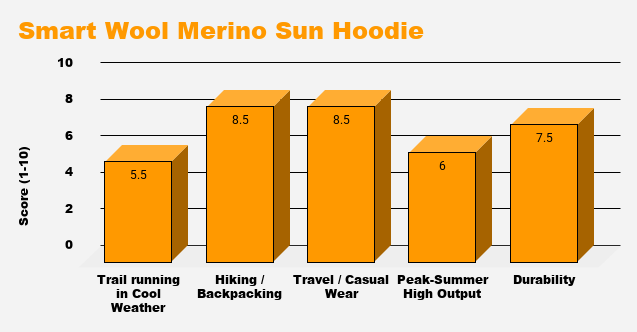
The Verdict
The Smartwool Merino Sun Hoodie is the one I’d point someone toward if they want the benefits of merino wool but don’t want something that comes across as overly fragile or fussy.
The 88% merino wool and 12% recycled nylon blend is the main story here. You still get the comfort, odor resistance, and temperature regulation that make merino so good for hiking and camping, but the nylon core gives the fabric a little more backbone. This is not some paper-thin wool shirt that needs perfect treatment every time it touches dirt, a backpack strap, or the washing machine.
Where I liked it most was on long, exposed hikes and camp days in mild temperatures. Think sunny Sierra days where the air is not brutally hot, but the sun is still strong enough that a normal t-shirt starts to feel like the wrong call. It gives you coverage without coming across as overly technical, and it handles repeat wear better than a lot of synthetic sun hoodies I’ve used.
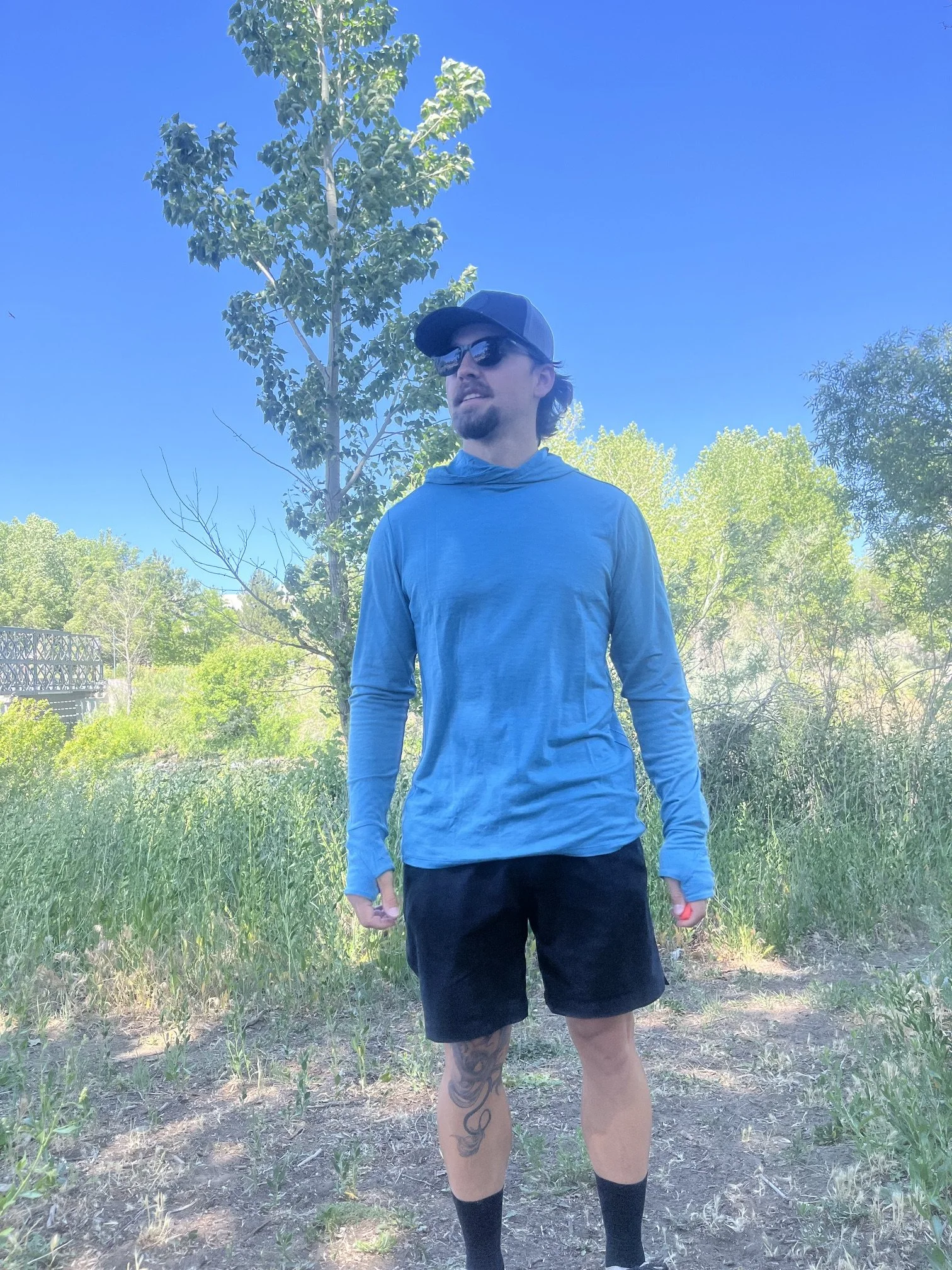
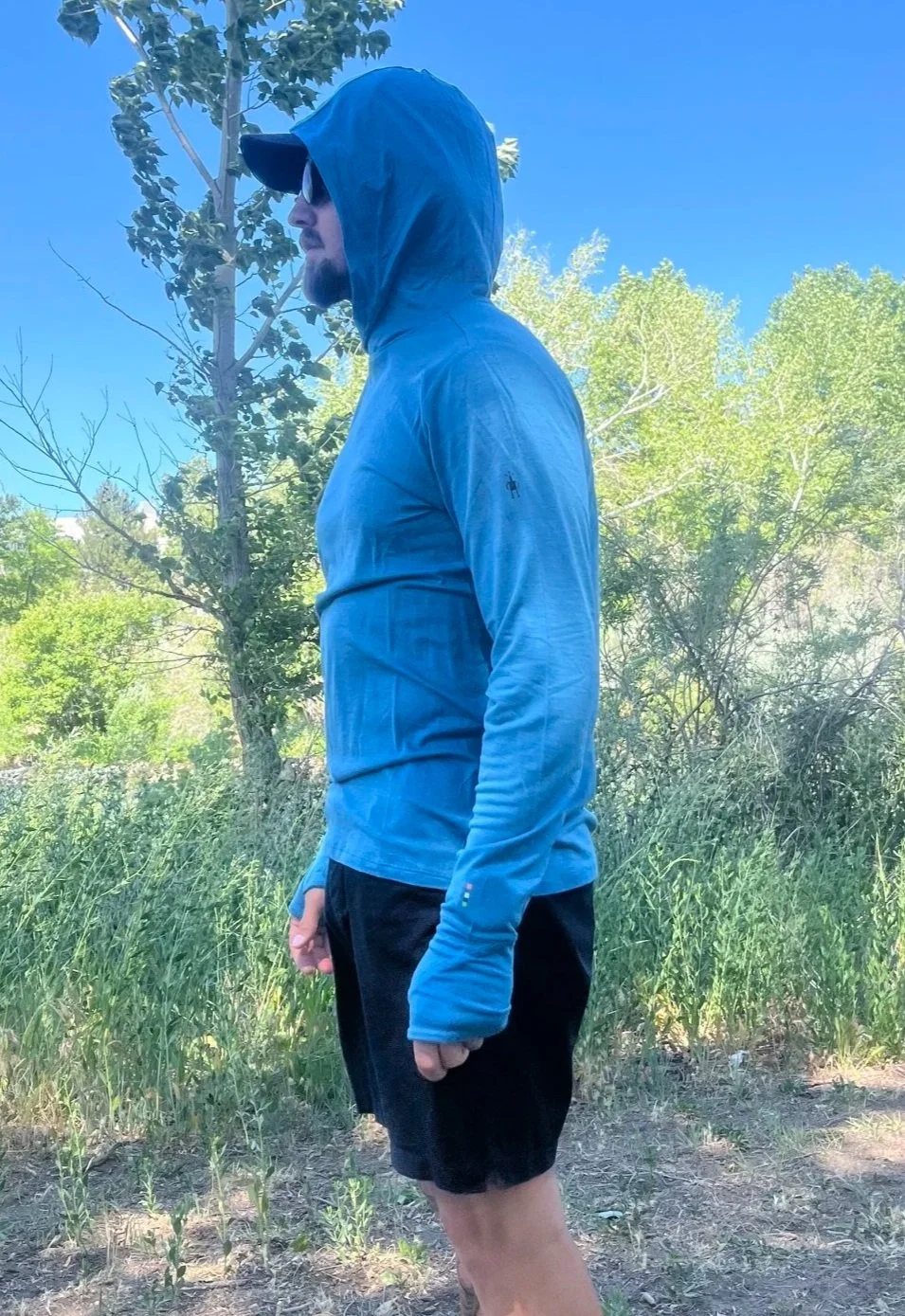
The one thing I would call out right away is the sleeve length. The thumbholes are really well done and stay secure when you use them, but that also means the sleeves run long by design. If you use thumbholes often, great. If you don’t, the extra sleeve length can get a little annoying.
Overall, this is the kind of hoodie I’d pack when the trip has a little bit of everything: cool mornings, exposed trail, camp time, and at least one day where I know I’m probably wearing the same shirt again. It is not my first pick for hot, high-output summer efforts, but it makes a lot of sense when comfort and repeat wear matter as much as sun coverage.
+What We Like
Merino wool comfort without the delicate wool-shirt problem
88% merino / 12% recycled nylon blend adds useful durability
Great for long sun exposure in mild temperatures
Handles odor well for multi-day hiking, camping, and travel
Thumbholes are secure and built better than most
Washes easier than some merino sun hoodies and has not shrunk drastically
The large hood gives solid sun coverage without turning bulky
-What We Don’t Like
Sleeves run long if you do not use the thumbholes
Not the coolest option for hot, high-output summer efforts
Still rewards proper merino care, even if it is less fussy than most
Nitty Gritty
Fabric: 88% merino wool / 12% recycled nylon
Sun Protection: UPF 40+
Fit: Relaxed fit
Construction: Merino jersey fabric with recycled nylon core and merino next to skin
Seams: Offset shoulder and side seams
Hood: Large hood for extra coverage
Cuffs: Thumbholes
Best For: Hiking, camping, travel, mild-weather sun exposure, multi-day wear
MSRP: $130
Tested In
Location: Reno/Tahoe, Sierra Nevada
Activities: hiking, camping, travel, casual wear, long sun-exposed days outside
Conditions: mild temps, dry mountain air, exposed sun, cool mornings, repeated washing
Best Use: hikers and campers who want one shirt they can wear hard and wear again
Fit, Fabric, and Comfort
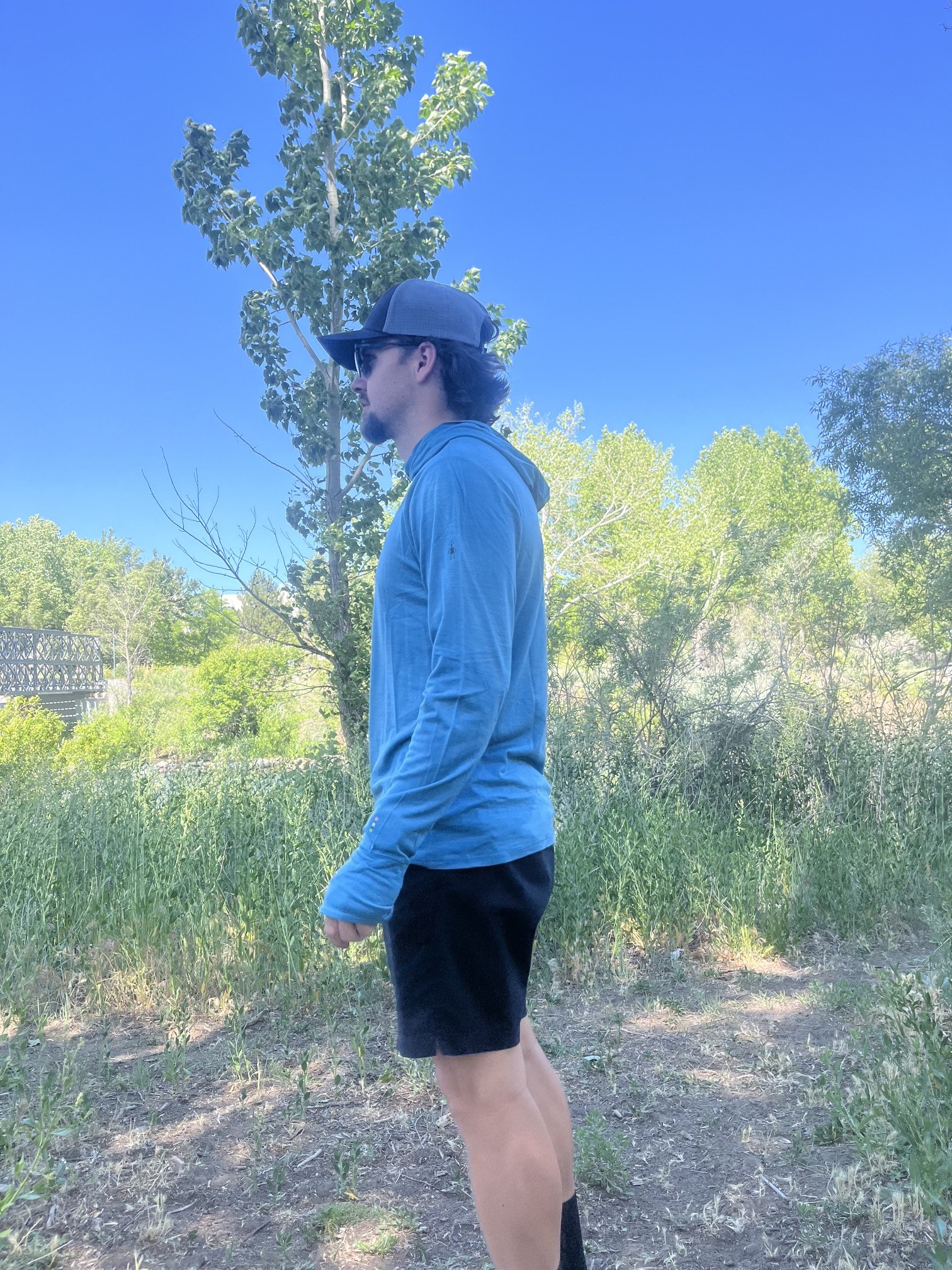
The Smartwool Merino Sun Hoodie has a relaxed fit, but it never gets sloppy. It has enough room to move, enough space to wear comfortably over a t-shirt if you wanted to, and enough shape that it still looks normal around town or at camp.
The fabric is where this hoodie separates itself from a lot of standard sun hoodies. A thin synthetic sun hoodie usually feels cooler at first touch, especially in the heat. The Smartwool feels softer and a little more natural, especially when the day starts cool and warms up slowly.
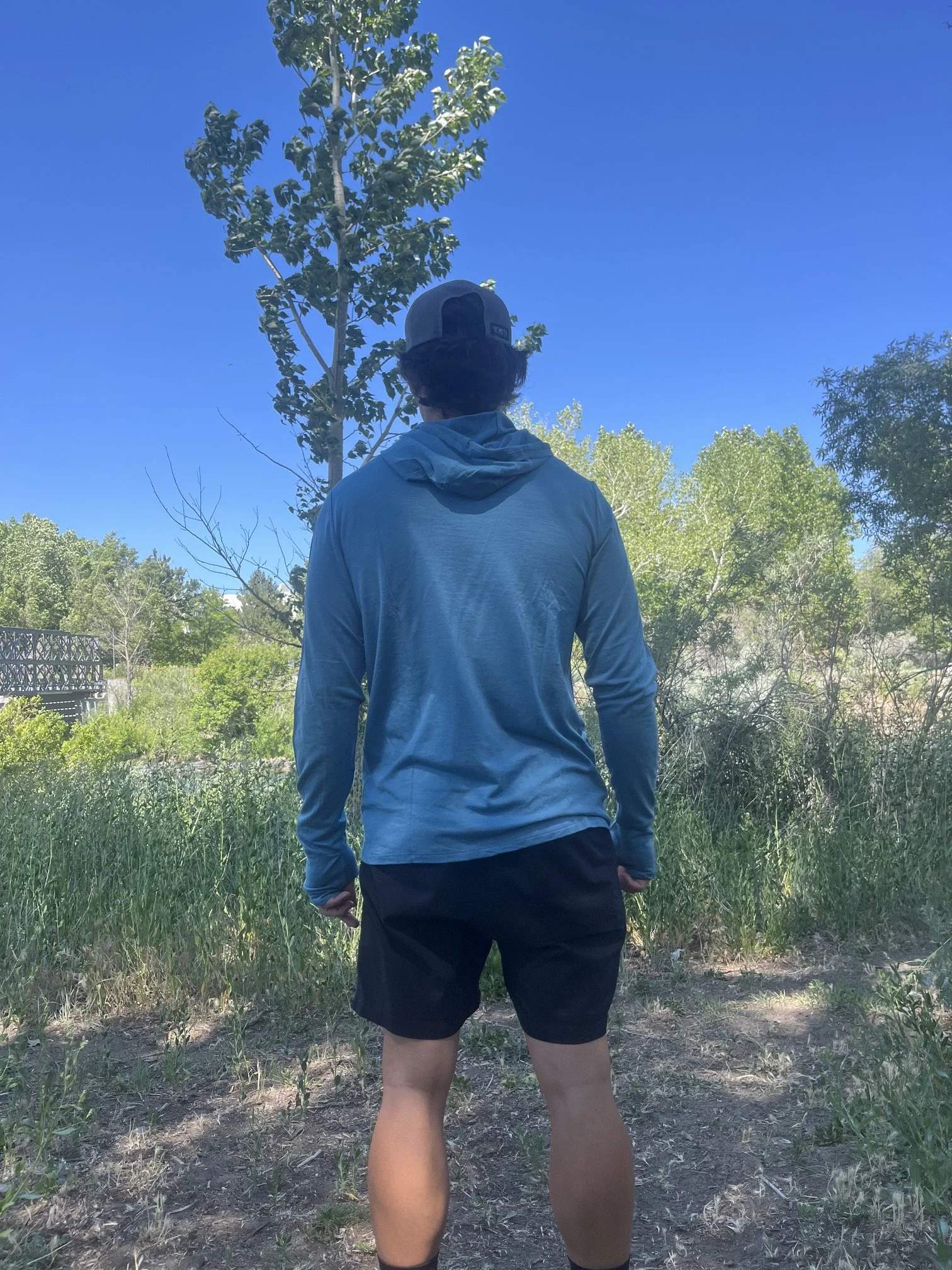
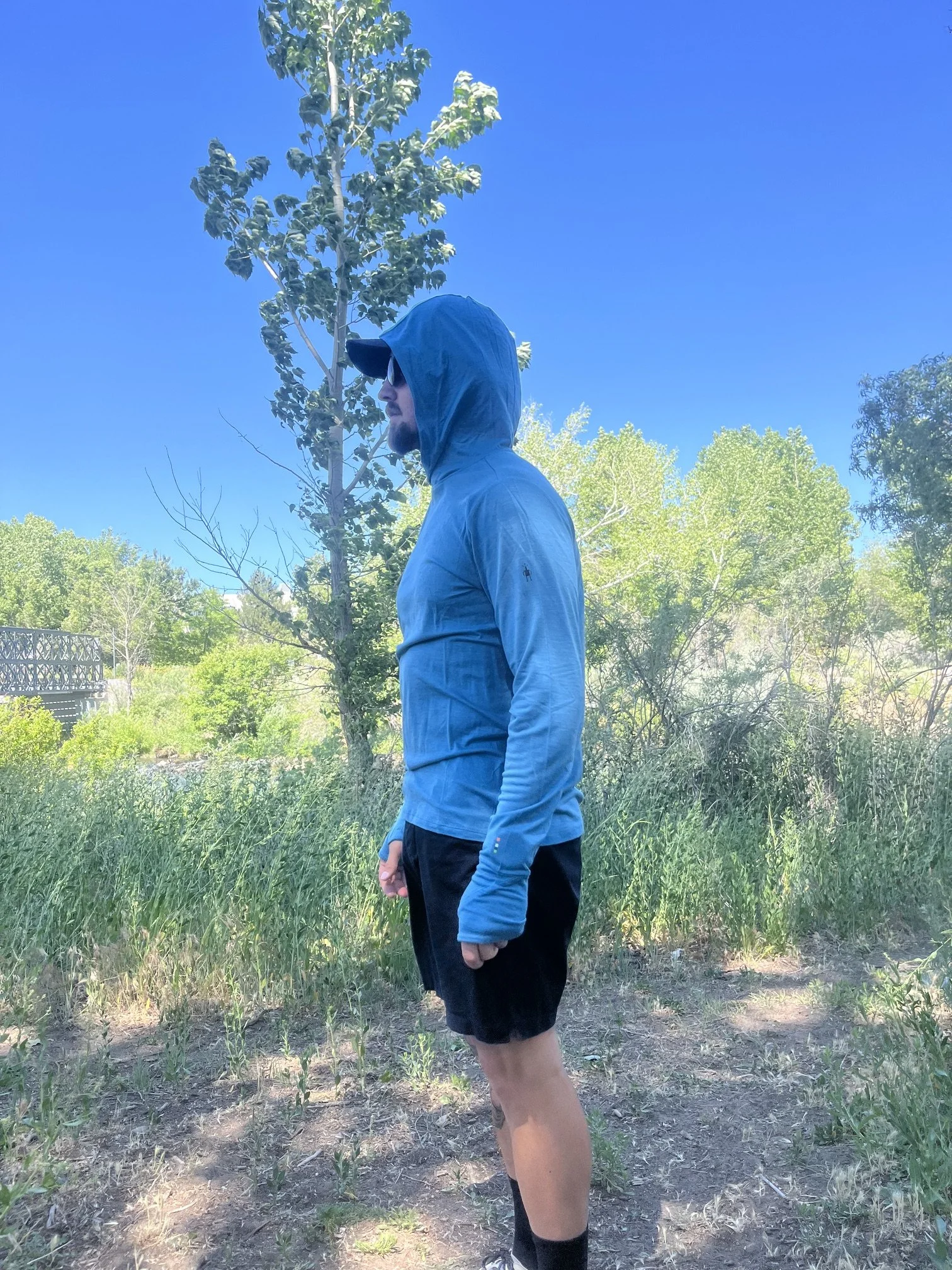
You can tell it is not 100% merino in the best way. It still has the merino feel against skin, but the recycled nylon gives it a little more structure. This one comes across more like actual outdoor gear than a fragile merino layer you have to baby.
I noticed it most when wearing it with a pack. The fabric never got scratchy under straps, and the offset seams helped keep the shoulder area from becoming annoying after a few miles. It is one of those details you do not think about much unless a shirt gets it wrong.
Where This Hoodie Works Best
The best use case for this hoodie is pretty specific, but it is also very real around Reno and Tahoe. You can start a hike in the morning with cool air coming off the mountains, then be fully exposed to the sun an hour later. A lightweight synthetic hoodie can be great once it is warm, but early on, it can be a little too thin. A warmer layer solves the morning problem, then becomes annoying once the sun gets higher.
That is where this hoodie fits into my kit the best. It takes enough edge off a cool start without turning into a layer you want to peel off fifteen minutes later. Once the sun gets higher, the hood, sleeves, and thumbholes keep doing their job instead of turning into extra fabric you are stuck with.
I would not grab it for a hard trail run in July heat. That is where I want the lightest, breeziest synthetic sun hoodie I own. But for hiking, hanging around camp, road-tripping through the mountains, or spending a full day in and out of the sun, this hoodie works really well.
The Merino Blend Is the Point
A lot of the usefulness here comes from the blend. The hoodie is mostly merino wool, so you get the parts of merino that make it so good for hiking and camping: it is comfortable against skin, handles temperature swings well, and does not get nasty as quickly as a synthetic shirt.
The nylon side of the blend makes it less precious. It still is not a shirt I would drag through granite, tree branches, and campfire sparks without thinking. But compared to some lighter merino shirts, it is more durable and more forgiving.
At first, it mostly wore like a nice merino sun hoodie. After more use, more washing, and more days being stuffed into a bag, the nylon started to seem like more than a spec-sheet detail. It makes the hoodie easier to actually live in.
Thumbholes and Sleeve Length
The thumbholes are one of the best parts of this hoodie, but they are also tied to my biggest fit complaint.
When you use them, they work really well. The cuff sits comfortably over the hand, the thumb opening is not just a lazy slit in the fabric, and the extra sleeve length gives you better hand coverage when the sun is strong. On exposed hikes, I liked having that coverage without needing sun gloves.
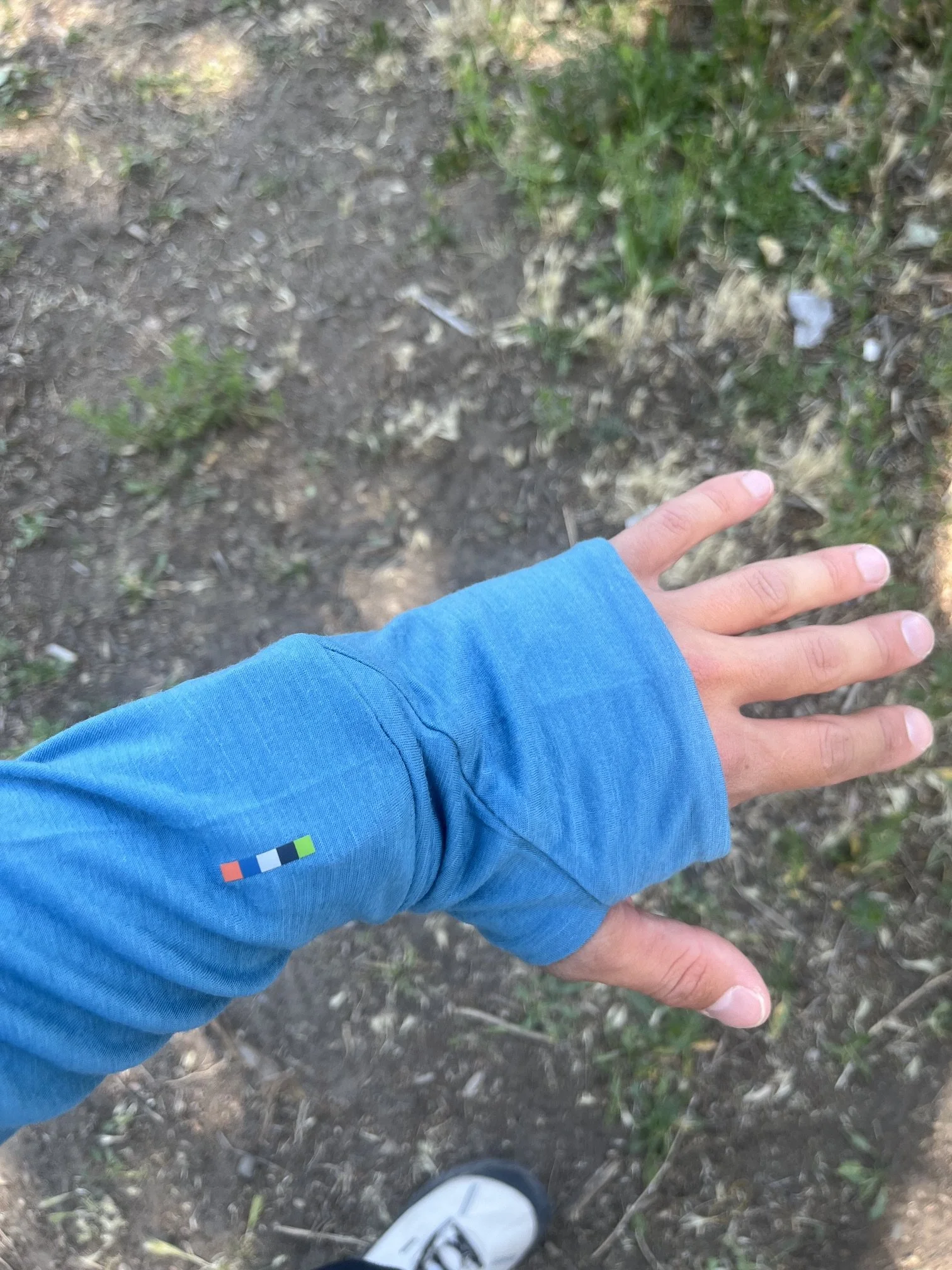
The tradeoff is that the sleeves are long when you are not using the thumbholes. Not unusably long, but noticeable. If you use thumbholes often, it works. If you rarely use them, the extra sleeve length is probably the first thing you’ll notice.
I would rather have a good thumbhole with a slightly long sleeve than a short sleeve with a useless thumbhole, but it is something to know before buying.
Hiking and Camping Use
For hiking, it gives you the coverage you want without looking or wearing like a purely technical sun shirt. The large hood is useful in exposed sections, and the fabric is comfortable enough that I did not feel the need to change the second I got back to the car.
For camping, odor resistance is the bigger deal. A normal synthetic shirt can be great for one sweaty hike and pretty questionable by dinner. Merino buys you more time. It does not make you magically clean, but it does make it easier to wear the same shirt around camp, sleep in it if needed, and put it back on the next morning without feeling like you made a terrible decision.
This is where it starts to earn the pack space. On a quick overnight or a mellow few-day trip, I’d rather bring this than pack two or three shirts that all end up doing a worse version of the same job.
Washing and Long-Term Wear
Merino usually asks you to care a little more. Wash it cold, avoid cooking it in the dryer, and generally treat it like something you want to keep nice. That is still the best way to handle this hoodie.
The Smartwool has handled washing better than some merino hoodies I’ve used. It has not drastically shrunk or twisted into a weird shape. The fabric still rewards better care, but one wrong laundry cycle does not seem like it will ruin the whole thing.
I like gear I can actually use, wash, pack, and wear again without feeling like I am managing a science project.
This hoodie still deserves decent care. It is merino, not a cotton shop rag. But it has been more forgiving than expected.
Where It Falls Short
If the plan is a hard trail run, a fast hike, or anything high output in real heat, I would rather be in a lighter synthetic sun hoodie. Those shirts breathe faster, dry faster, and usually work better once the day gets properly hot.
The Smartwool is better when the day has some range to it. Cool morning, sunny afternoon, light wind, maybe a long lunch at camp, maybe another wear the next day. That is where the $130 price starts to make more sense.
The sleeve length may also be a dealbreaker for some people. I like the thumbholes enough that I can live with them, but someone who never uses thumbholes might find the cuffs getting in the way.
Final Thoughts
The Smartwool Merino Sun Hoodie is not the top I’d grab for the hottest, fastest days of summer. For that, I still want something lighter, thinner, and more synthetic.
But for hiking, camping, travel, and sunny mountain days that start cool and warm up slowly, this hoodie has a really useful lane. It is soft, handles repeated wear well, and has enough structure from the nylon blend that I was not constantly worried about babying it.
The sleeve length is the main thing to know before buying. If you use the thumbholes, the sleeve length makes sense. If you do not, the sleeves may run a little long. Outside of that, this is one of those pieces that makes more sense after a few days of actually wearing it. It is not flashy, but it is practical, comfortable, and easy to keep reaching for.