

Icebreaker 150 MerinoFine Ace Long Sleeve Hoodie UPF Review: Soft Merino for High Mountain Sun

I’ve been wearing the Icebreaker 150 MerinoFine Ace Long Sleeve Hoodie UPF around Reno, Tahoe, and the Sierra Nevada, and it clicked most on the days that were sunny without being brutally hot. Think cool starts, exposed trail, dry mountain air, and enough sun that you still want your arms, neck, and ears covered. This is not the hoodie I would grab for a humid summer run or a 90-degree desert hike. It is more of a high-country sun layer that feels softer and less plasticky than the usual synthetic option.
Hiking around exposed Sierra terrain, sitting around camp, making coffee in the morning, and wearing it through those cooler Sierra days, it felt like a really good high-altitude sun layer. The fabric is soft enough that I kept wearing it after the hike was over, and the odor control was easily one of the biggest wins after camping in it for multiple days.
The Verdict:
The Icebreaker 150 MerinoFine Ace Hoodie is at its best when you want sun coverage, merino comfort, and a shirt you can keep wearing after the hike is over.
That might sound like a narrow use case, but in the mountains, it is a pretty common one. Around Reno-Tahoe, you can start the day in cool air, hike straight into harsh sun, sit on warm granite for lunch, and still want a layer on once the wind picks up or the light drops behind the trees. The Icebreaker handled those conditions really well. It gave me sun coverage without feeling like a slick synthetic layer, and it had enough natural comfort that I did not feel the need to change the second I got back to camp.
The fabric is what separates this hoodie from most sun layers I’ve worn. Icebreaker uses a 17.5-micron MerinoFine wool, and it feels noticeably softer than a lot of wool pieces. It does not have much of that scratchy, “I know this is merino” feeling. I wore it directly against my skin for hiking, hanging around camp, and traveling between spots, and it was one of those layers I forgot about in a good way.
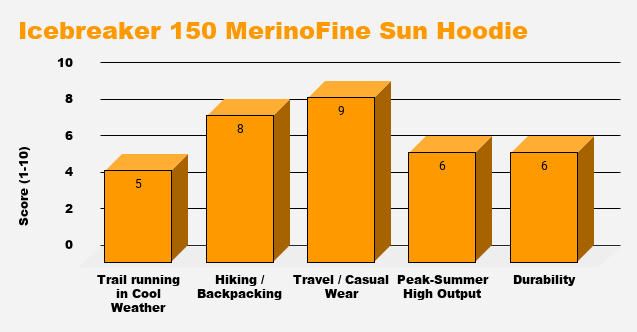
I would be careful calling it a hot-weather-first sun hoodie. It breathes well for 100% merino, but a lightweight synthetic sun hoodie will still be cooler, airier, and faster drying once the temperature climbs. For me, the Icebreaker is at its best below 80 degrees, especially in exposed mountain terrain where I cared more about staying covered and comfortable than dumping heat as fast as possible.
The other thing to know is that 100% merino takes a little more care. This is not the hoodie I would toss in the dryer, drag through rough brush all day, and expect to treat like a nylon-heavy layer. It feels premium, soft, and natural, but part of owning it is washing it correctly and not being careless with the fabric.
+What We Like
Extremely soft against the skin
100% merino wool fabric feels natural and comfortable
Great odor control for camping and repeated wear
Best in high-altitude sun when temps are below 80 degrees
UPF 40+ sun protection
Hood, thumb slits, raglan sleeves, and dipped hem are all useful
Comfortable enough to keep wearing after the hike
-What We Don’t Like
Not the best pick for hot-weather breathability
100% merino needs more careful washing and drying
Less abrasion-friendly than merino blends with nylon
$170 is expensive for a sun hoodie
Nitty Gritty:
Fabric: 100% Merino Wool, exclusive of decoration
Merino fiber: 17.5-micron MerinoFine wool
Sun protection: UPF 40+
Weight: 230 g / 8.11 oz in men’s medium
Fit: Regular
Hood: 3-piece hood
Sleeves: Raglan sleeve construction with thumb slits
Seams: Offset shoulder seams to help reduce friction
Hem: Dipped hem for additional coverage
Best for: Hiking, camping, travel, running, and high-altitude sun exposure
Care: Machine wash cold on gentle, wash with like colors, no softener, no bleach, no tumble dry, line dry in shade
MSRP: $170
Tested In
Location: Reno/Tahoe, Sierra Nevada Mountains
Activities: hiking, camping, travel, casual wear
Conditions: high-altitude sun, cool mornings, dry heat, exposed trails, camp use
Best use: exposed mountain days, cool starts, dry sun, camp wear
Not ideal for: hot, high-output days
Fit, Fabric, and First Feel
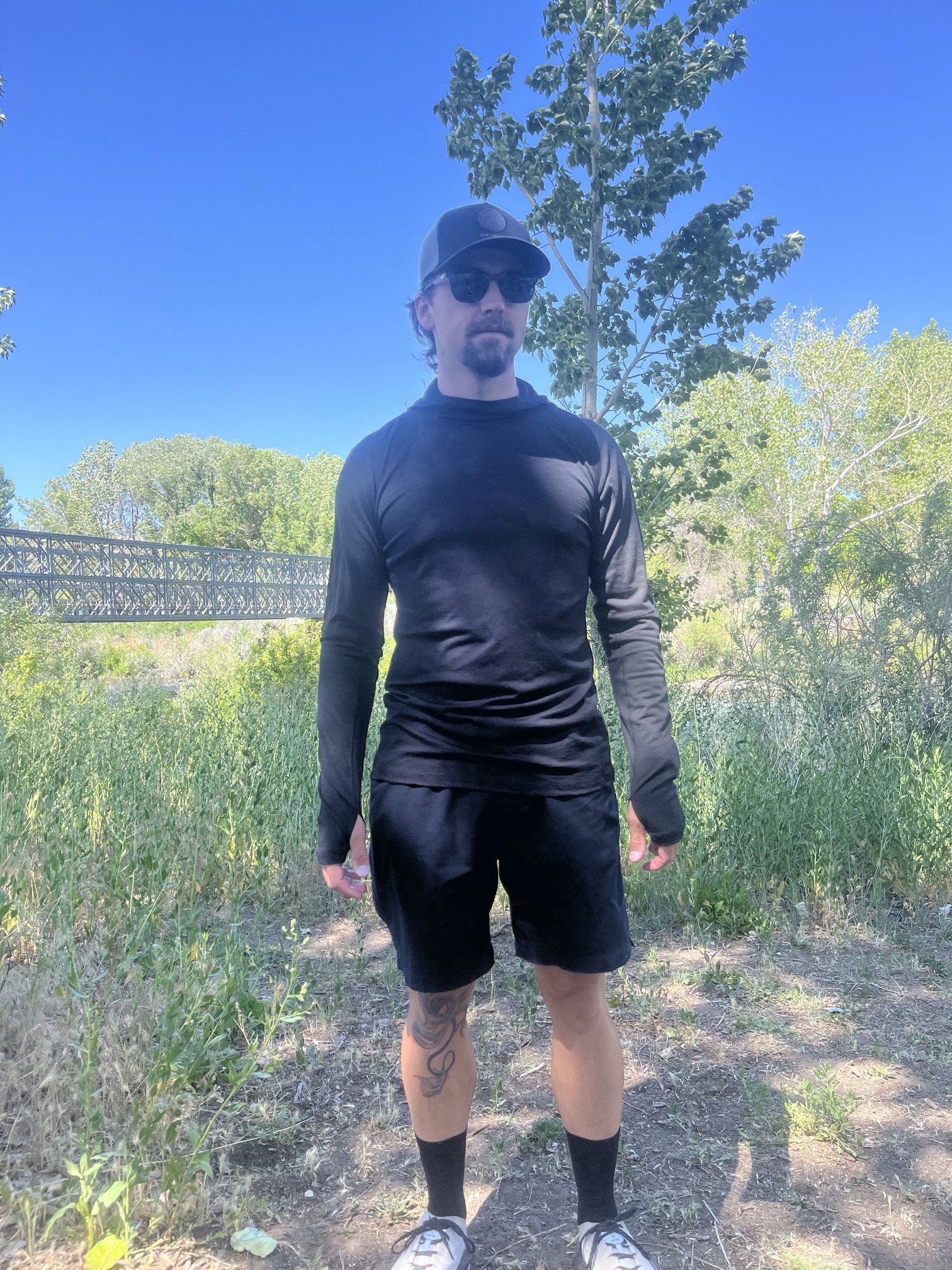
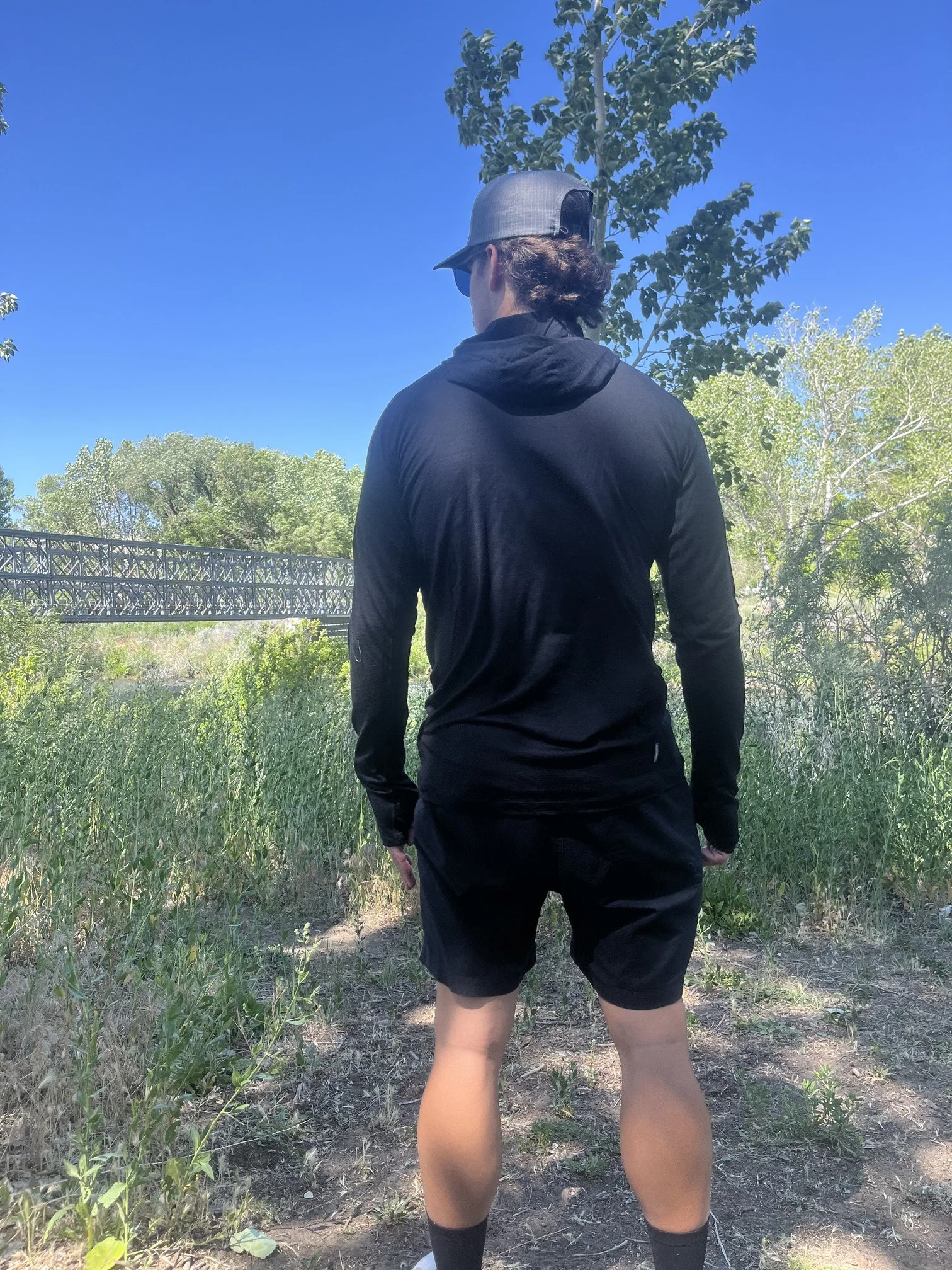
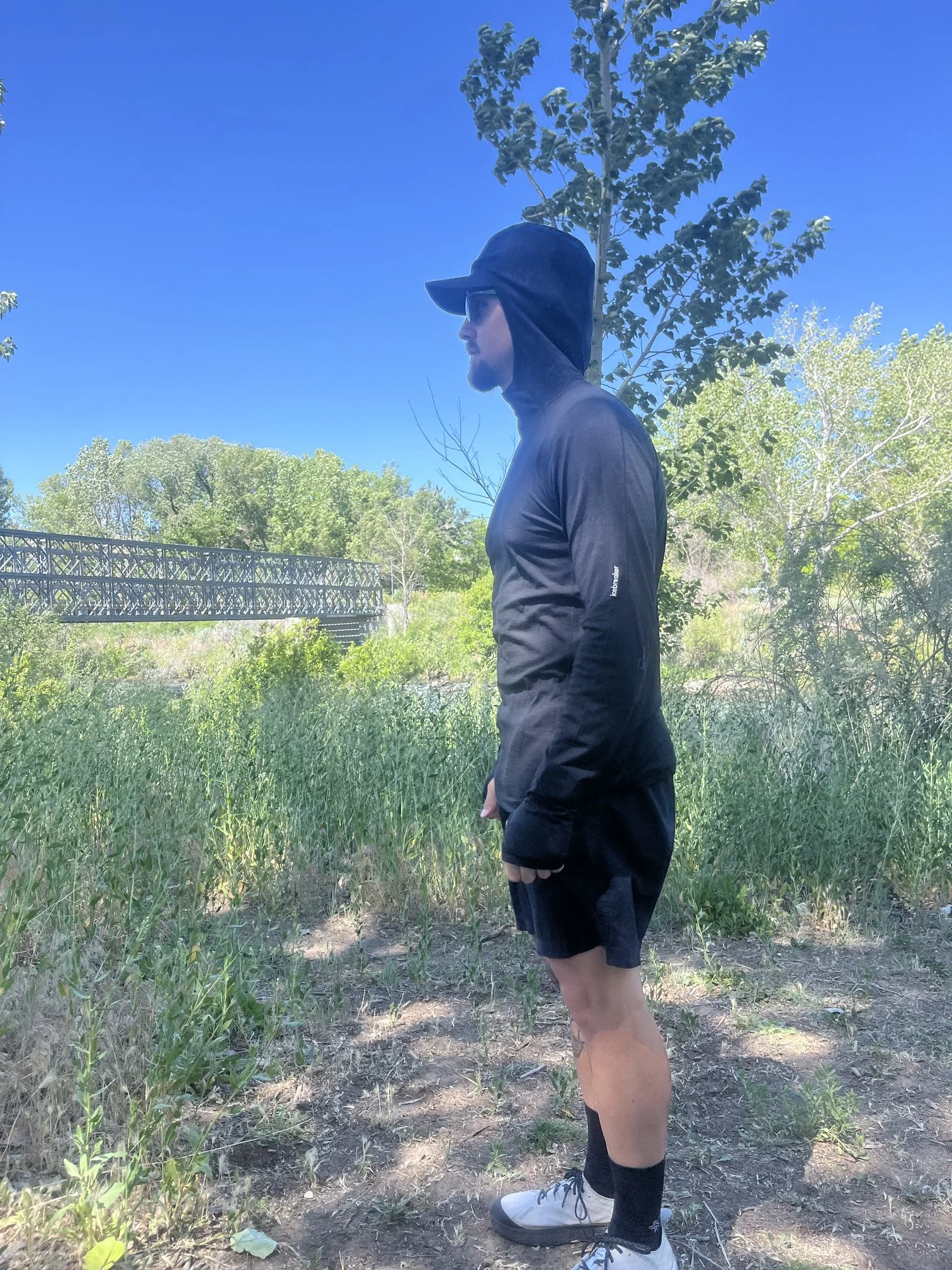
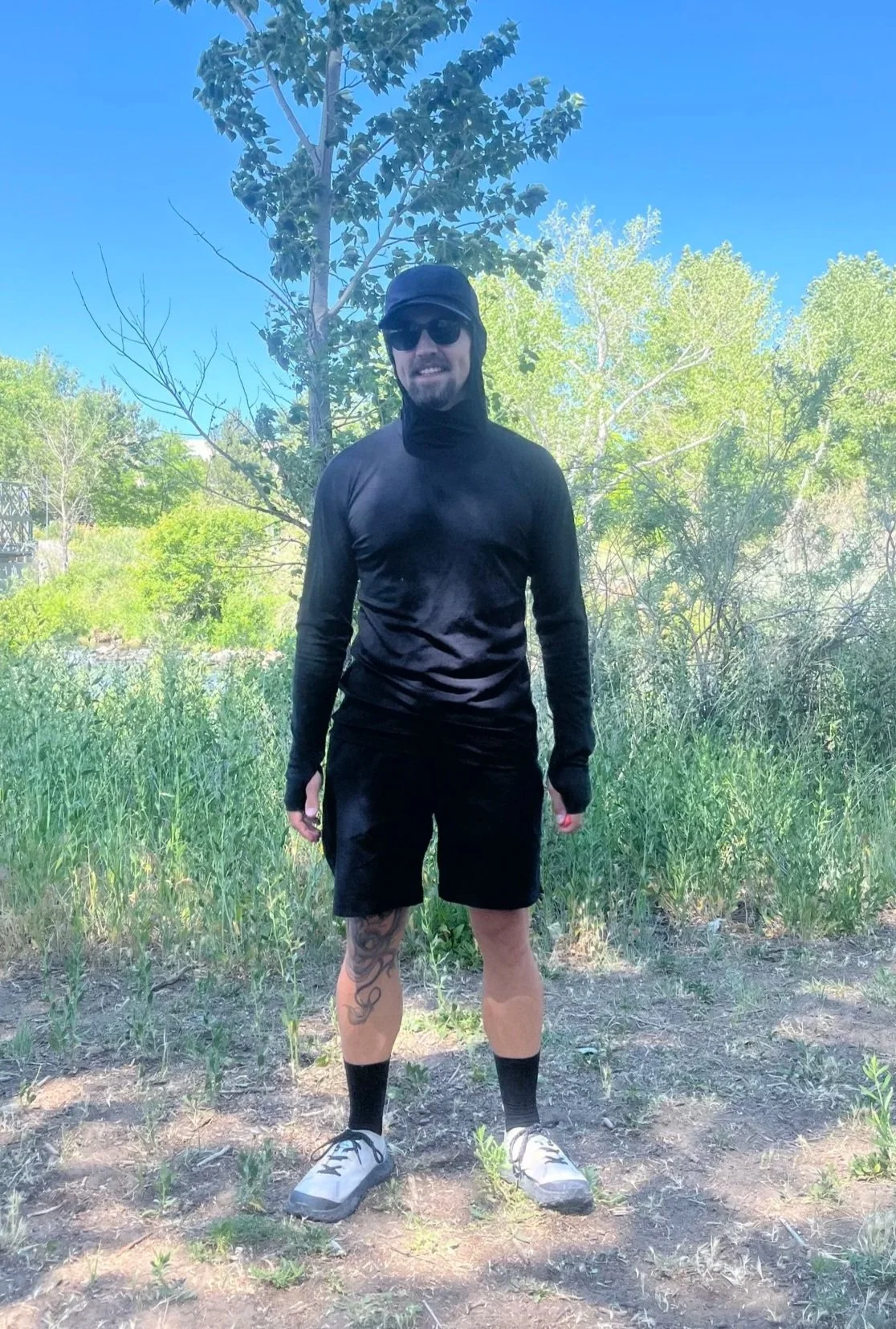
The regular fit works well for this kind of layer. It is not baggy, but it also does not fit like a tight base layer. It has room for a little airflow, enough length to keep your back covered, and just enough shape that it still looks normal once the day stops being about hiking.
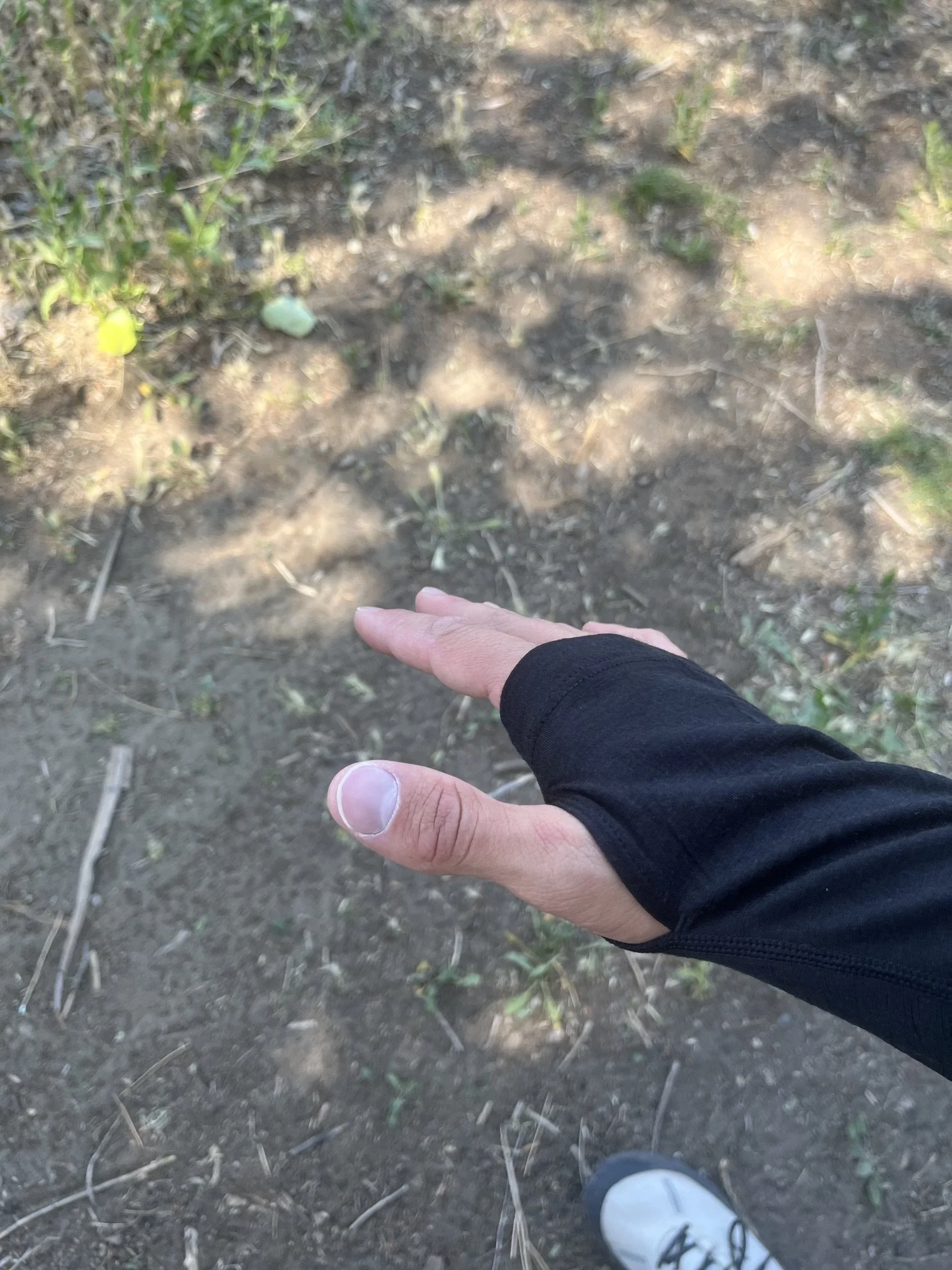
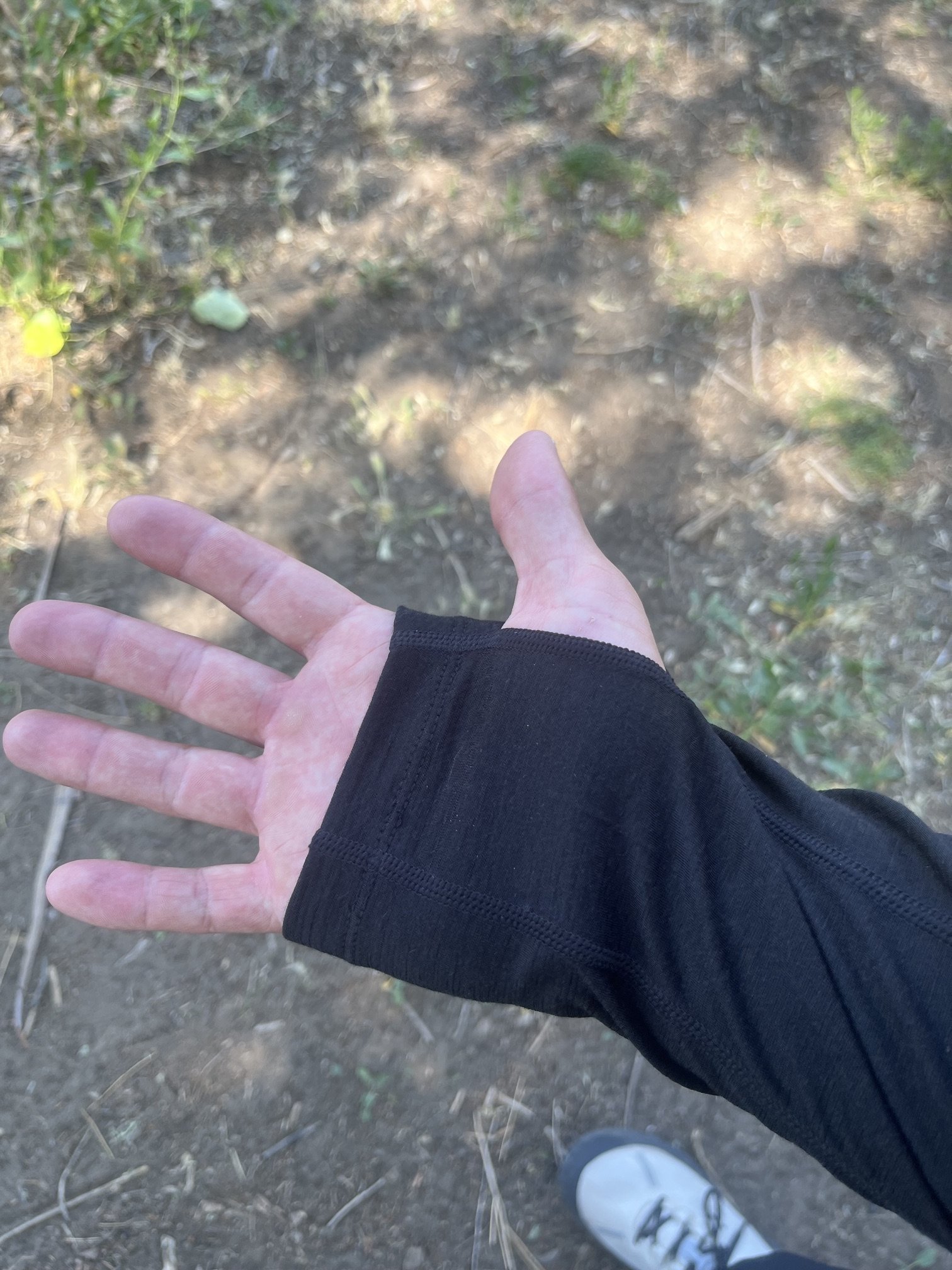
The dipped hem sounds like a small thing until you are actually using the hoodie. Bending over to sort gear at camp, sitting on a tailgate, or hiking with a light pack all made the extra coverage in the back feel useful instead of like a spec-sheet detail. The thumb slits were also useful when the sun was hitting my hands or when the morning was still cold enough that keeping the sleeves pulled down felt nice.
The hood is simple, but it works well with a hat. That combination gave me good coverage through the neck, ears, and side of the face without needing to constantly mess with sunscreen. It is not a giant floppy hood, and it does not feel like Icebreaker added it just to check the sun hoodie box.
What stood out most was the fabric. A lot of merino feels good, but this feels especially soft. It has a smoother next-to-skin feel than the wool texture you sometimes get with lightweight merino layers. I wore it for long stretches without thinking about the fabric, which is usually the best compliment you can give a shirt you are sweating in.
High-Altitude Sun Is Where It Works Best
The Icebreaker is at its best when the air is not that hot, but the sun is still working on you.
That is a very real mountain problem. Around the Sierra Nevada, you can be hiking in comfortable air and still feel your arms, neck, and shoulders getting cooked on an exposed section of trail. You might not be overheating, but you still want coverage. A super-thin synthetic sun hoodie can feel a little too light in those moments, especially when the wind comes through or you stop moving.
This hoodie worked well on those days. It gave me enough coverage to stay out in the sun without feeling like I needed to keep reapplying sunscreen every ten minutes, but it also had enough comfort that I left it on around camp later. It felt especially good during those in-between parts of the day: making coffee in cool morning air, hiking through exposed sections before it got hot, and hanging around camp as the temperature started dropping again.
For me, that is the lane. I would pack it for Sierra sun and cooler air before I would pack it for a hot, exposed sufferfest.
Breathability and Heat Limits
I was more impressed with the breathability than I thought I would be, but this still is not the hoodie I would bring out for the hottest days of the year. It did not feel swampy during normal hiking, and it handled steady movement better than I expected from an all-wool piece. In cooler mountain conditions, the fabric has a nice way of smoothing out temperature swings instead of feeling great for five minutes and then immediately wrong.
Once the temperature climbs, the limits are pretty clear. If I were heading out in 85- or 90-degree heat, especially for a higher-output hike or run, I would pick something lighter and synthetic. Those pieces dump heat faster, dry quicker, and usually feel cooler the second you put them on.
The Icebreaker is better when the day is warm but not hot. Below 80 degrees, especially with dry air and strong sun, it feels comfortable and useful. Above that, I would start thinking more about airflow than softness.
Camping and Odor Control
I camped in the Sierra Nevada with it and ended up wearing it as my main top for most of the trip. It saw dusty camp chores, hiking, sitting around in the sun, sleeping near all my gear, and getting pulled back on the next morning before anything felt clean. That is usually when synthetic layers start to get pretty rough.
By the end of the trip, some of my other clothing smelled exactly like you would expect camp clothing to smell. The Icebreaker did not smell fresh, but it also did not have that sharp, sour funk that makes you want to bury a shirt at the bottom of the laundry bag. It still felt wearable, which is the whole point of merino on trips like this.
If you are camping, road-tripping, or packing light, odor resistance lets one shirt do more than one day of work. The shirt you hiked in can still be the shirt you pull on around camp later, which is a pretty big win when you are trying to keep the kit simple.
Durability and Care
The same thing that makes this hoodie feel so good is also the reason I would not be careless with it. A merino blend with nylon or another synthetic fiber usually gives you a little more forgiveness. You can be rougher with it, worry less about pack abrasion, and wash it with less thought.
That does not make the Icebreaker fragile, but I also would not treat it like a work shirt. Normal hiking, camping, travel, and daily outdoor use all feel well within its range. Dragging it through brush, scraping it across rough granite, or wearing it under a heavy pack for days in a row would make me a little more cautious.
I would also follow the care instructions. Cold gentle wash, no softener, no tumble dry, and line drying in shade is not difficult, but it does take a little more effort than throwing everything into the same hot wash and dryer cycle. With a $170 merino piece, that extra care feels worth it.
Where It Fits
If I were packing for Sierra camping, a Tahoe hike, shoulder-season travel, or a road trip where I wanted one shirt to handle sun, cool mornings, and a second wear the next day, the Icebreaker would be easy to justify. It also works well as a travel layer because it does not look overly technical and does not pick up stink as quickly as synthetic shirts.
If you want the lightest and coolest shirt for peak summer heat, I would look elsewhere.
Where It Falls Short
The Icebreaker starts to lose its advantage when breathability becomes the whole priority. In hot weather, the softness and odor control are still nice, but they are not as important as airflow. A thin synthetic sun hoodie will usually feel better when you are sweating hard in direct sun.
It is also not the best fit for someone who wants zero-maintenance clothing. If all your outdoor gear gets washed together and dried on high, this hoodie probably deserves better than that. The fabric is part of what makes it good, and it needs a little more care.
Final Thoughts
The Icebreaker 150 MerinoFine Ace Long Sleeve Hoodie UPF is a really good sun hoodie for the right kind of day. It is soft, comfortable, naturally odor-resistant, and useful in high-altitude sun when the temperature is still reasonable.