

KETL Breakwind Jacket Review: A Wind Layer That Nails the Balance
After a lot of time in the KETL Breakwind, from casual wear and backpacking trips to high-output trail runs and mountain bike rides, it has earned a permanent spot in my gear bag.



Intro:
Lightweight wind jackets sound simple, but they are surprisingly easy to mess up. Some block wind well, but turn into a sweatbox the second you start working hard. Others breathe nicely but leave you wondering why you bothered bringing them in the first place. The good ones are rare because they need to land right in the middle, offering enough protection to matter without compromising comfort once your effort level climbs.
What stood out most was how often I kept reaching for this jacket in very different situations. I have worn it casually around town, packed it for backpacking trips, taken it on hikes, and used it for higher-output efforts like running and mountain biking. It is not a one-trick emergency shell that only comes out when the weather forces the issue. It is a layer I actually want to wear.
The biggest reason is the balance between breathability and protection. It cuts the wind in a noticeable way, but it does not immediately trap heat once you start working hard. That balance is what gives it so much versatility.
The Verdict:
If you want an ultralight wind layer that works across hiking, backpacking, trail running, mountain biking, travel, and everyday casual wear, the KETL Breakwind makes a very strong case.
Its biggest strength is how well the jacket balances airflow and protection. It blocks enough wind to keep you comfortable on ridgelines, descents, and cool starts, but it never feels like the kind of jacket you are desperate to peel off after ten minutes. That is what separates it from a lot of lightweight shells. Plenty of jackets are light and packable. Fewer are this comfortable once you are actually moving.
Even for such a light jacket, it never felt like something I had to baby. I have used it in the kinds of situations where thin fabrics usually start to show their limits, and so far, it has shrugged off abrasion better than expected.
The main thing to understand up front is that this is a wind layer first. It is not meant to replace a true rain shell in sustained bad weather. It can handle cool wind and a little bit of moisture just fine, but if the forecast is ugly and wet all day, this is not the piece I would rely on. The fit is trim and athletic, which is great for movement but means it layers best over lighter pieces instead of bulkier insulation.
+What We Like
Excellent balance of breathability and wind protection
Works well for casual wear, backpacking, hiking, running, and mountain biking
More durable than expected for such a lightweight jacket
Packs down small and is easy to justify bringing along
Useful features without unnecessary clutter
-What We Don’t Like
Trim fit limits layering over bulkier insulation
Slightly heavier than the most stripped-down wind shells
Nitty Gritty
Fabric: 100% Nylon 66
Fabric weight: 52gsm
Weight: 151g in size medium
Weather protection: wind-resistant shell with PFAS-free DWR finish
Ventilation: laser perforated underarms and back panel
Storage: two zippered hand pockets and one zippered chest pocket that doubles as the stuff pocketHood: fitted design for secure coverage in the wind
Extra feature: thumb loops to keep sleeves in place
Best for: trail running, fastpacking, mountain biking, backpacking, hiking, and climbing
Color: Black
Price: $149
(We are associated with KETL, however we review and test everything the same. No free wins)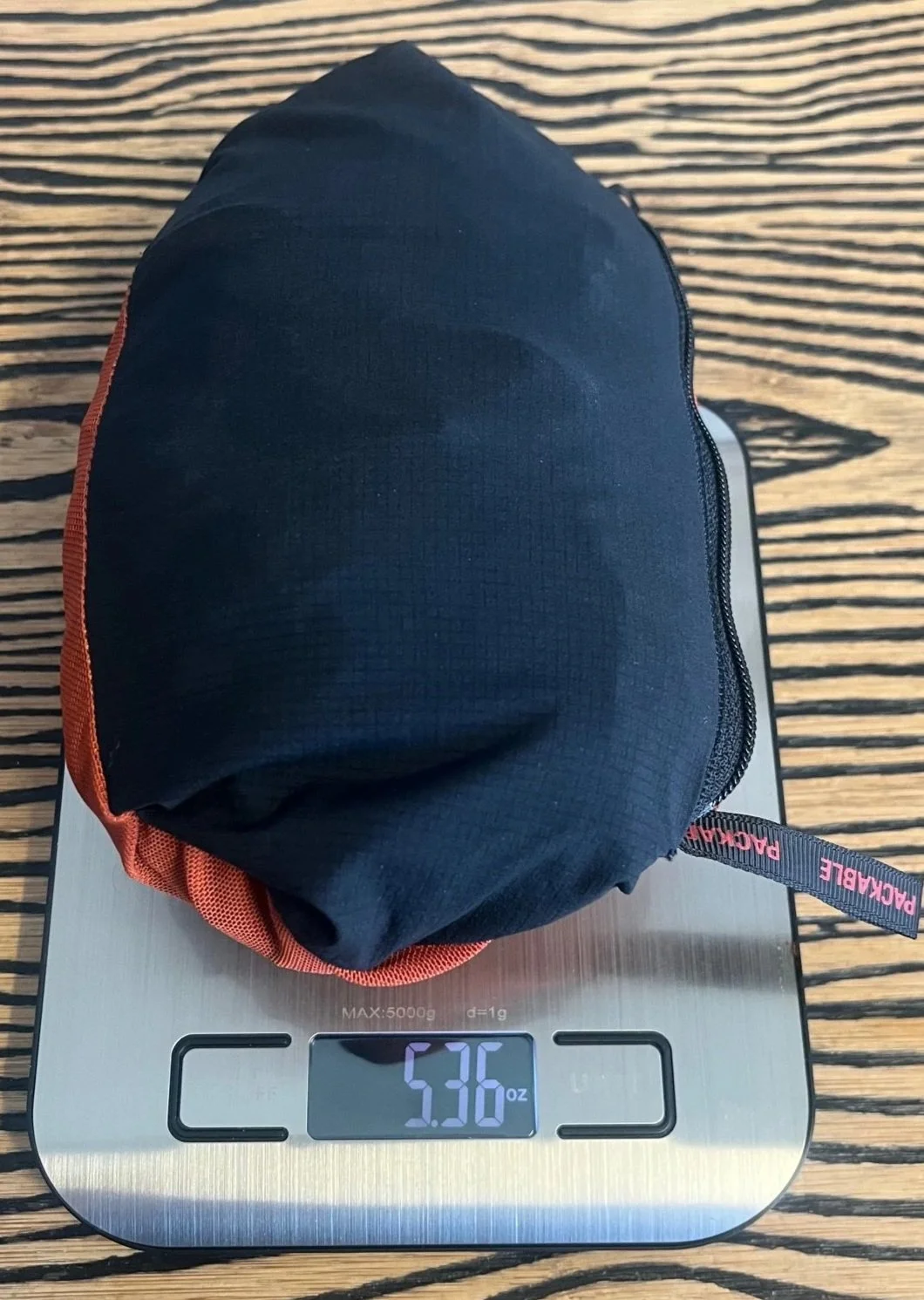
Fit Notes
The fit is athletic and trim, which suits the jacket’s intended use really well. It feels clean on the body, moves easily, and avoids the excess fabric flap that can make lightweight shells feel sloppy when you are running, riding, or hiking into the wind. For me, that trim profile is part of what makes it so enjoyable during higher-output use.
It is worth knowing how this fit works with layering. The Breakwind makes the most sense over a long-sleeve top, sun hoodie, or light midlayer. If you want to wear it over a thick fleece or insulated layer, the fit may feel limited. This is a performance-minded fit, not an oversized throw-on shell. If you plan to wear it over insulation, sizing up makes more sense.
Breathability & Protection: The Real Story
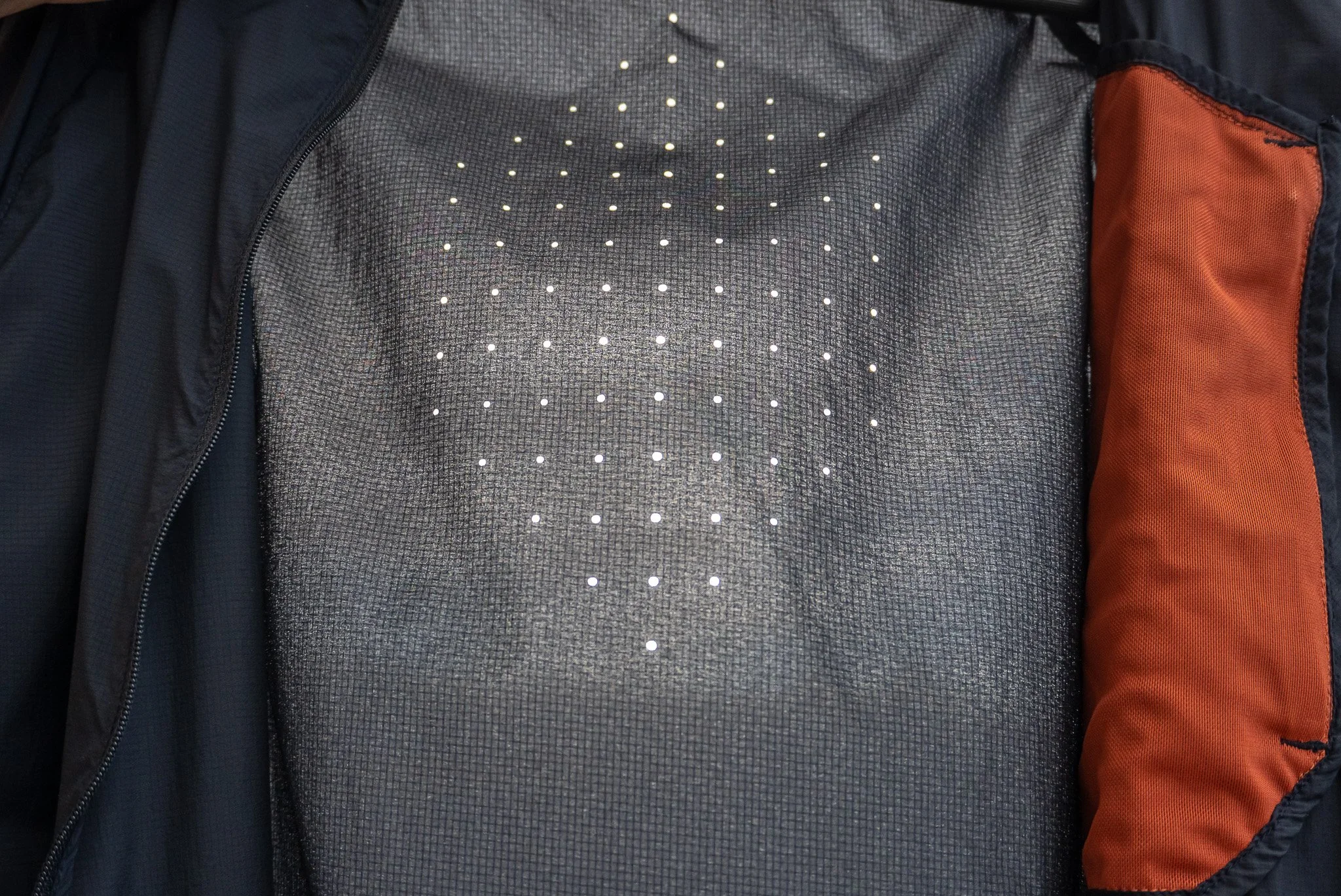
A lot of ultralight jackets are only good at one side of the equation. They either block wind effectively but trap too much heat, or they breathe well but do not offer enough protection to feel worthwhile once the breeze picks up. The Breakwind lands in a much more useful middle ground. It takes the edge off cool wind in a very noticeable way, but it still allows enough airflow that I keep wearing it even when the effort level goes up.
The jacket feels comfortable in the kinds of in-between conditions where layering decisions are hardest. Cool morning starts, exposed ridgelines, breezy descents, or long stretches where a shirt is not quite enough but a heavier shell would be overkill. That is exactly where it makes the most sense.
That venting is a big reason the jacket works as well as it does. It never feels overly sealed off, and that makes it much more wearable during runs, climbs on the bike, or hiking at a pace. Instead of constantly noticing it, I found myself leaving it on and not thinking much about it at all.
Durability: Better Than Its Weight Suggests
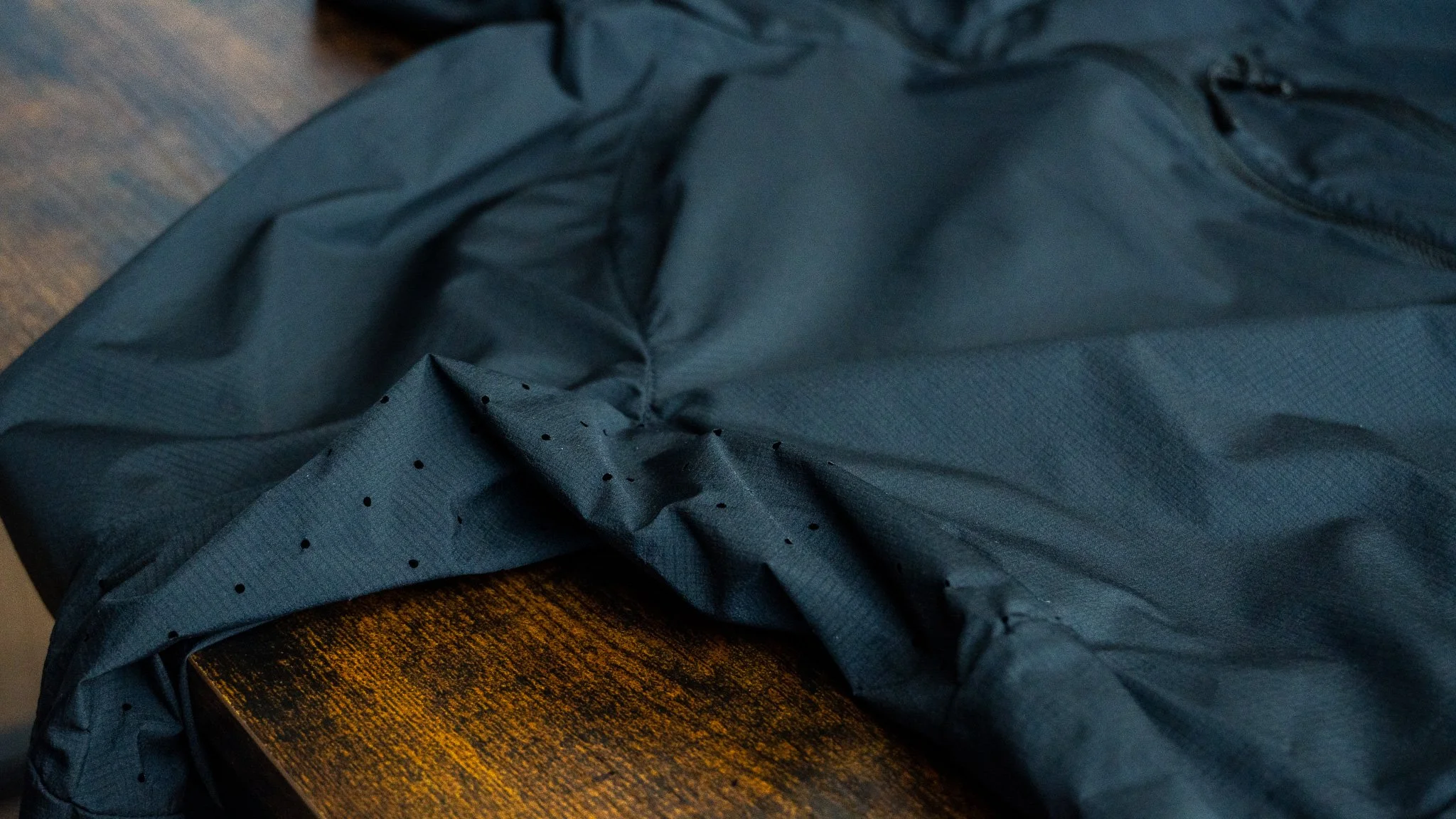
Durability was one of my early questions with the Breakwind, especially since I have used it around brush, bushes, and plenty of trailside abrasion. It has held up impressively well. I have brushed it against trailside vegetation while mountain biking and put enough days on it to expose any weak points, but it has handled that wear better than I expected.
That does not mean it is a heavy-duty alpine shell. It is still a lightweight wind jacket, and it should be judged within that category. But within that lane, it feels reassuringly tough. It does not come across as fragile or overly delicate, which adds confidence when you are using it the way gear like this is actually meant to be used.
Features & Packability: Small Details Done Right
The feature set feels nicely dialed. Nothing seems thrown in just to pad the spec sheet. The chest pocket doubling as the stuff pocket makes packability simple and intuitive. The zippered hand pockets are genuinely useful, and the fitted hood adds real value when the wind picks up rather than just acting as a token feature. The thumb loops are another nice touch, especially when you want a little extra sleeve security during movement or in cooler temperatures.
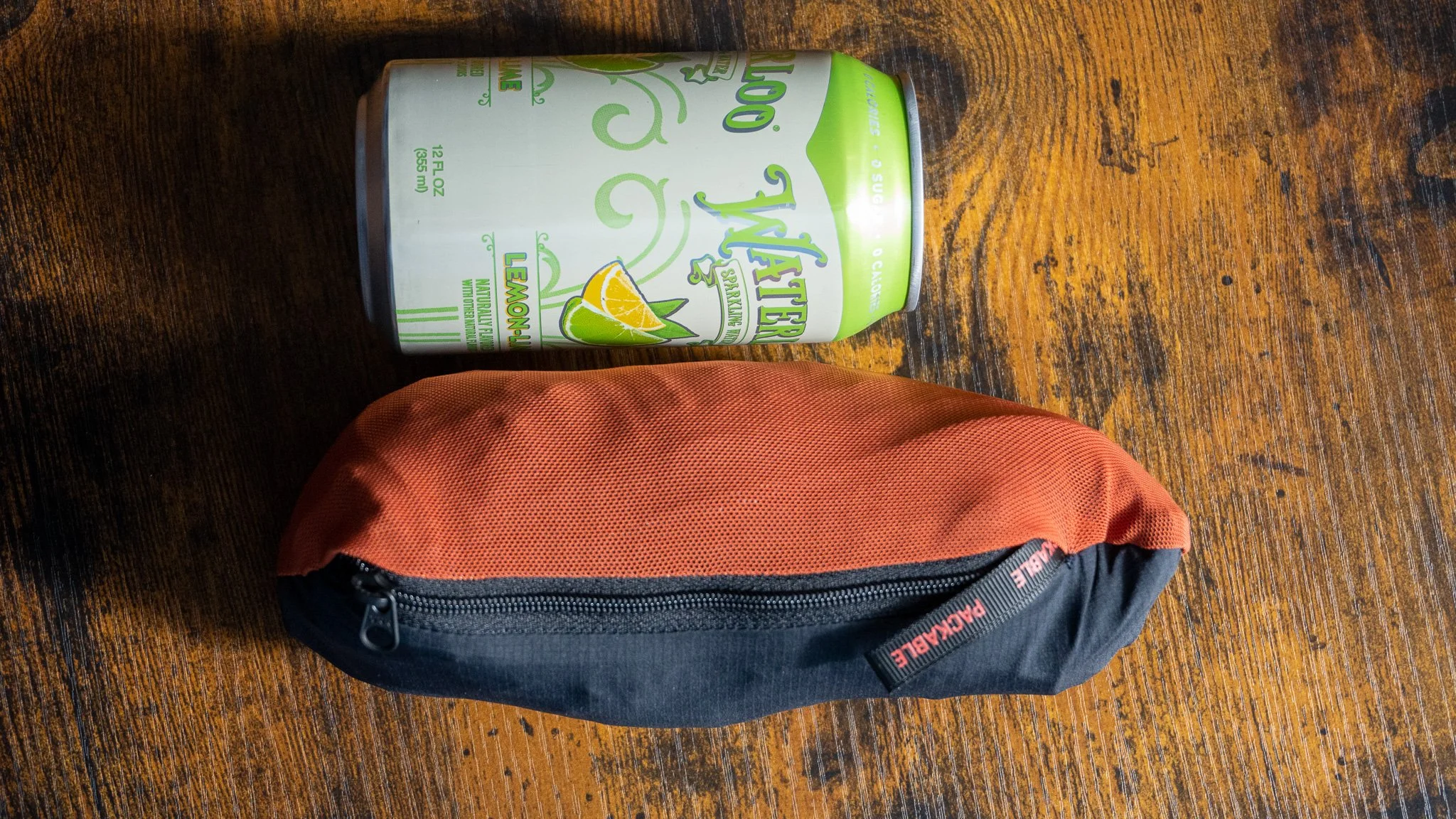
One of the things I like most is that the jacket does not feel overdesigned. There is no clutter, and it never feels like it is trying too hard to look technical. It feels intentional, not overbuilt, and that clean design helps it work just as well for casual wear and travel.
Field Test: Where This Jacket Shines
It excels on cool morning starts when you need a little protection but know you'll warm up quickly. It works especially well on windy hikes, breezy ridgelines, mountain bike descents, and runs where a little extra coverage helps, but a true shell would be too much. That versatility is a huge part of its appeal. I’ve been training for an Ultra lately and needed to get out before the sun rises. And this jacket has been the one I’ve worn every time, along with a long-sleeve shirt. From starting at sub-30-degree Fahrenheit to sunrise, where it picks up to 40 degrees, I’ve kept this jacket on throughout a 2-3 hour run without any issues of overheating, as I’ve experienced with other windbreakers in this category.

It is also one of those rare technical layers that still feels normal enough to wear casually. A jacket that works on trail but also looks good enough for travel days, coffee stops, campsite mornings, or everyday errands ends up getting used far more often. The Breakwind has that quality. It feels built for movement, but not boxed into a single activity.
Final Thoughts
The KETL Breakwind is one of those jackets that ends up coming with you more often than you expected. It is light, breathable, protective in the right ways, and more durable than its weight suggests. More than anything, it fits into real life, whether that means hiking, backpacking, trail running, mountain biking, traveling, or just pulling on a light jacket when the air has a little bite.
If you want a wind layer that can handle all of that without feeling compromised, the Breakwind is a very good one.