
5 Fleece Jackets Tested for Skiing, Hiking, and Everyday Wear
I spent the colder months around Reno and Tahoe rotating between five fleece jackets for skiing, hiking, backpacking, and everyday wear. After living in all of them, the differences came down less to specs and more to which fleece made the most sense for the way I actually used it.

I spent most of the colder shoulder seasons and winter rotating between these five fleeces around Reno and Tahoe. They came with me skiing, hiking, backpacking, running errands, doing chores, and commuting. After wearing them back to back, the differences had a lot less to do with which one looked best on paper and more to do with which one annoyed me the least.
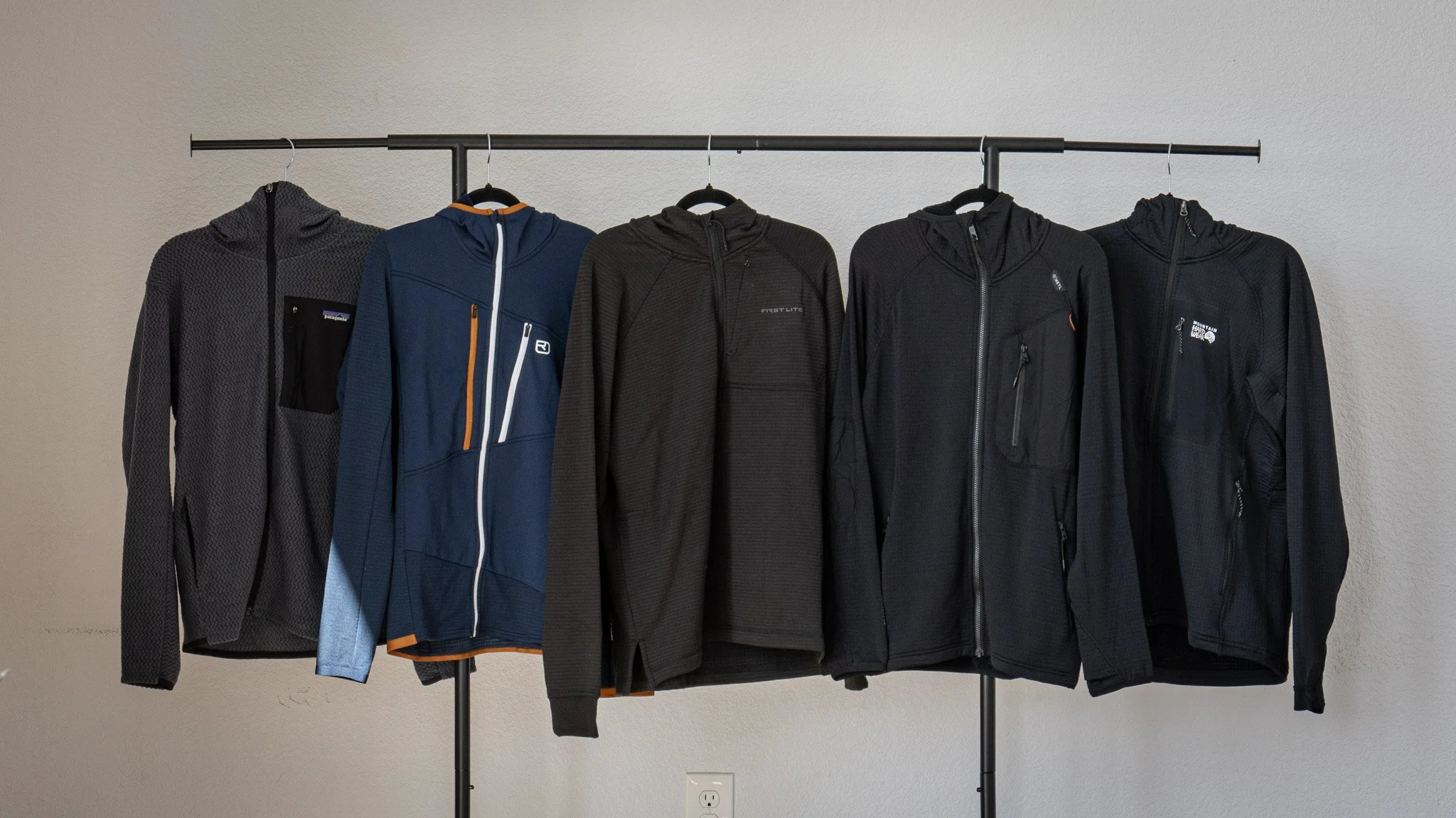
The KETL RLT was the one I found easiest to wear for almost everything. The Ortovox made the most sense when I was skiing. Patagonia's R1 Air was the lightest on my scale. The Mountain Hardwear was the fleece I trusted most around packs, brush, and granite. The First Lite was the one I liked most once the weather warmed up and I wanted something that felt a little less technical.
How I Tested These Fleece Jackets
I tested every fleece in a men's Medium. I am 5 feet 9 inches tall, weigh roughly 170 pounds, have a 40- to 41-inch chest, and normally wear a Medium. Most of these jackets have been in my rotation for roughly 10 months. I have owned the First Lite since January 2026.
For one month, I made the comparison more structured. Monday was Patagonia, Tuesday was First Lite, Wednesday was Ortovox, Thursday was Mountain Hardwear, and Friday was KETL. I wore that day's jacket for the full day rather than reaching for whichever one sounded best that morning.
Wearing one fleece for a full day made the smaller annoyances harder to ignore, and switching jackets the following morning kept those differences fresh. On weekends, I rotated the jackets through skiing, hiking, backpacking, and other outdoor use.
Most of these fleeces saw temperatures below freezing, with some use down around 5°F to 10°F. At those temperatures, I was using them as midlayers rather than standalone jackets. I normally had a long-sleeve base layer underneath and a shell over the fleece. Around 30°F to 40°F while moving, I could use them as outer layers over a long-sleeve shirt.
I also wore them in roughly 25 to 40 mph wind gusts. None is a wind-blocking layer. Air moves through all five fairly easily, although the Mountain Hardwear cut the wind slightly better than the others in my use.
Sweat management separated them more. Among the warmer winter fleeces, the KETL did the best job of giving me airflow without leaving me feeling clammy. For warmer shoulder-season days, the First Lite did the same. The Ortovox felt quickest to dry while I was still wearing it, with the KETL and First Lite close behind.
These are field observations, not laboratory moisture-management tests.
Comparison at a Glance
Scroll or swipe sideways to see all columns.
| Fleece | Best for | Measured weight | Price | Fit |
|---|---|---|---|---|
| KETL RLT Merino Thermal Grid Hoodie | Best overall | 455 g | $174 | Athletic, roomier torso with closer forearms |
| Ortovox Fleece Grid Hoody | Skiing | 370 g | $250 | Closest-fitting jacket tested |
| Patagonia R1 Air Full-Zip Hoody | Lightweight layering | 343 g | $199 | Trim technical fit |
| Mountain Hardwear Polartec Power Grid Full Zip Hoody | Backpacking and rough mountain use | 438 g | $190 | Athletic with room to move |
| First Lite ThermaGrid Merino Wool Hoody | Shoulder-season casual wear | 457 g | $140 | Longer torso and sleeves with closer-fitting arms |
Current manufacturer pricing and listed specifications were checked in September 2026. Patagonia currently lists the R1 Air at $199 and 369 g; Mountain Hardwear lists the Power Grid at $190 and approximately 427 g in Medium; First Lite lists the ThermaGrid at $140 and 10.5 ounces; Ortovox lists the Fleece Grid at $250; and KETL lists the RLT at $174 and 460 g in Medium.
Ortovox Fleece Grid Hoody
Best for Skiing
The Verdict:
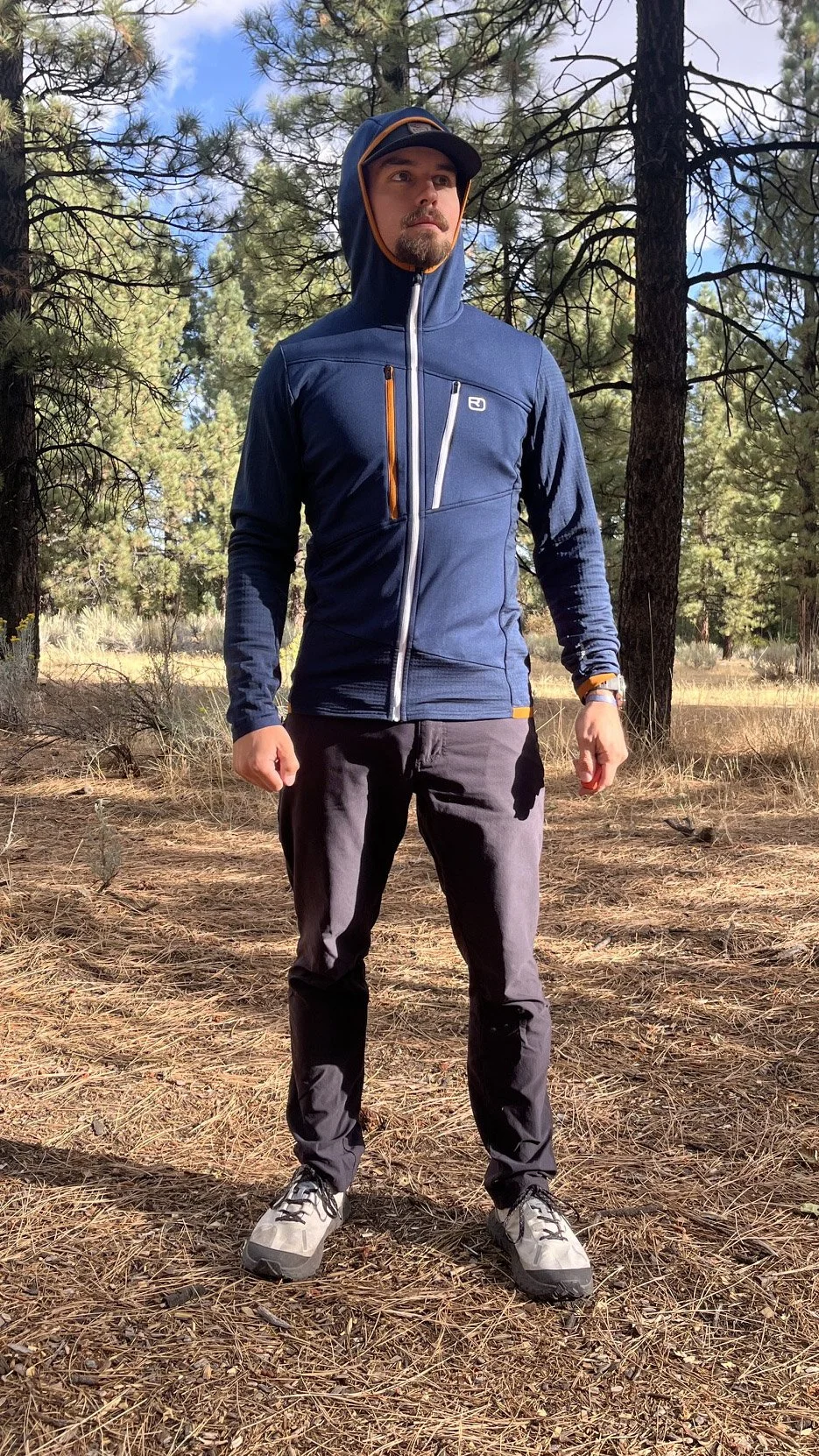
The Ortovox has the closest fit in this test, slides cleanly beneath a shell, and has a hood that stays out of my vision. It also felt quickest to dry while I was still wearing it.
If I were buying one of these fleeces only for skiing, I would take the Ortovox.
+What We Like
Close fit layers cleanly beneath a shell
Felt quickest to dry while I was still wearing it
Hood stays secure without restricting vision
Packs down tightly
Stretchy binding at the cuffs, hem, and hood disappears while wearing it
Two chest pockets stay out of the way of a pack
-What We Don't Like
No hand pockets
Small zipper pulls are frustrating with gloves
Looks like ski clothing around town
Slight pilling developed around the elbows
Expensive at $250
The Nitty Gritty
Price: $250
Measured weight: 370 g
Size tested: Men's Medium
Fabric zone 1: 66% polyester, 21% merino wool, 7% polyamide, 6% elastane
Fabric zone 2: 67% polyester, 26% virgin merino wool, 7% elastane
Fit during testing: Tighter and athletic
Pockets: Two chest pockets, no hand pockets
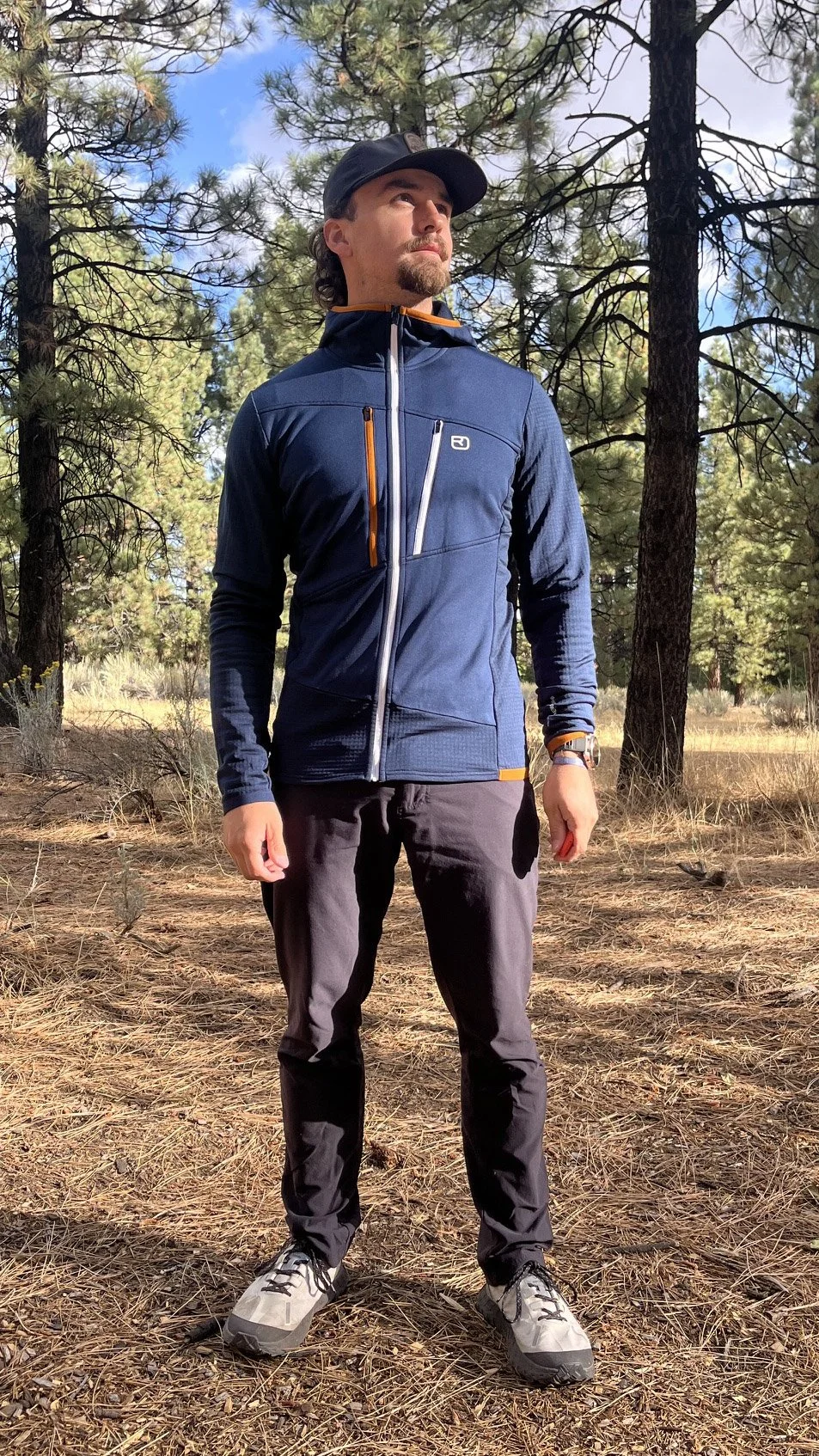
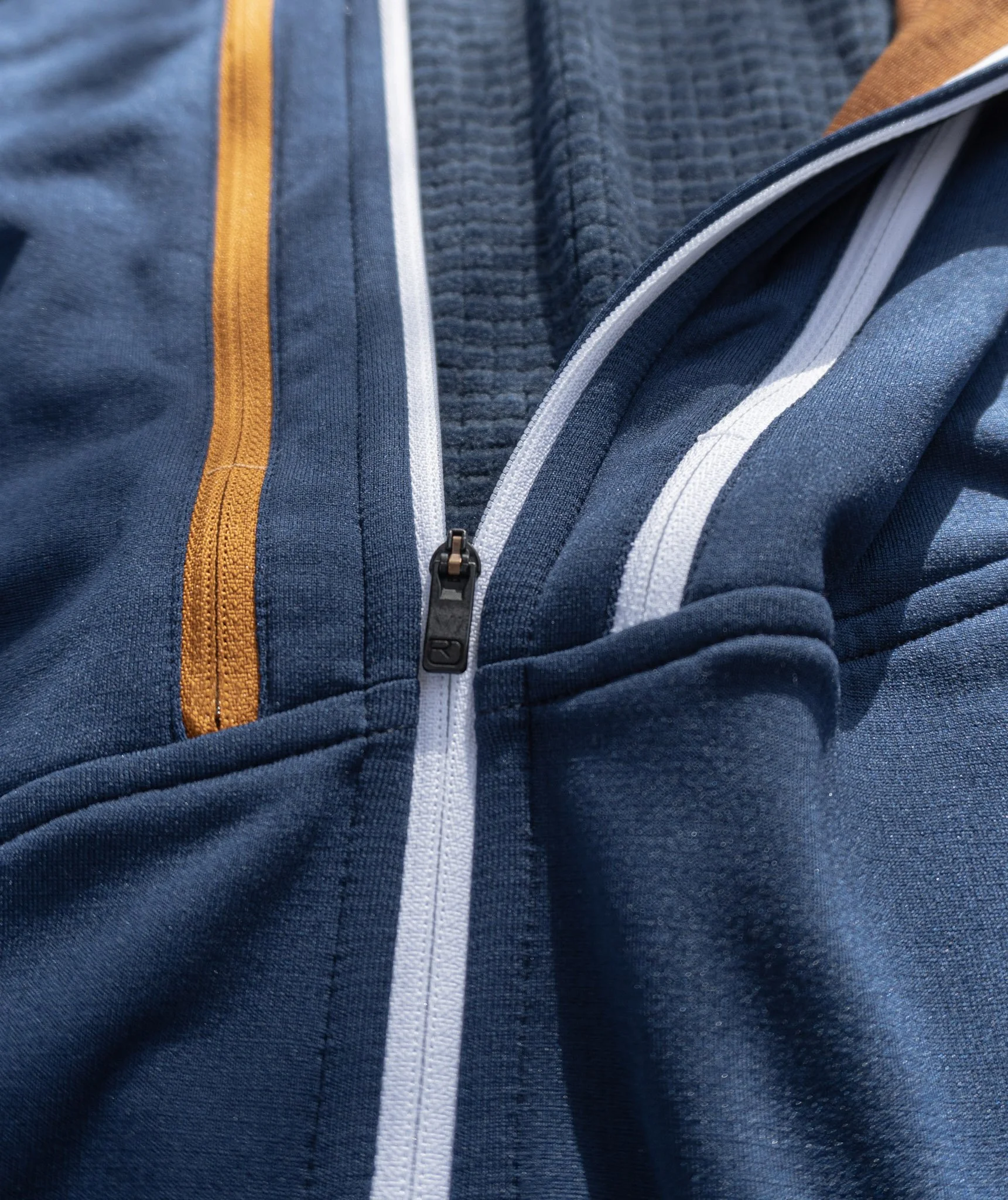
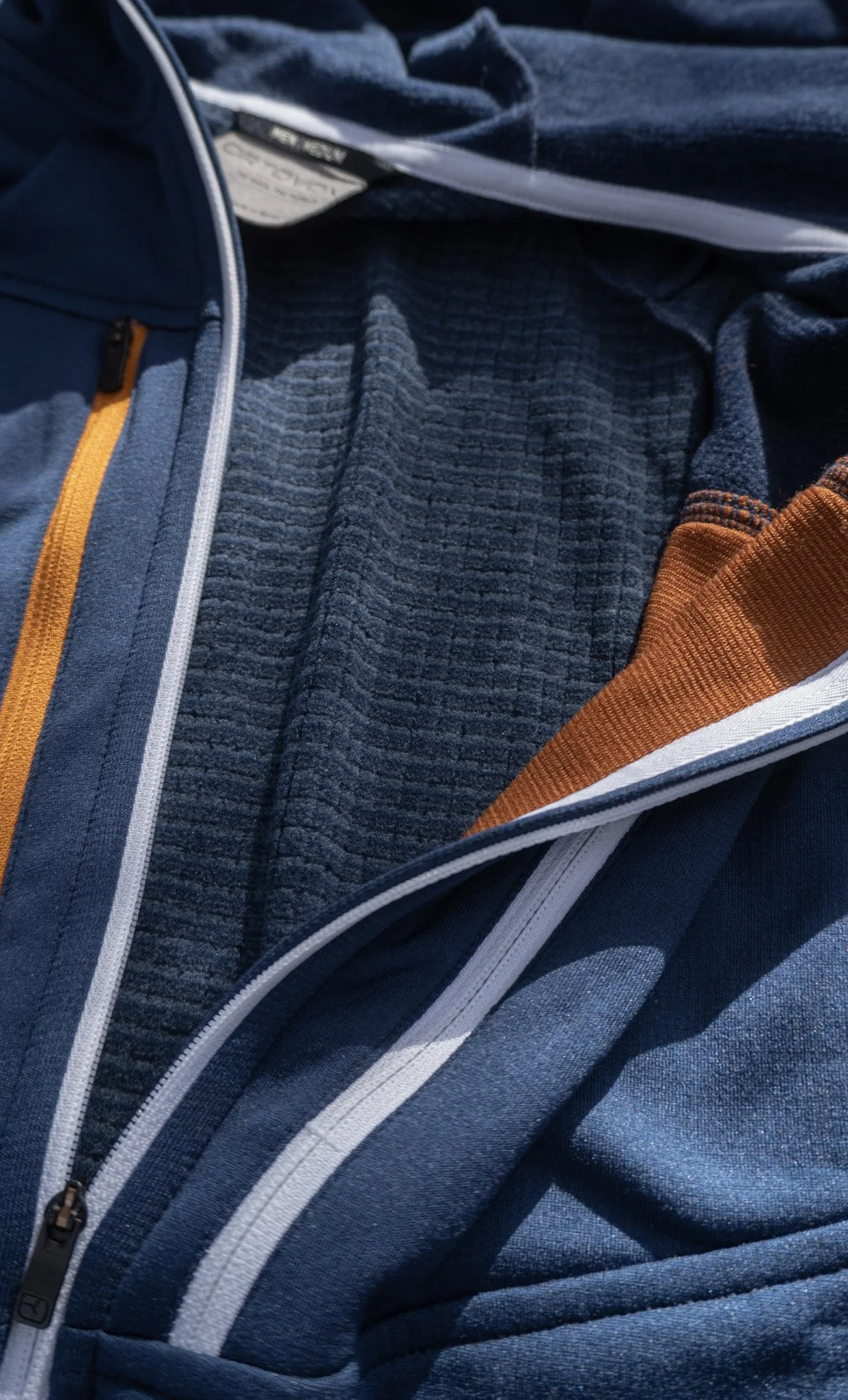
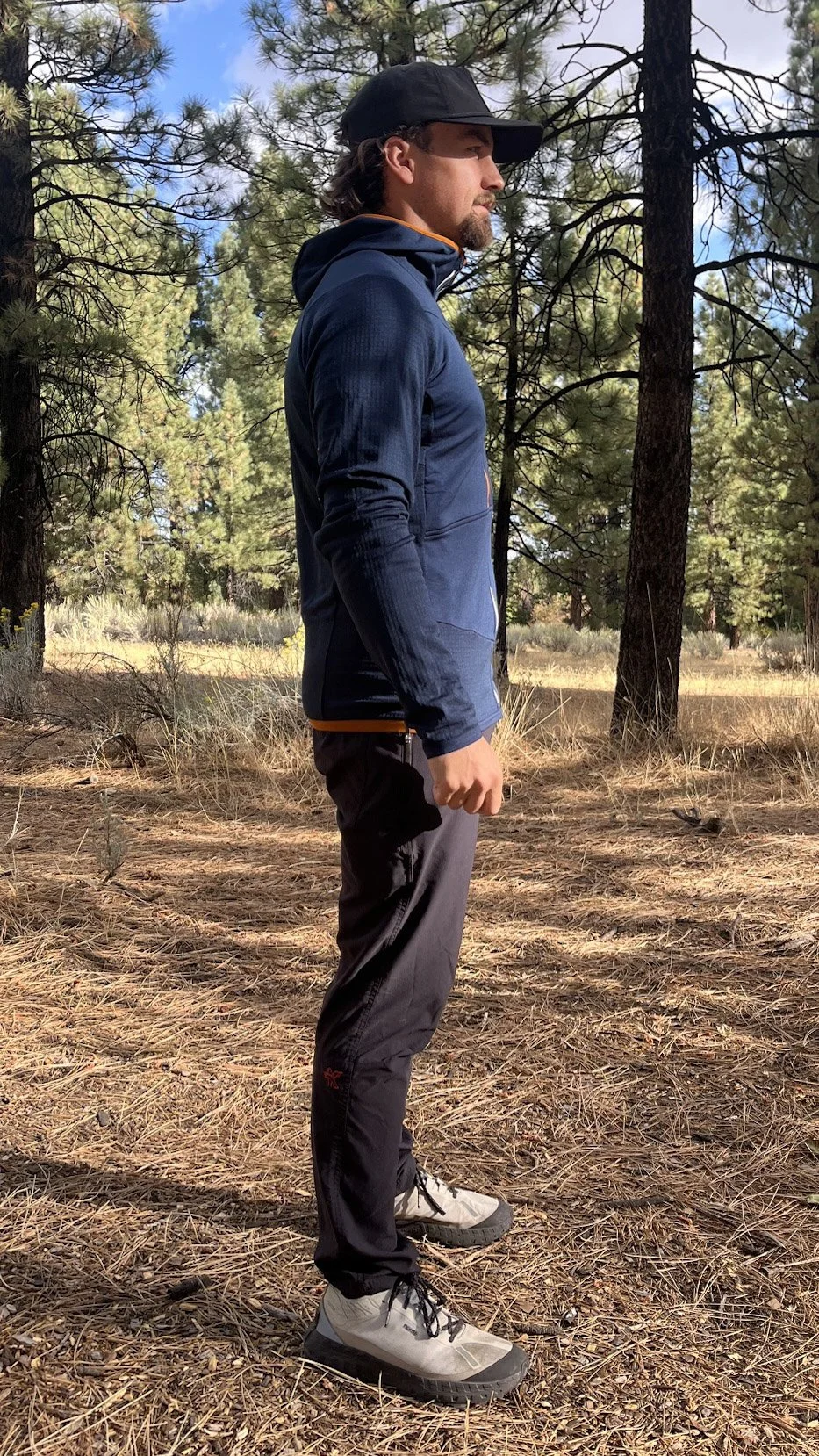
The Ortovox fits closer than the other four, with enough stretch for a long-sleeve base layer underneath. The sleeves and torso are the right length on me, and it slides cleanly beneath my shell.
The hood stops just beneath my chin, hugs my head, and moves without getting into my peripheral vision. The elastic material around the cuffs, hem, and hood is stretchy enough that I barely notice it once the jacket is on.
The Ortovox felt quickest to dry while I was still wearing it, with the KETL and First Lite close behind.
The Ortovox made a lot less sense once I got off the mountain. During the weekday rotation, I repeatedly reached for hand pockets that were not there. I missed having somewhere to put my hands while walking around town, especially after wearing the KETL and Mountain Hardwear.
The close fit and ski styling also left me feeling like I had just stepped off the mountain.
The small zipper pulls slipped out of my fingers with winter gloves on. I would add cord pulls. At $250, I should not have to fix that myself.
Mine has also developed slight pilling around the elbows. Nothing has failed, but it is more visible wear than I have on the Patagonia, Mountain Hardwear, or KETL.
Who Should Buy It?
Buy the Ortovox if you mainly need a fleece beneath a shell for skiing or ski touring.
Who Should Skip It?
Skip it if most of your wear happens away from the ski hill.
Patagonia R1 Air Full-Zip Hoody
Best Lightweight Fleece
The Verdict:
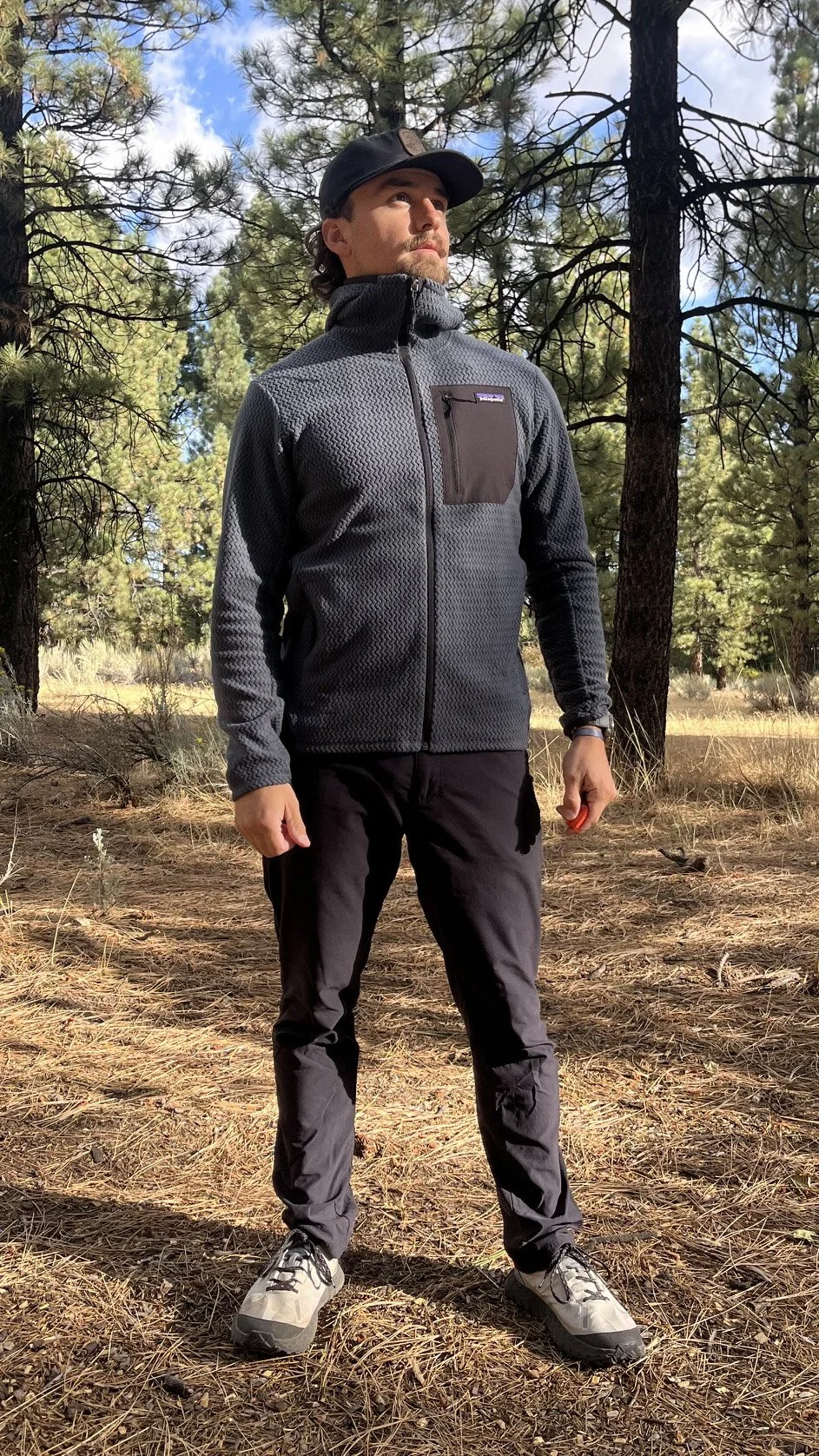
At 343 grams on my scale, the Patagonia was the lightest fleece in this test and warm enough for my winter layering. I would buy the non-hooded version next time. I spent too much of the weekday test leaving this one unzipped to keep the collar off my face.
+What We Like
Lightest fleece I measured
Warm enough over a base layer and beneath a shell at roughly 5°F to 10°F
Trim technical fit works well underneath a shell
Sleeve and torso lengths fit me well
Two hand pockets and a chest pocket
No visible wear after extended use
-What We Don't Like
High collar sits against my lips when fully zipped
Biceps fit slightly tighter than the rest of the upper body
Seemed bulkier packed than the Ortovox and KETL despite weighing less
Tends to hold odor more easily
The Nitty Gritty
Price: $199
Measured weight: 343 g, men's Medium
Fabric: 100% recycled polyester jacquard fleece
Size tested: Men's Medium
Fit: Trim, with slight tightness around my biceps
Storage: Two hand pockets and one chest pocket
Features: Slim Scuba hoodie style that can fit under a helmet
Patagonia currently lists the R1 Air at 369 g.
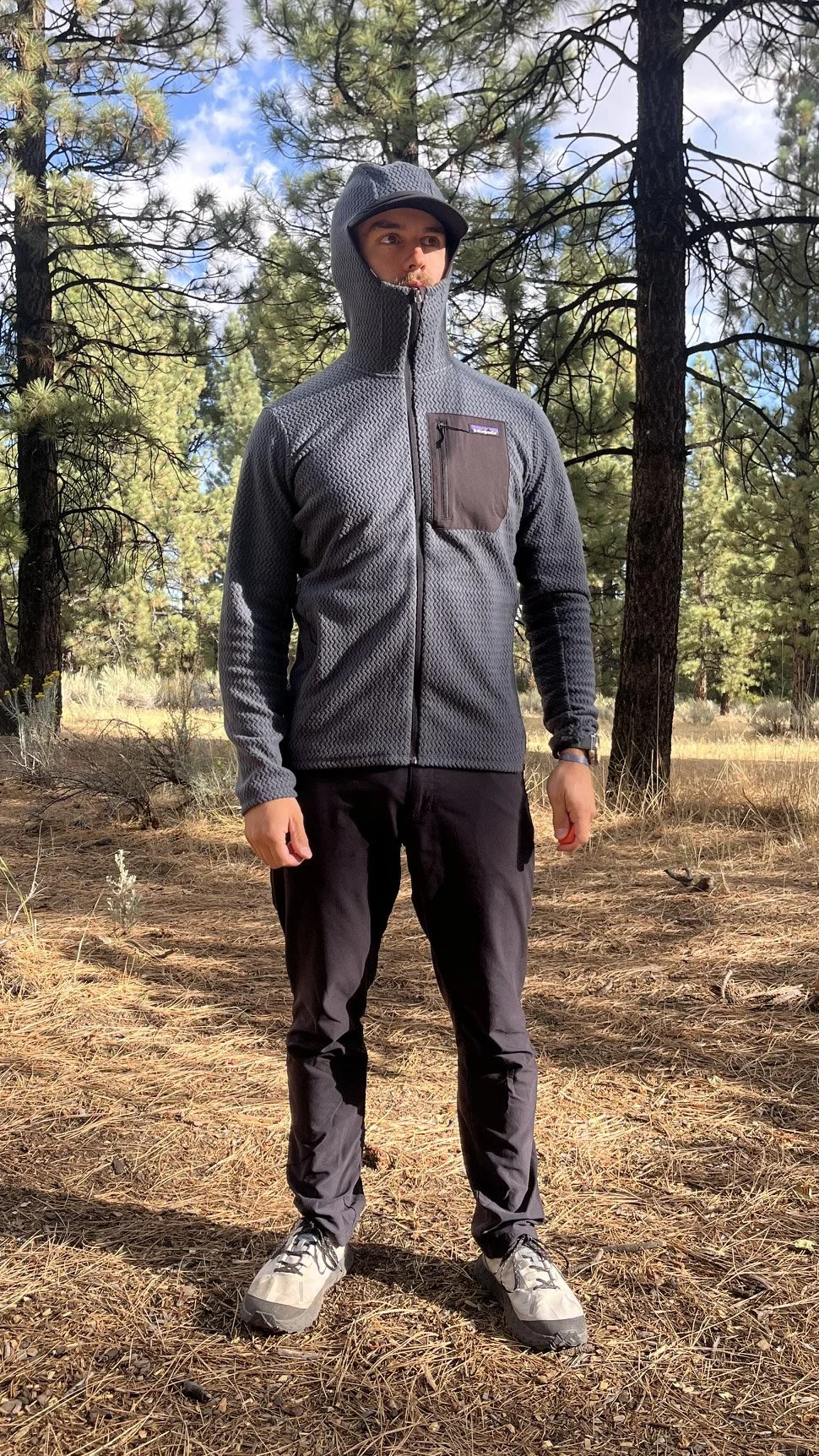
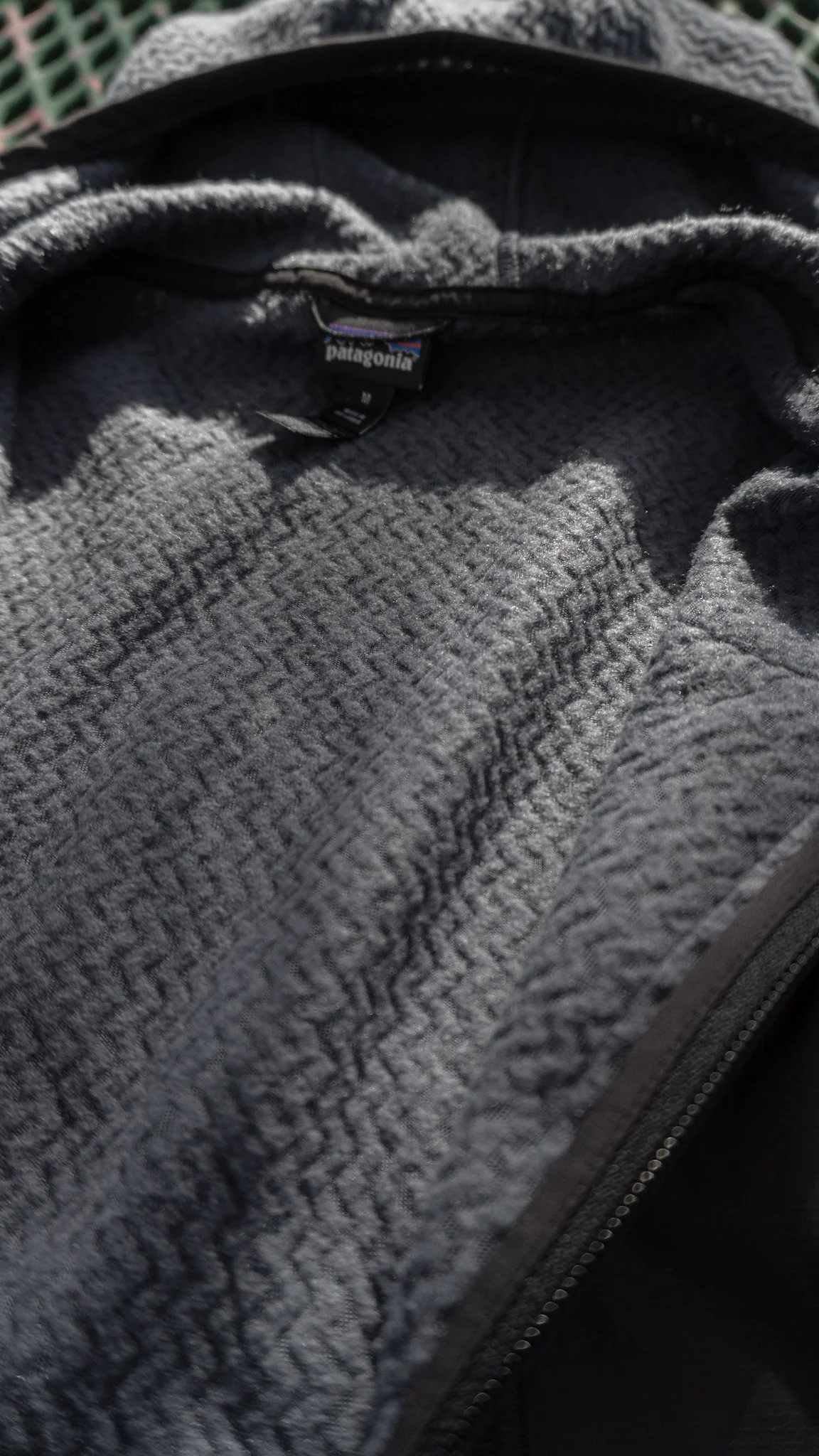
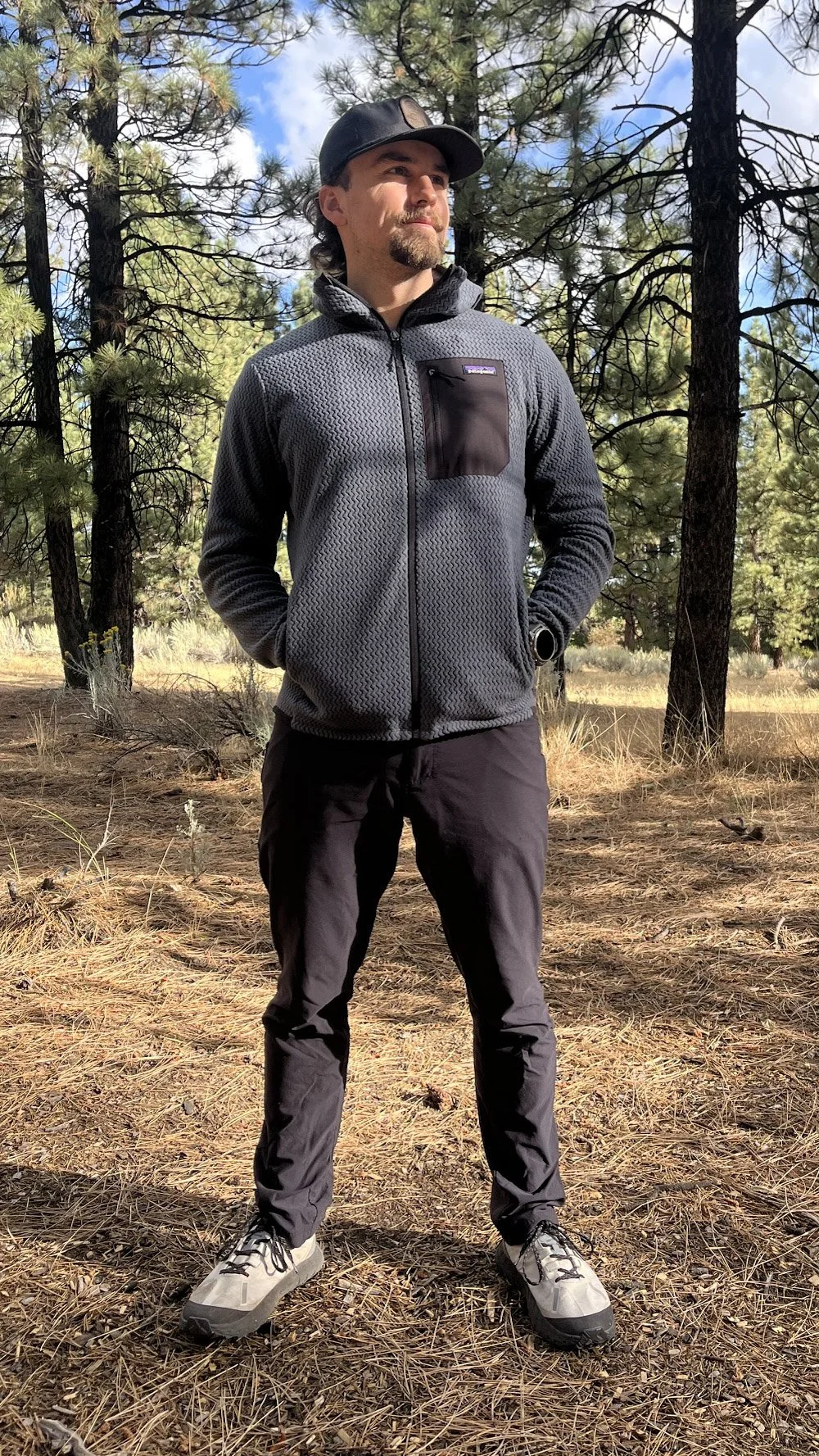
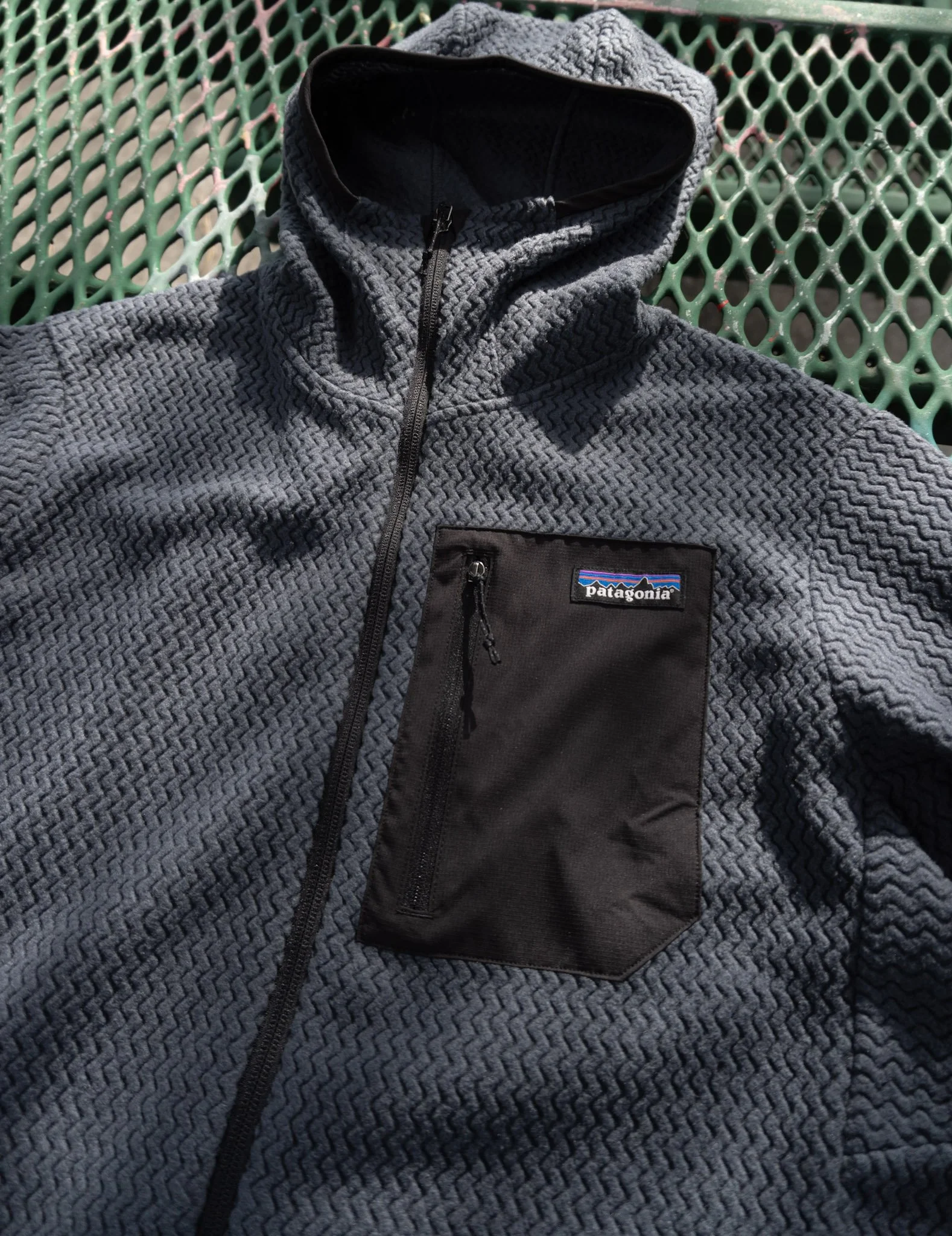
The torso is not too long, the sleeves end where I want them, and I can easily wear a long-sleeve shirt underneath. The only noticeably tight area is around my biceps.
The hood is where I stopped getting along with the R1 Air. Fully zipped, it reaches my lips and the bottom of my nose. It works when I want maximum coverage outside, but during normal daily wear I almost always left the zipper partially open. The Mountain Hardwear's hood stops underneath my chin. The Patagonia still lets me turn my head without blocking my vision, and I can get it over a hat after adjusting it.
I have not seen meaningful pilling, stretching, zipper problems, or fabric wear on the R1 Air.
The R1 Air weighed 343 grams on my scale, compared with 370 grams for the Ortovox and 455 grams for the KETL. Yet both heavier jackets seemed to fold and compress into tighter spaces in a pack.
For skiing and climbing, the high collar makes more sense. I just would not choose that design for an everyday fleece.
Who Should Buy It?
Buy the R1 Air Hoody if weight matters, and you want a warm technical fleece for skiing, climbing, hiking, or layering beneath a shell.
Who Should Skip It?
Skip the hooded version if you want a relaxed everyday jacket. I would buy the non-hooded R1 Air next time.
KETL RLT Merino Thermal Grid Hoodie
Best Overall Fleece
The Verdict
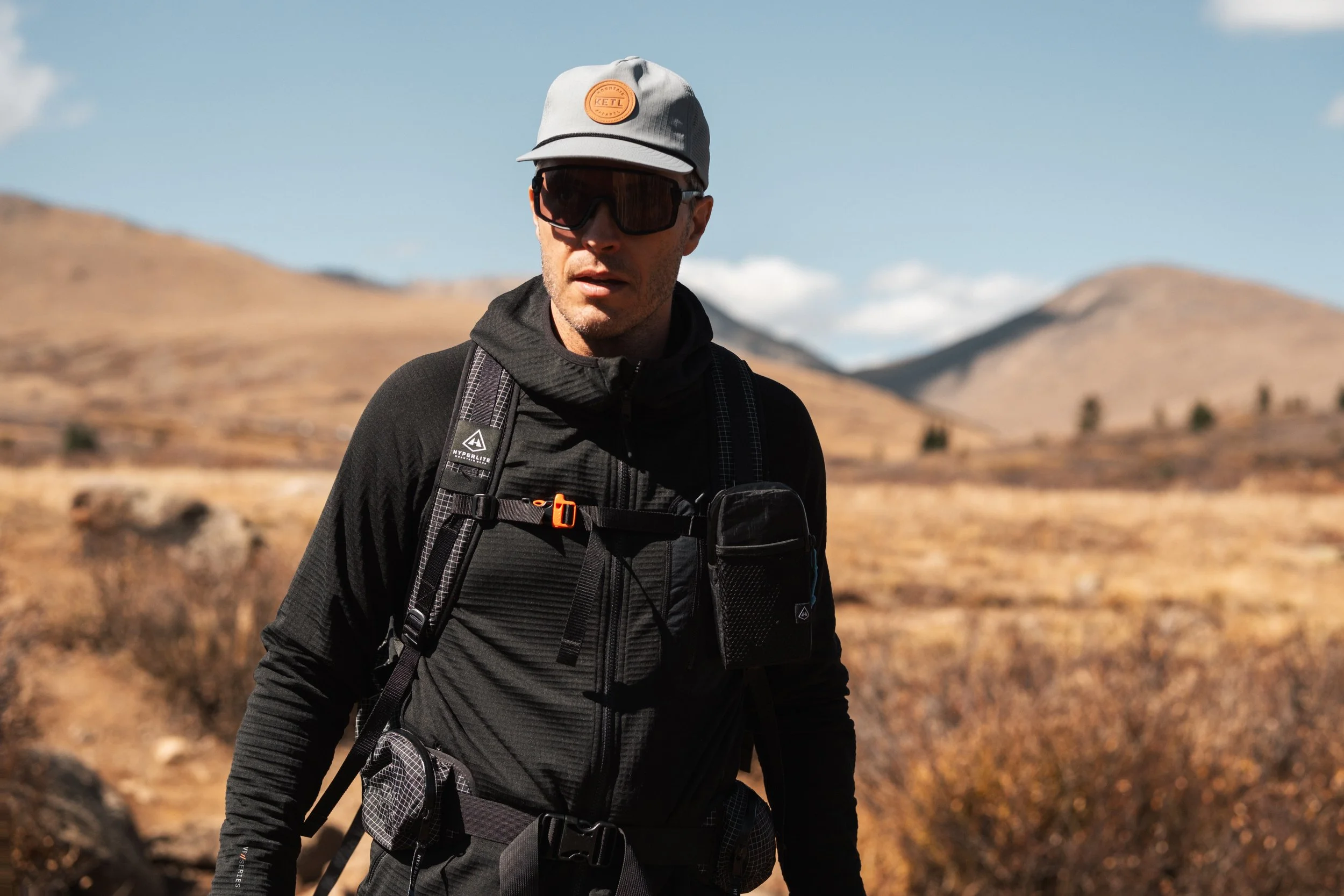
The RLT is the fleece I would keep if I could only own one. It handled cold, active use well enough for ski tours and hikes but still felt normal around town. Above roughly 55°F in direct sun, I wanted something lighter.
+What We Like
Warm without feeling excessively clammy during winter activity
Comfortable against bare skin
Chest pocket works better than the stretchy hand pockets for a phone
No visible fabric or zipper problems after extended use
-What We Don't Like
Too warm for sunny shoulder-season use above roughly 55°F
Hand pockets sag and bounce with a phone
Heavier than the Patagonia and Ortovox
Wind passes through the fabric easily
Long sleeves can bunch around a watch when the thumbholes are not used
The Nitty Gritty
Price: $174
Measured weight: 455 g, men's Medium
KETL-listed weight: 460 g, men's Medium
Fabric: 63% polyester, 25% merino wool, 6% nylon, 6% spandex
Fabric weight: 230 gsm
Size tested: Men's Medium
Fit: Athletic with room through the torso and closer-fitting forearms
Storage: Two zippered hand pockets and one zippered chest pocket
Features: Thumbholes, locking main zipper, ripstop elbow panels
KETL currently lists the RLT at 460 g in a Medium.
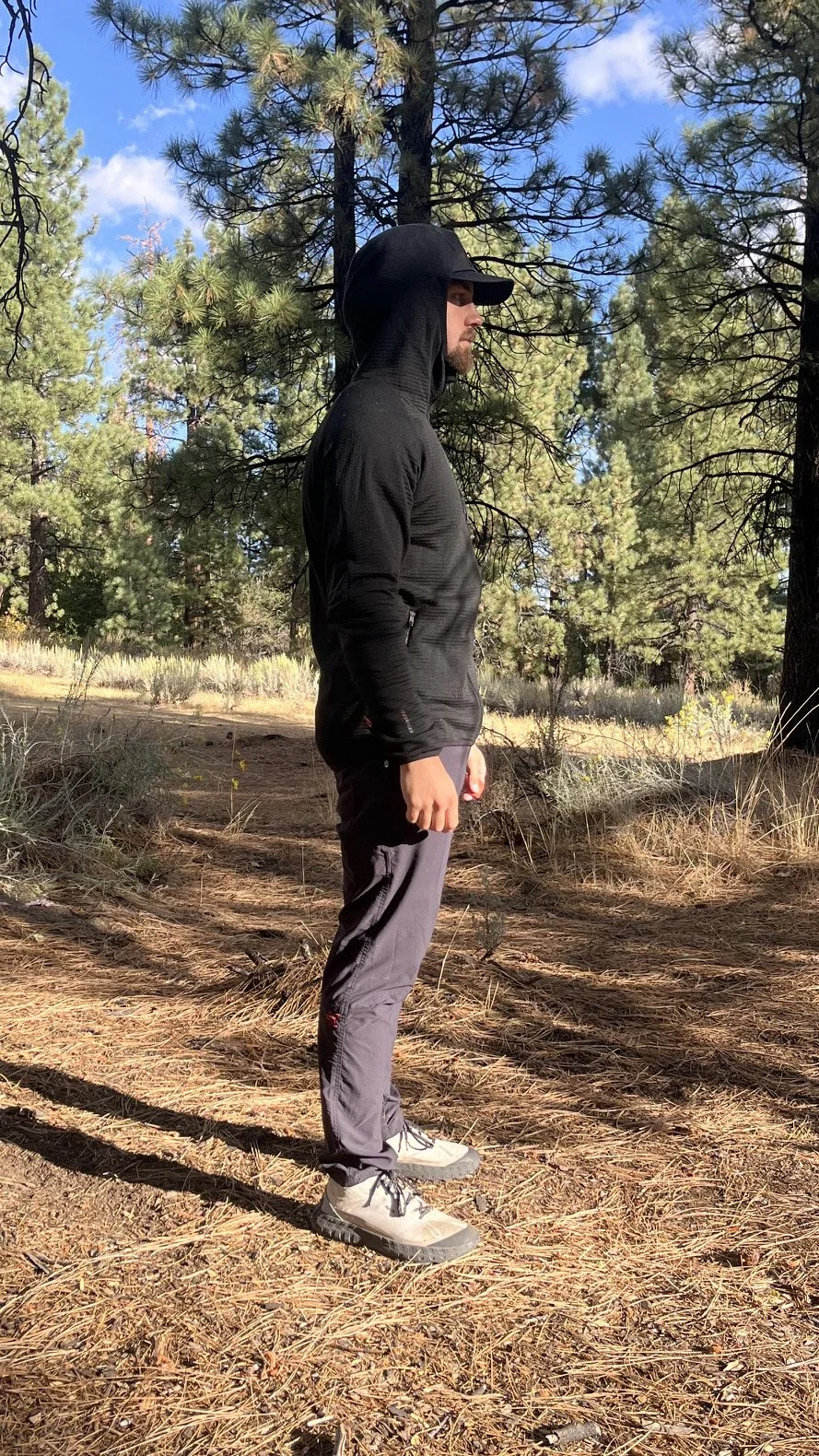
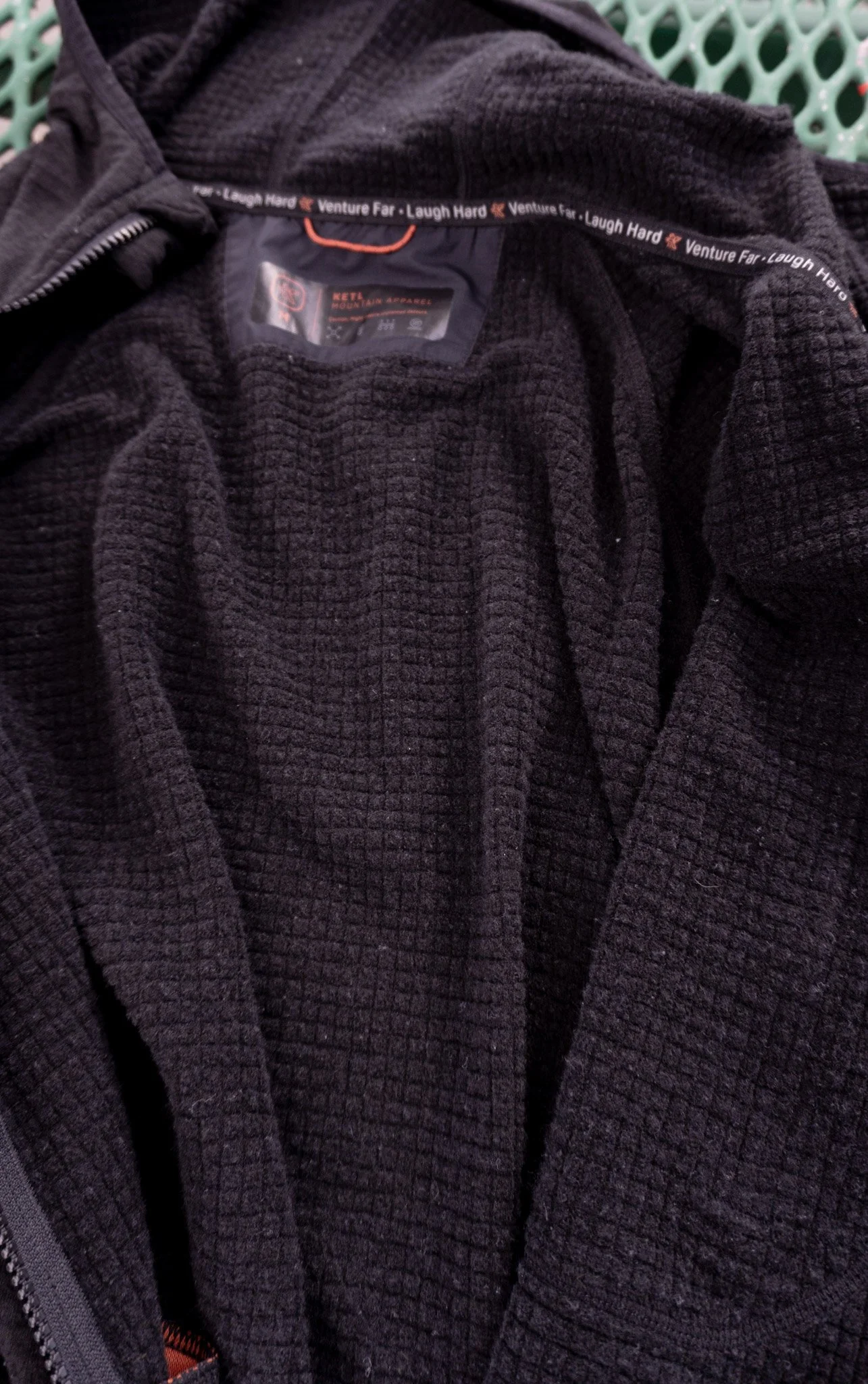
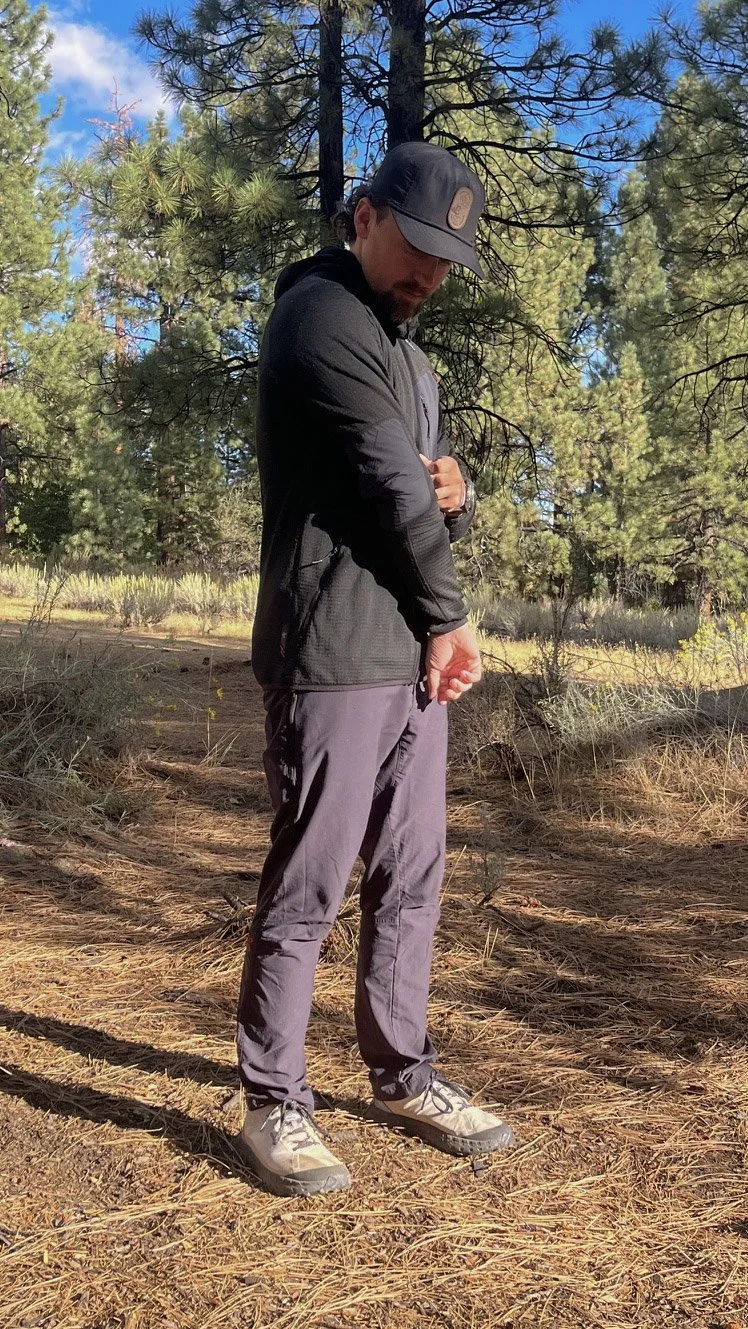
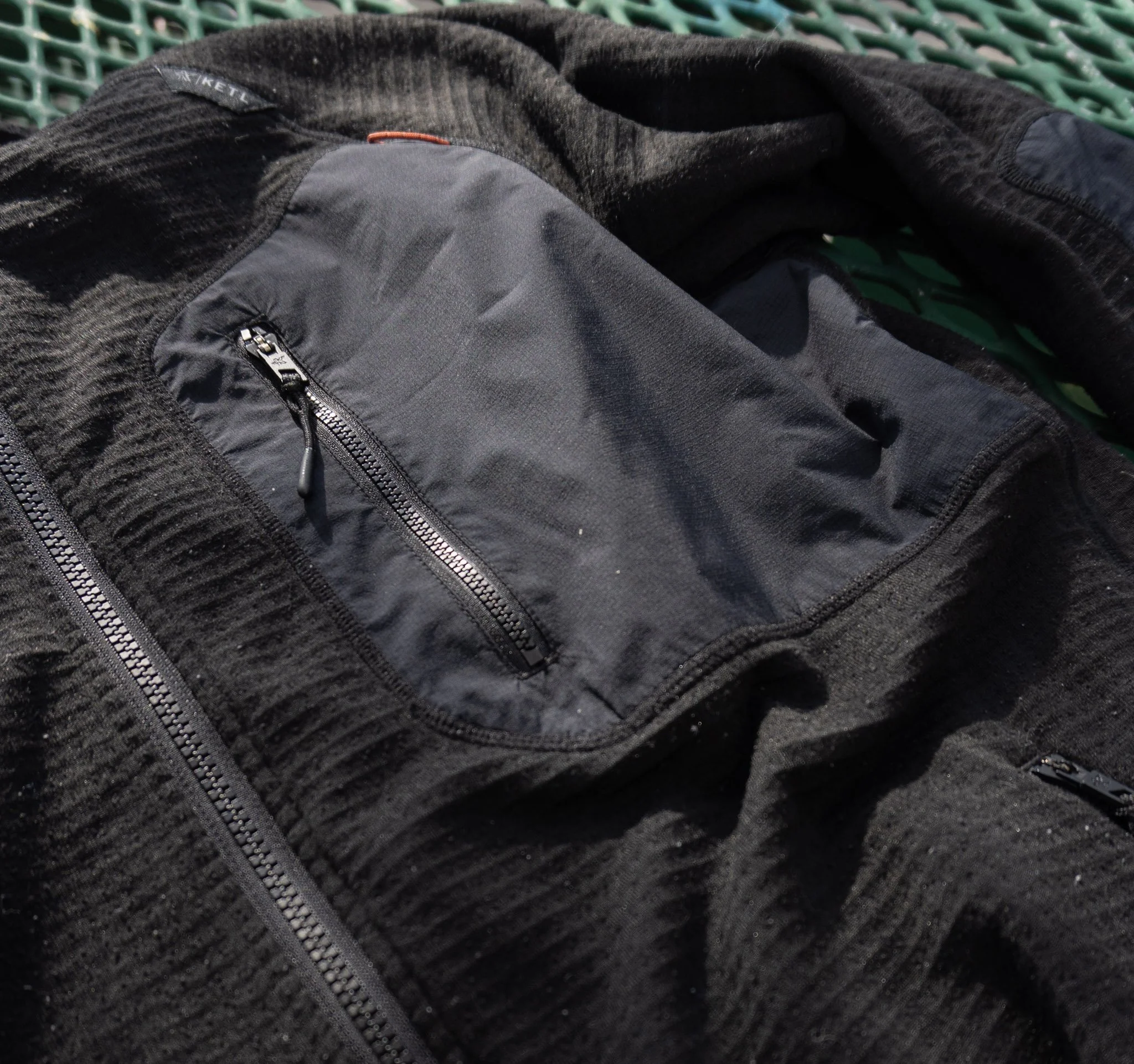
I have already spent roughly nine months testing the RLT on its own, including around 10 backcountry ski tours, roughly 10 hikes, daily wear, and a six-hour hike on Mount Bierstadt with about 2,800 feet of climbing and a roughly 40-pound pack.
During the weekday rotation, the RLT was the fleece I thought about the least. I could hike in it, throw a shell over it, then wear it around town without feeling like I was still dressed for skiing.
On cold ski tours, I wore it over a merino base layer and under an uninsulated shell. Around 5°F, I absolutely needed that shell. As temperatures rose, I could remove the shell and leave the RLT on for the climb.
On a previous back-to-back test, I wore the R1 Air and RLT on the same four-mile loop with roughly 1,500 feet of climbing at 36°F. The R1 felt damp and left me chilled in several areas afterward. The RLT did not give me the same cold, clammy feeling.
That was one DIY comparison on one day, not proof that merino automatically manages moisture better than polyester. But it matches what I continued to notice while wearing the RLT alongside these other fleeces.
After extended use, the fabric, zipper, and reinforced elbows still show no obvious damage. The main annoyance remains the hand pockets. Put a phone in one, and the soft fabric lets it sag and bounce. I use the chest pocket instead.
Who Should Buy It?
Buy the RLT if your week mixes cold-weather hikes and ski days with commuting and errands.
Who Should Skip It?
Skip it if most of your fleece use happens in sunny shoulder-season weather above roughly 55°F.
Mountain Hardwear Polartec Power Grid Full Zip Hoody
Best for Backpacking and Rough Mountain Use
The Verdict:
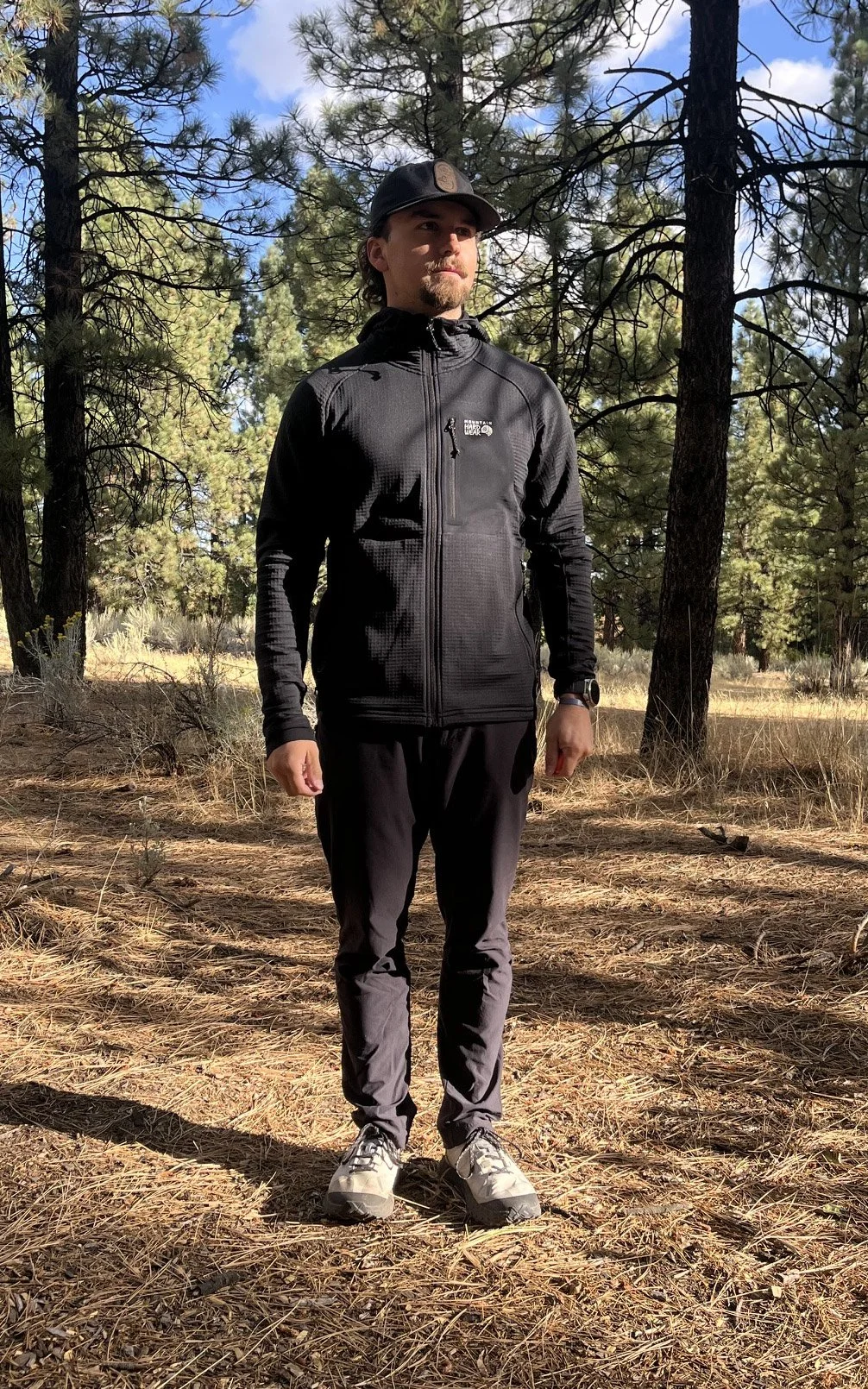
I would take the Mountain Hardwear for big mountain days. I wore it against pack straps, brush, and granite and found no visible damage afterward.
The elastic hem stayed put under a pack better than the First Lite's loose hem. That mattered more to me on those days than the rougher fabric.
+What We Like
No visible damage after pack straps, brush, and granite contact
Thin cuffs avoid a bulky stack of fabric around my wrists
Elastic hem stays in place under a backpack
Hood ends underneath my chin and moves naturally
Seemed to cut slightly more wind than the others in my use
Easier to keep wearing at 40°F to 55°F than the KETL, Patagonia, and Ortovox
-What We Don't Like
Fabric feels rougher than the rest
Less stretchy than the other fleeces
Heavier than the Patagonia and Ortovox
The Nitty Gritty
Price: $190
Measured weight: 438 g, men's Medium
Fabric: 60% recycled polyester, 33% polyester, 7% elastane
Size tested: Men's Medium
Fit: Athletic with an elastic hem
Storage: Two zippered hand pockets and one zippered chest pocket
Features: Thumbholes, stretch-knit cuff panels, three-piece scuba hood
Mountain Hardwear currently lists the Power Grid at approximately 427 g in a Medium.
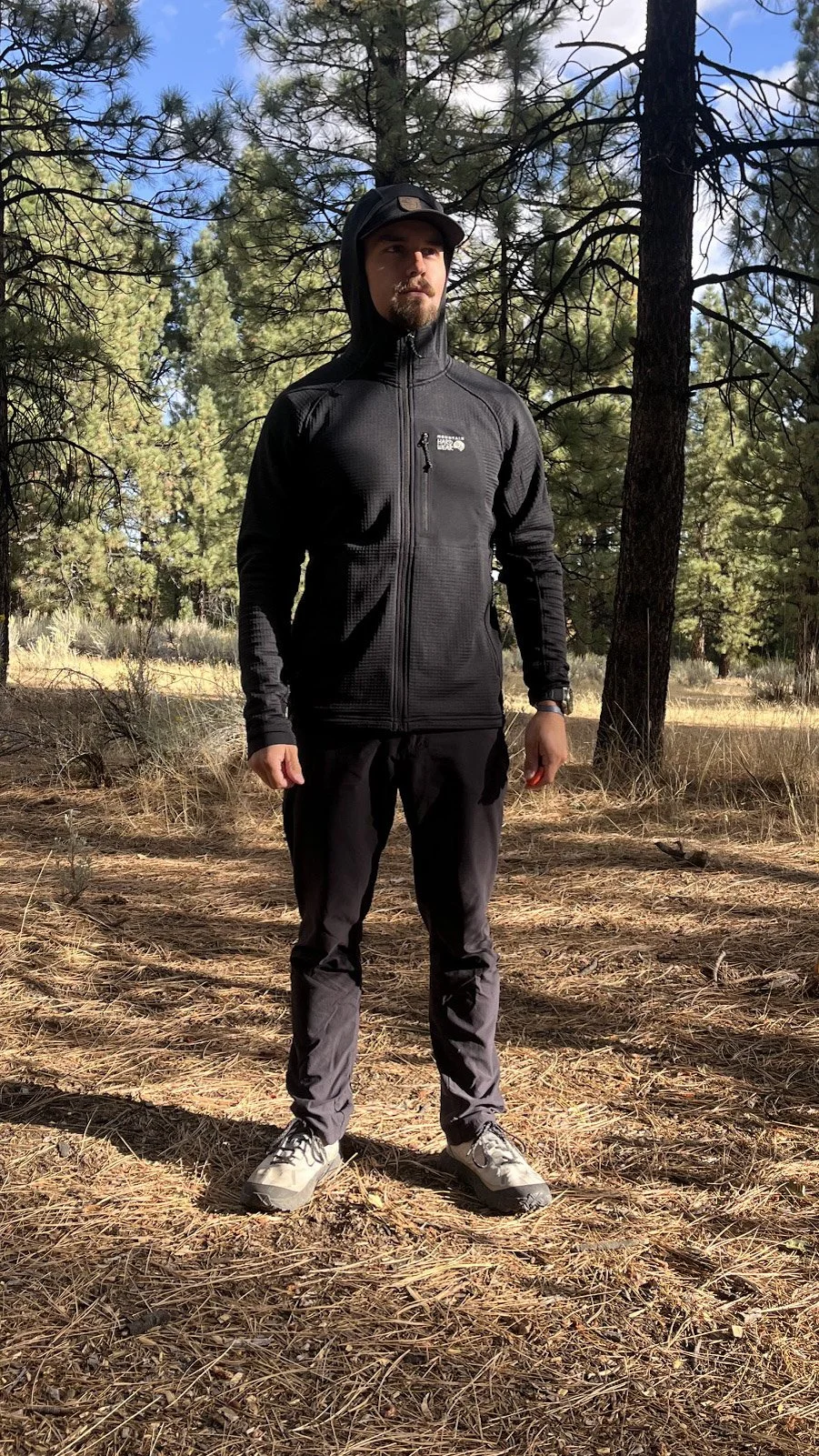
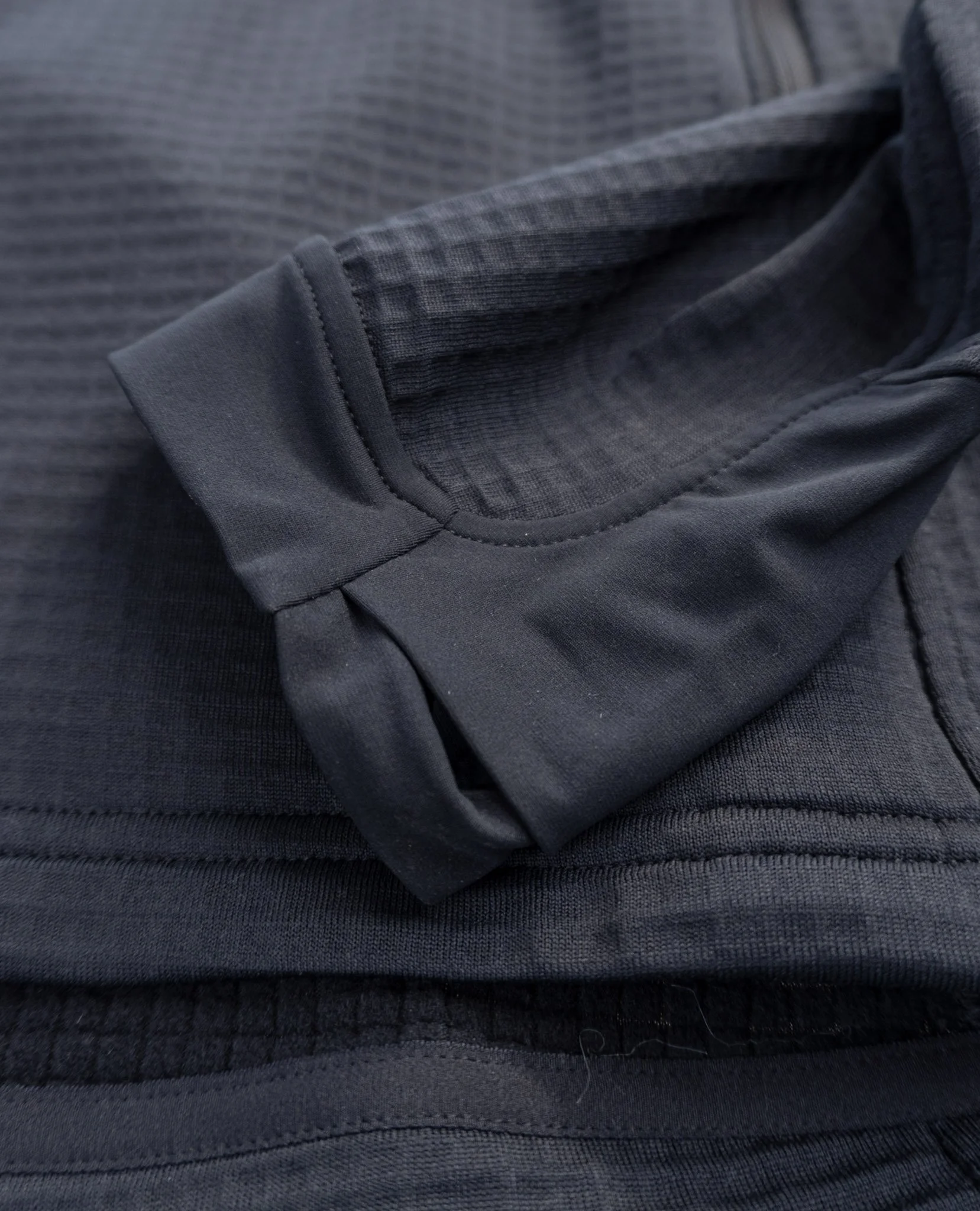
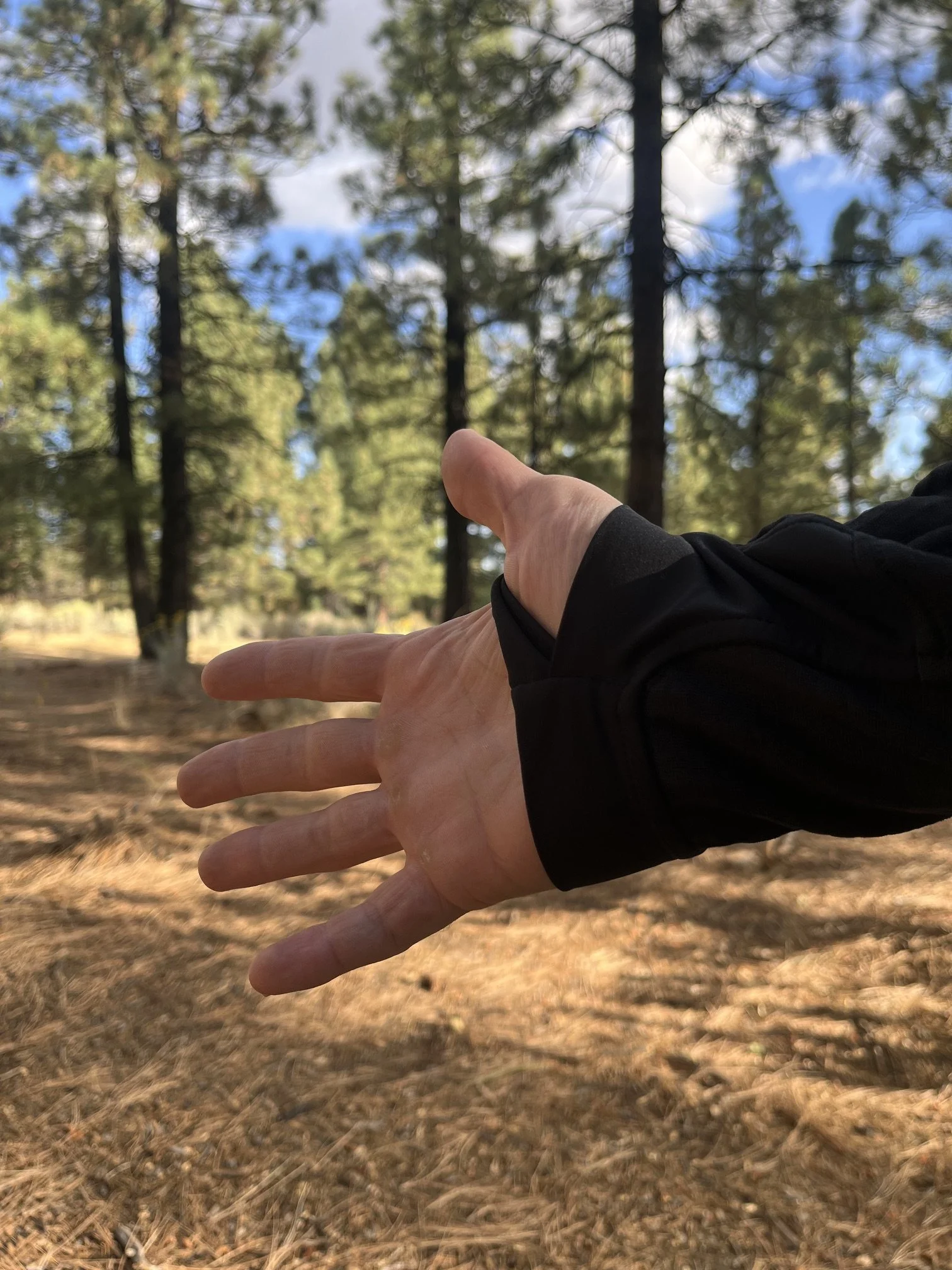
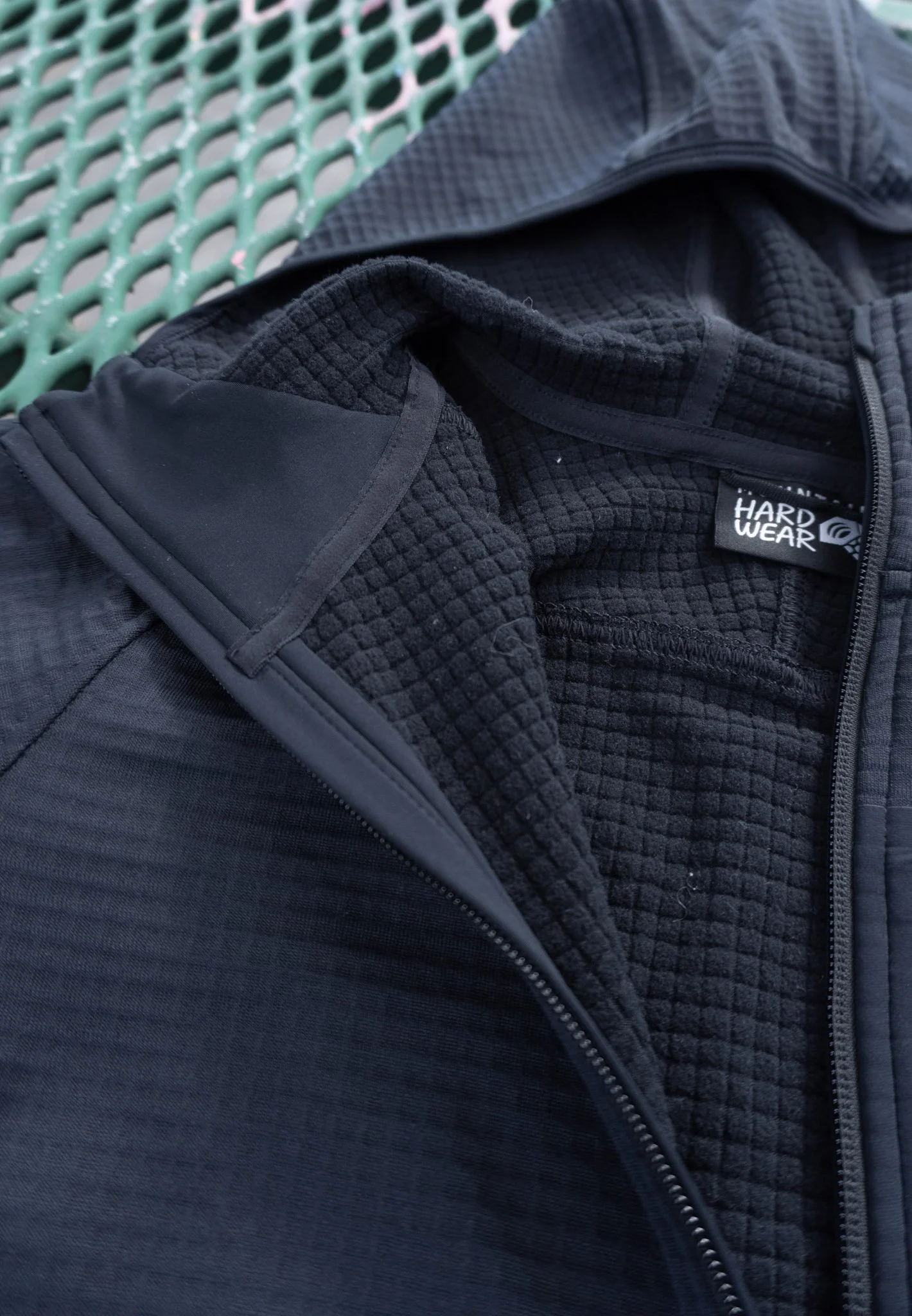
The torso and sleeves fit me without excess length, and raising my arms does not pull the jacket halfway up my torso. The elastic hem stayed put under a pack better than the First Lite's loose hem. The cuffs are my favorite here. They are thin and soft without a bulky stack of fabric around my wrist, and the thumbholes feel like part of the cuff.
The hood stops underneath my chin instead of covering my lips like the Patagonia. It follows my head without getting in the way of my vision. But the reason it earned this category is how it held up to abrasion.
I wore it with a pack, pushed against brush, and scraped it against granite. Afterward, I could not find visible damage from any of it. Patagonia and KETL have also held up well, but the Mountain Hardwear is the jacket that made me least worried about what I was rubbing against.
The fabric feels rougher and stretches less freely than the others.
I also liked it in warmer weather. Around 40°F to 55°F, the Mountain Hardwear and First Lite were easier for me to keep wearing than the warmer KETL, Patagonia, and Ortovox. It also seemed to stop slightly more wind than the rest, although none provided enough wind resistance to replace a shell.
Who Should Buy It?
Buy the Mountain Hardwear when you expect pack rub, granite, and brush.
Who Should Skip It?
Skip it if softness against bare skin is your first priority.
First Lite ThermaGrid Merino Wool Hoody
Best for Shoulder-Season Casual Wear
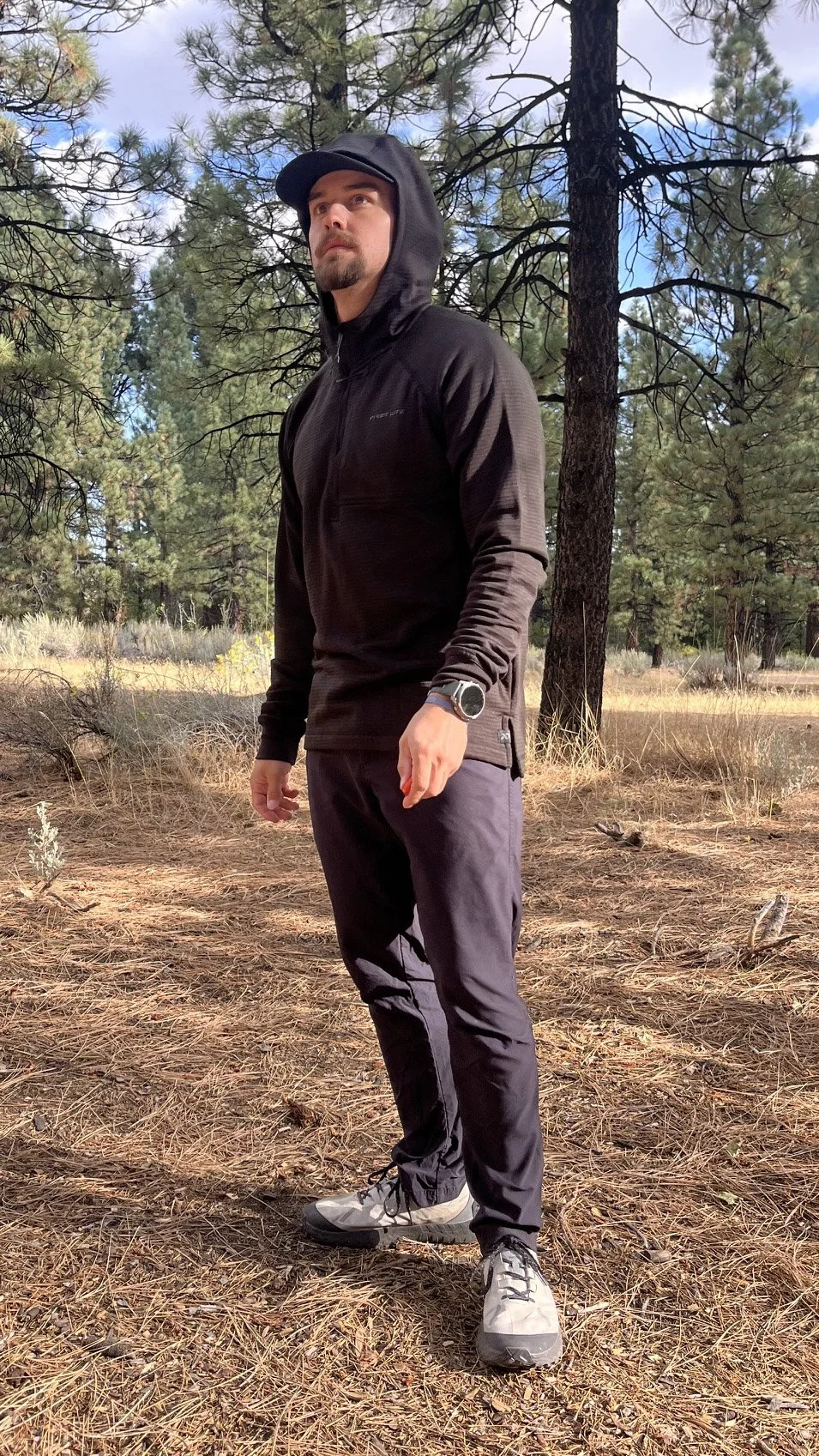
The Verdict:
The First Lite was the fleece I enjoyed most once temperatures reached roughly 40°F to 55°F. I would buy it for shoulder-season errands and easier hikes.
It stayed comfortable through full-day wear without feeling as clammy as the warmer fleeces.
I would not buy it for long days under a loaded pack. The hem rode up more than the Mountain Hardwear's, and the chest was already pilling.
+What We Like
Comfortable in roughly 40°F to 55°F shoulder-season weather
Good airflow during higher-output use
Stayed comfortable through full-day wear without feeling as clammy as the warmer fleeces
Easy to layer over a long-sleeve shirt
Lowest current price in the group
-What We Don't Like
No hand pockets
Loose hem rides up more underneath a backpack
Thick cuffs bunch noticeably around a watch
Some pilling has developed on the chest
Long torso and sleeves fit larger than the rest
The Nitty Gritty
Price: $140
Measured weight: 457 g, men's Medium
First Lite-listed weight: 10.5 oz / approximately 298 g
Fabric: 56% merino wool, 40% polyester, 4% spandex
Fabric weight: 260 gsm
Size tested: Men's Medium
Fit during testing: Long torso and sleeves with closer-fitting arms
Storage: One chest pocket, no hand pockets
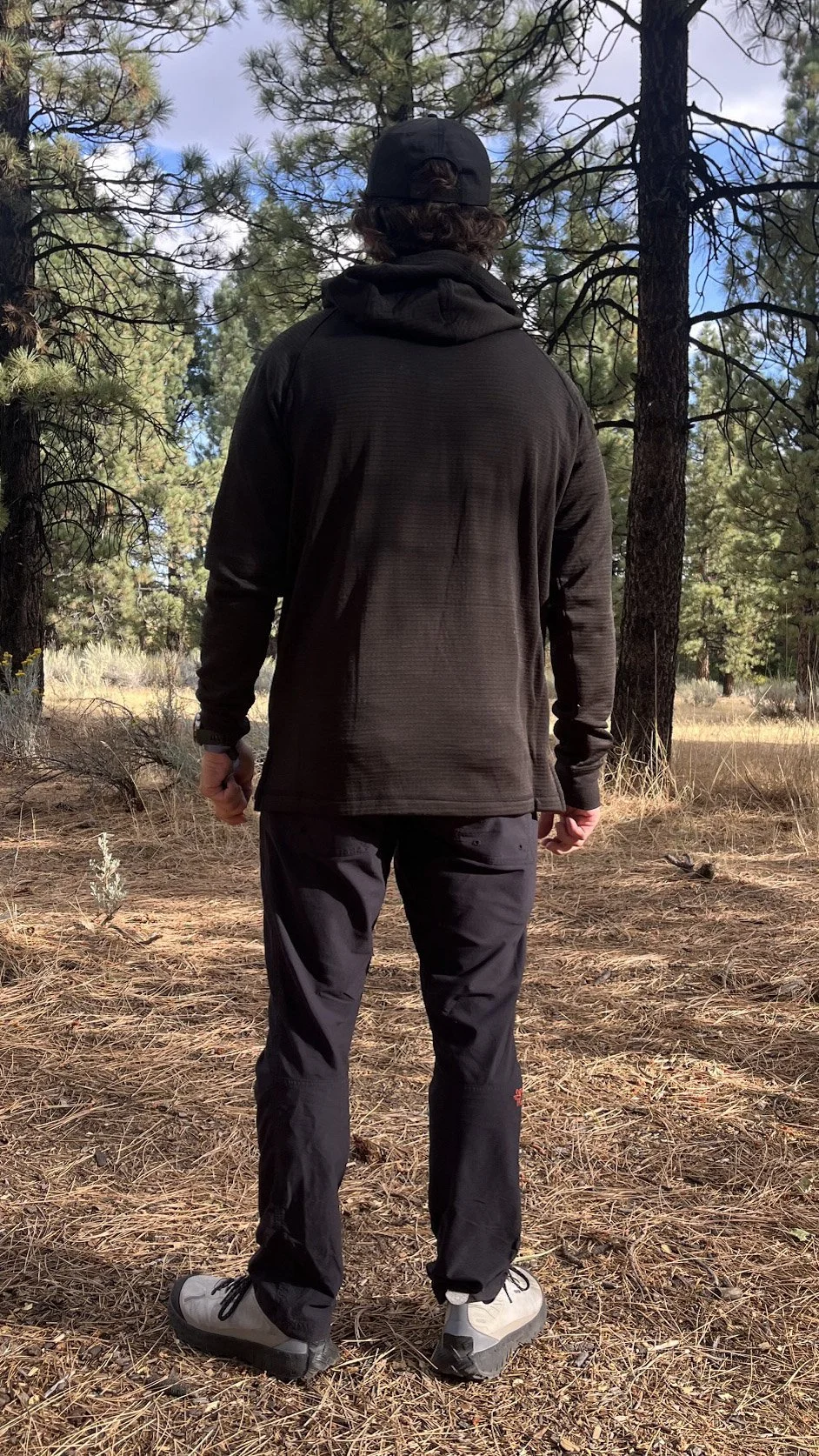
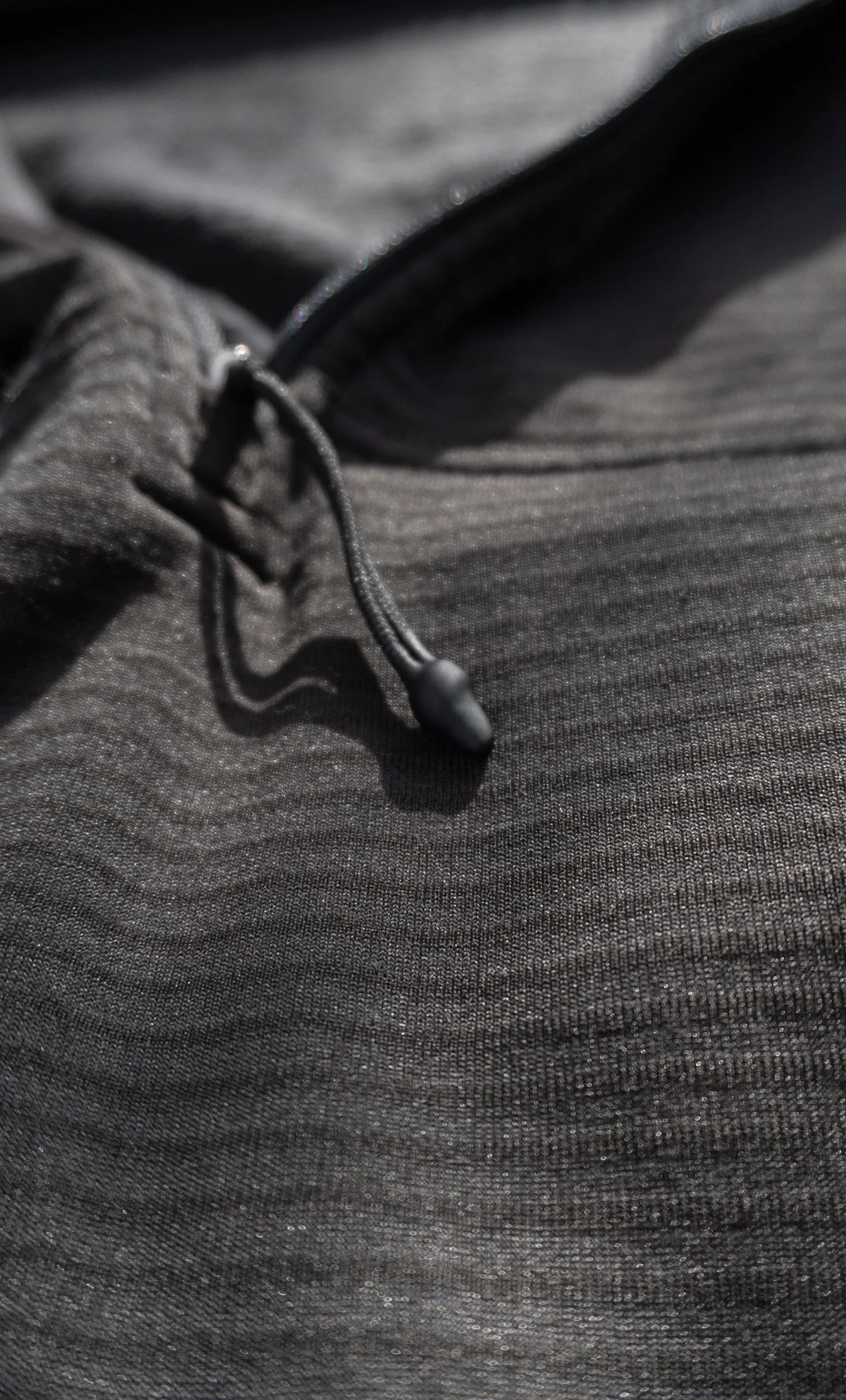
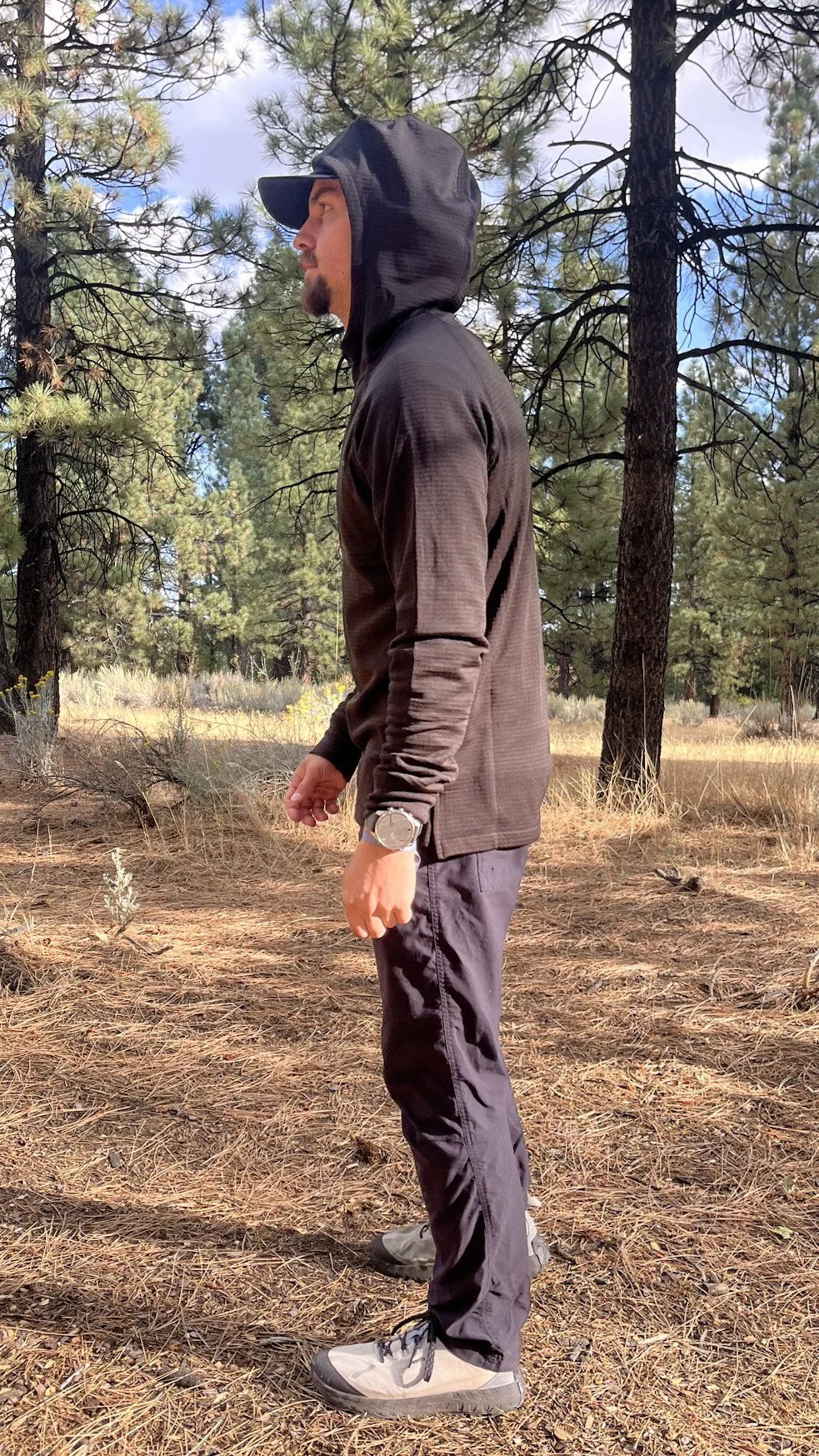
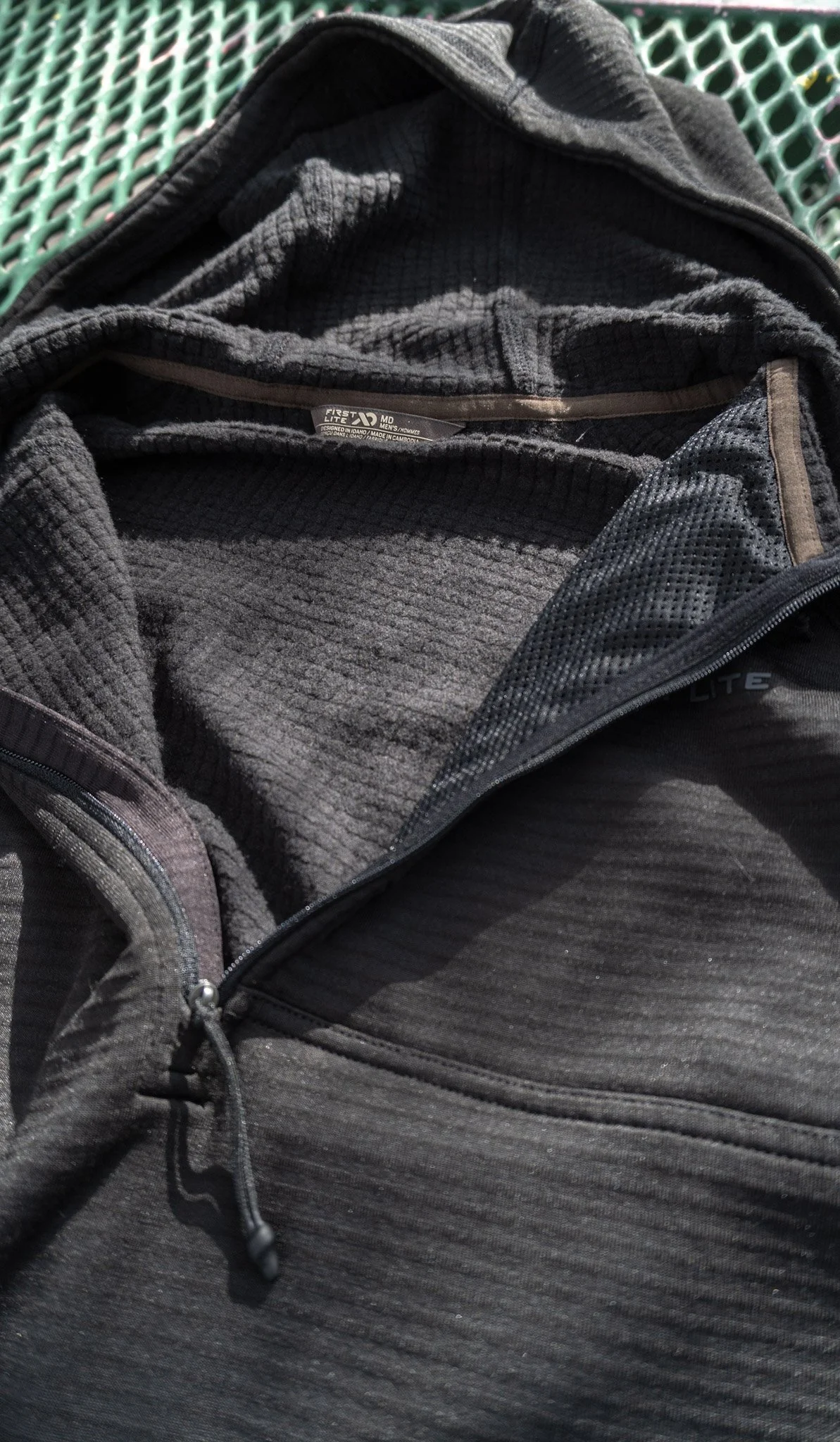
Around 40°F to 55°F, it stayed comfortable when some of the warmer fleeces started feeling like too much. During higher-output use, airflow was good, sweat buildup was less noticeable, and the fabric did not leave me feeling as clammy throughout the day.
The Medium has a noticeably longer torso and sleeves. The arms themselves still fit relatively close, so it does not simply feel oversized, but there is more fabric to deal with. That makes layering underneath easy.
The cuffs are comfortable on their own but thick enough that they bunch significantly around my watch.
The loose hem bothered me more. Under a backpack, the First Lite rode up more than the Mountain Hardwear, whose elastic hem stayed put. I did not notice the same annoyance walking around town.
It has one chest pocket and no hand pockets. For a fleece I otherwise liked around town, I missed having somewhere to put my hands.
Mine has already developed some pilling around the chest. I would still take it on normal hikes, but I would not buy it for repeated rubbing against granite, brush, and loaded packs.
One specification did not line up with my test jacket. First Lite lists the ThermaGrid at 10.5 ounces, but my men's Medium weighed 458 grams on my scale. I re-weighed the jacket twice and got the same 457-gram result. I can't explain the difference, so I am listing both numbers rather than treating First Lite's claimed weight as the weight of the jacket I tested.
Who Should Buy It?
Buy the First Lite if you want a comfortable merino-heavy fleece for shoulder-season errands, travel, everyday wear, and lighter hikes around 40°F to 55°F.
Who Should Skip It?
Skip it for long days beneath a loaded pack or regular contact with granite and brush. I would take the Mountain Hardwear for that.
Which Fleece Jacket Should You Buy?
If I could keep only one, I would keep the KETL RLT. The Patagonia weighs less, the Mountain Hardwear made me less worried about rock and brush, and the Ortovox fits closer beneath a ski shell, but during the weekday rotation, the KETL was the fleece I had to work around the least. If skiing is your main priority, I would take the Ortovox. If weight matters most, the Patagonia R1 Air was the lightest at 343 grams on my scale, although the Ortovox and KETL both seemed to pack down smaller. For backpacking and rough mountain use, I would take the Mountain Hardwear, which showed no visible damage after rubbing against pack straps, brush, and granite. The First Lite makes the most sense for errands and easier hikes around 40°F to 55°F, where it felt less clammy than the warmer fleeces. After living in all five, the biggest difference was not a spec. It was how often each fleece annoyed me enough to wish I were wearing one of the others.