

KETL RockyLoft Down Jacket Review: A Tougher Everyday Down Jacket
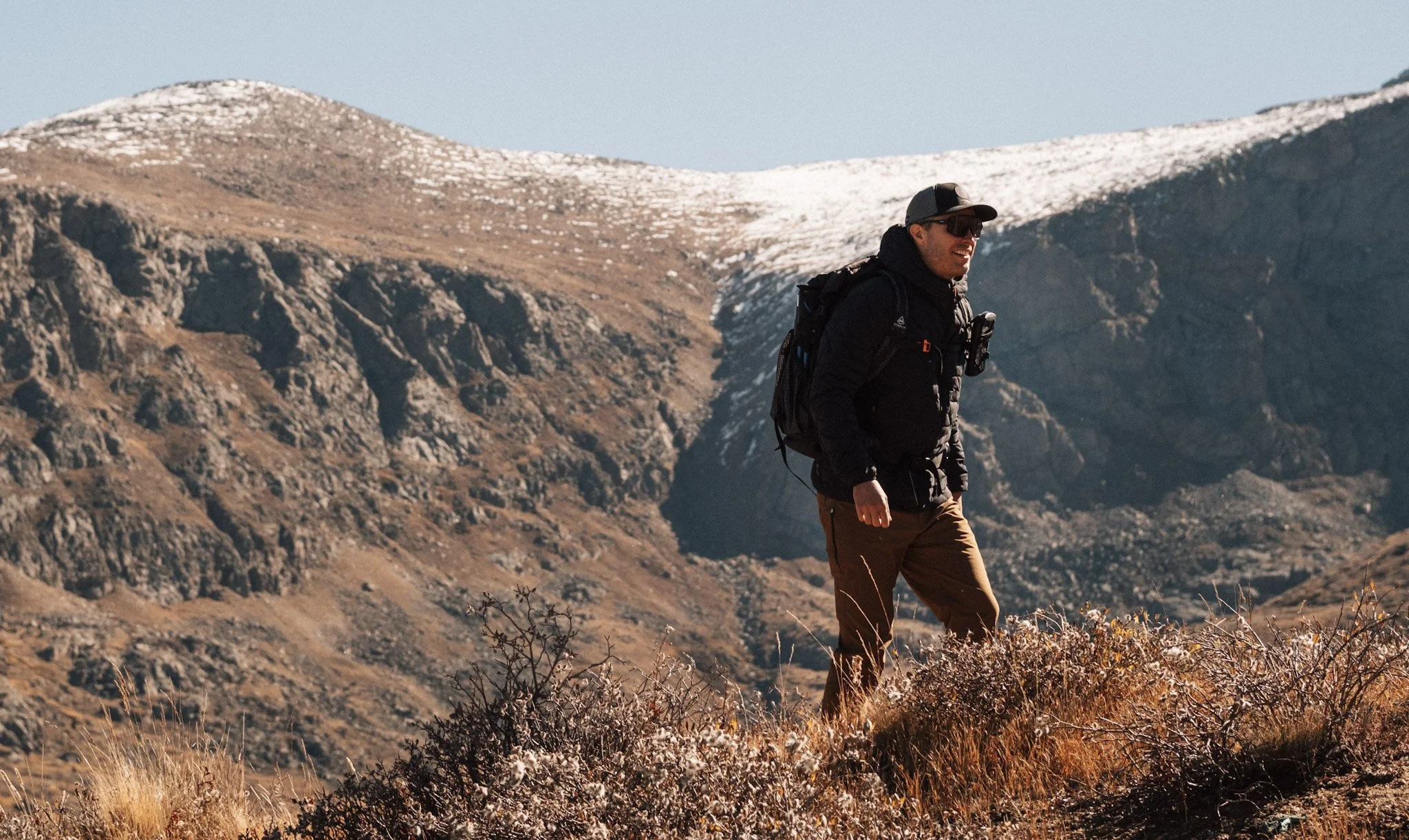
I wore the KETL RockyLoft through a Reno–Tahoe winter, mostly for everyday use, with skiing, climbing, and chores mixed in. After all of it, I haven’t found any noticeable damage.

The Verdict
About 75 percent of my use was everyday wear, but I also climbed, hiked, and skied in it. My Large weighs 586 grams, but that never bothered me during nearly daily wear in December and January. I would buy it again at $229. My main complaint is the fit at my wrists: sizing up gave me room to layer but left a small cuff gap that lets in a draft.
+ What We Like
No visible damage after three climbing outings with granite contact and more than an hour rubbing against firewood
Warm on sub-20°F resort days over merino and beneath a shell, including chairlift rides
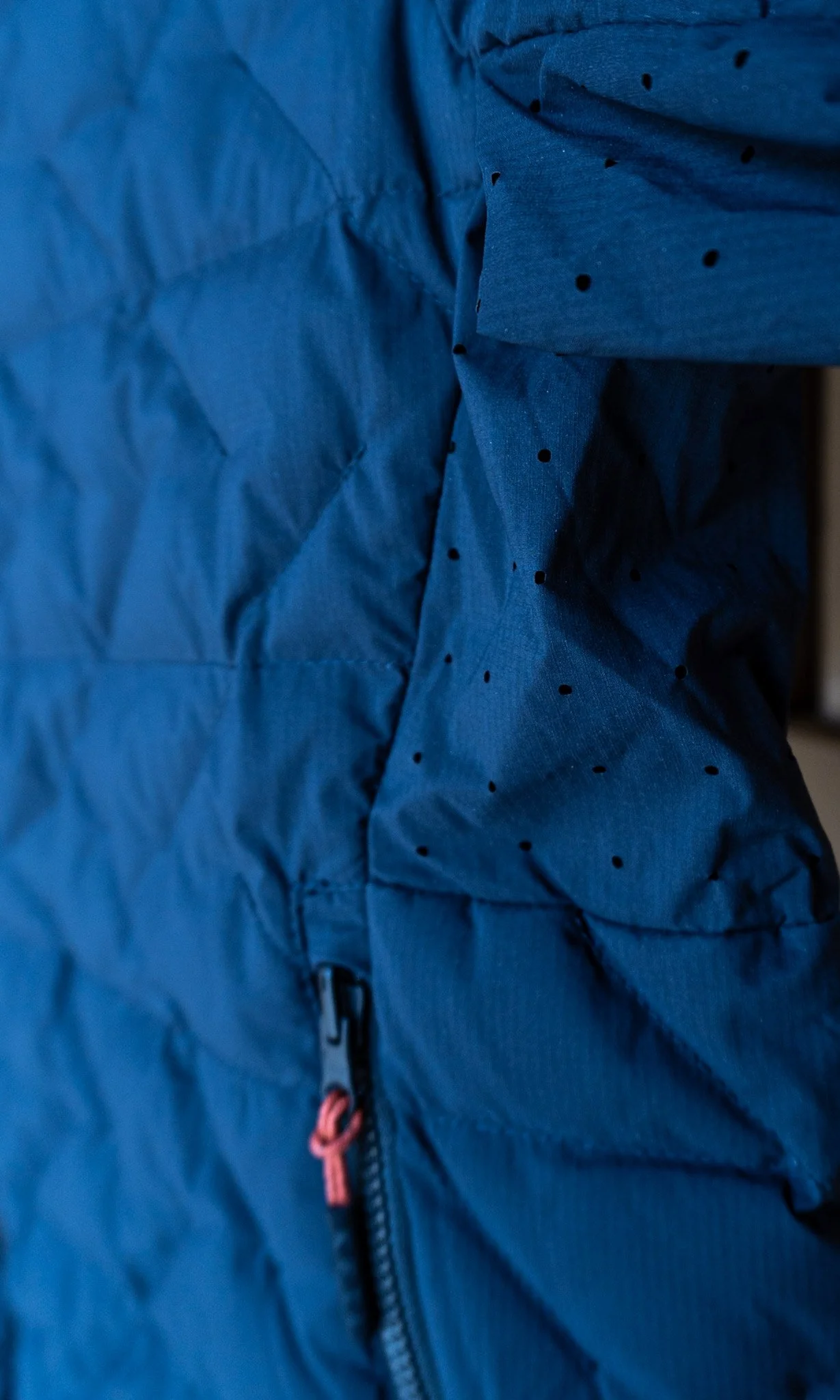
Welcome airflow through the underarm vents while skinning uphill
− What We Don’t Like
Sizing up left a small cuff gap that let in a draft without gloves
Nitty Gritty
Size tested: Men’s Large
Adventure Worthy measured weight: 586 g
KETL-listed weight: 568 g in Large
KETL-listed insulation: 800-fill-power down, 137 g fill weight in Large
KETL-listed fill ratio: 90% down / 10% feathers
KETL-listed shell: 100% recycled nylon
KETL-listed lining: 100% Nylon 66
KETL-listed fabric weight: 52 gsm
Weather treatment: PFAS-free DWR
Storage: Two fleece-lined zippered hand pockets and one internal zippered chest pocket
Features: Laser-perforated underarm vents, adjustable hem, packs into its left front pocket
Price: $229 at the time of writing
Specifications reflect KETL’s current listing, checked September 4, 2026. KETL confirmed to Adventure Worthy that the current RockyLoft is unchanged in construction from the jacket I tested; the only update is new color options.
Disclosure: Adventure Worthy is affiliated with KETL Mountain Apparel. The RLT was purchased at a discounted rate. This is not an affiliate link. KETL did not review, edit, or approve this article.
Tested In
Location: Reno–Tahoe, including hiking around Mount Rose and Galena
Main testing period: Late October through early March, wearing it when conditions called for it and nearly every day in December and January
Everyday use: Commuting, errands, travel, and outdoor chores, accounting for roughly 75 percent of my wear
Outdoor use: Five resort ski days, roughly five to seven backcountry ski outings, three climbing outings, and hiking
Temperatures: Approximately 8–45°F for winter use, plus a hike that warmed to about 50°F
Typical layers: A light long-sleeve shirt or merino base layer; a shell for stormy ski days and descents
Not tested: Hood compatibility with a helmet, sustained rain, or wet-snow performance
Fit Notes
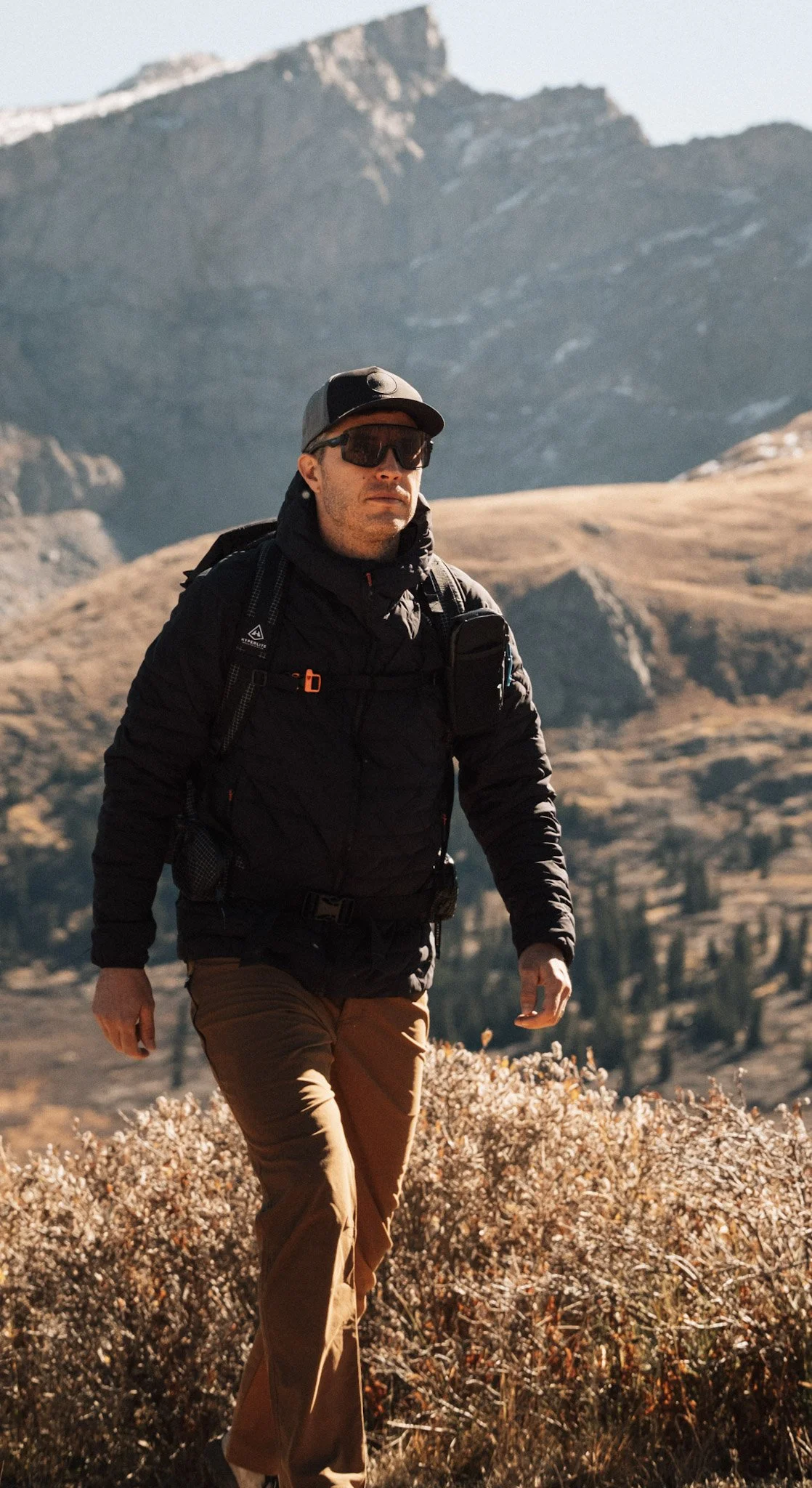
I’m 5'9", weigh 170 pounds, and have a 41-inch chest. I’m pretty firmly between sizes in the RockyLoft. I can wear the Medium, but it feels tight through my chest and armpits when I move. If I were buying it only for casual wear, I would probably choose the Medium. For layering and outdoor use, I went with the Large.
The Large fits me pretty darn well. The thickest combination I wore underneath was a lightweight sweatshirt over a thin long-sleeve shirt. I could tell the jacket fit tighter, but it didn’t restrict movement enough to become annoying. The hem is slightly longer than on most of my Medium jackets, which I came to appreciate. During outdoor chores and climbing, the length really helped with staying covered.
The trade-off I found was at my wrists. The Large’s cuffs leave a slight gap, enough to feel a draft outside. They aren’t loose enough to catch on anything, but they don’t sit against my wrists or move with them the way I’d prefer my jackets to. It’s a nitpicky complaint, but one I kept noticing. With gloves on, I didn’t notice the draft.
The hood fits closely all around my head and turns with me without blocking my peripheral vision. I didn’t wear it over or under a helmet, so I can’t speak to helmet compatibility.
A Down Jacket I Didn’t Have to Baby
The shell doesn’t have the thin, almost delicate feel I associate with lightweight down jackets. I climbed in the RockyLoft three times, repeatedly rubbing the chest and arms against granite while lead climbing. After each outing, I couldn’t find noticeable scuffs or tears.
I also wore it while cutting firewood during house chores. For more than an hour, the jacket rubbed repeatedly against wood and wood chips, with no visible damage afterward. The jacket never contacted the saw blade. Normally, I wouldn’t choose a down jacket for that chore, but with the RockyLoft I didn’t think twice.
After the winter, I haven’t noticed leaking feathers or popped stitching, and the zipper still runs smoothly.
Warmth for Everyday Winter Wear
I wore it in temperatures from about 8°F to 45°F, usually over a light long-sleeve shirt or merino base layer. Around 20°F, I wanted a warmer base layer when standing still. Below roughly 15°F, I preferred to keep moving. Those colder outings aren’t a standing-around temperature rating.
Above about 45°F with a normal long-sleeve shirt, the RockyLoft became too warm for everyday use. On a hike around Mount Rose and Galena, I started comfortably near 35°F over merino. Once the sun came up and temperatures reached about 50°F, I was too warm, even though I had reached flatter terrain.
I packed it into its own pocket once temperatures climbed and didn’t think much about the extra weight in my pack.
Once temperatures get much above 45°F, I usually reach for my lighter Arc’teryx Atom SL instead.
Skiing
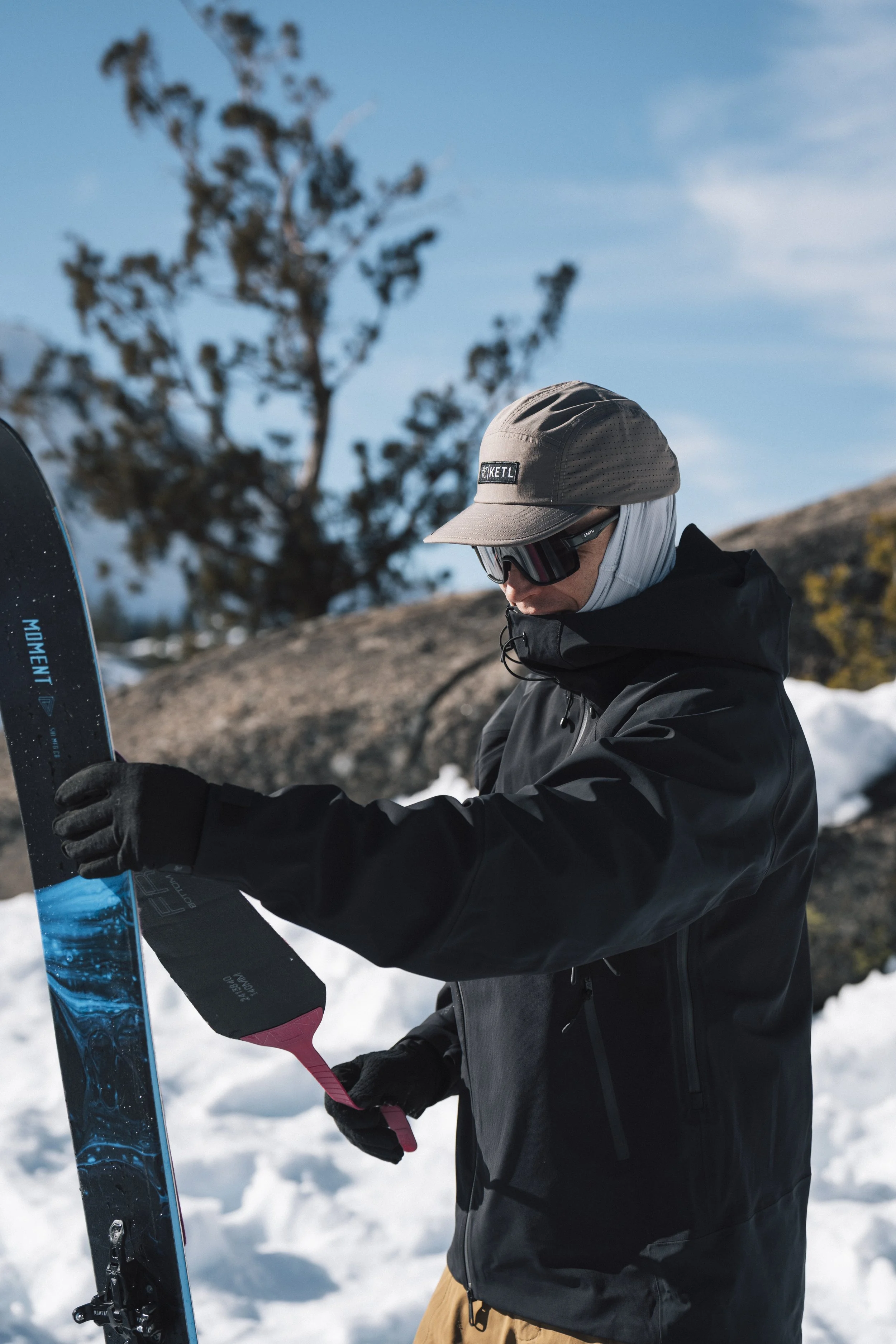
At the resort, I wore the RockyLoft as a midlayer on sub-20°F days with high winds and heavy snow, usually over merino and beneath a shell. When it was nuking outside, that combination kept me warm without feeling overly bulky.
I spent roughly 45 minutes skinning uphill in a storm below 20°F, wearing the RockyLoft over merino without a shell. The snow was dry and powdery. A weather station reported gusts around 50 mph; I wasn’t measuring wind at my exact position.
The vents were where I noticed the cold air most. While climbing, that airflow was welcome, and I didn’t feel noticeably damp during the climb.
We wanted to get off the hill quickly because of the storm, so we stopped for only a few minutes at the top. I stayed warm while getting ready, then put my shell on for the descent.
I didn’t notice obvious wetting out or cold spots during those 45 minutes. I’ve also seen water bead on the outer fabric, but the storm example was dry snow. It doesn’t establish how the jacket handles sustained rain or wet snow, and I wouldn’t use it as a reason to leave my shell behind.
Pockets That Hold More Than Gloves
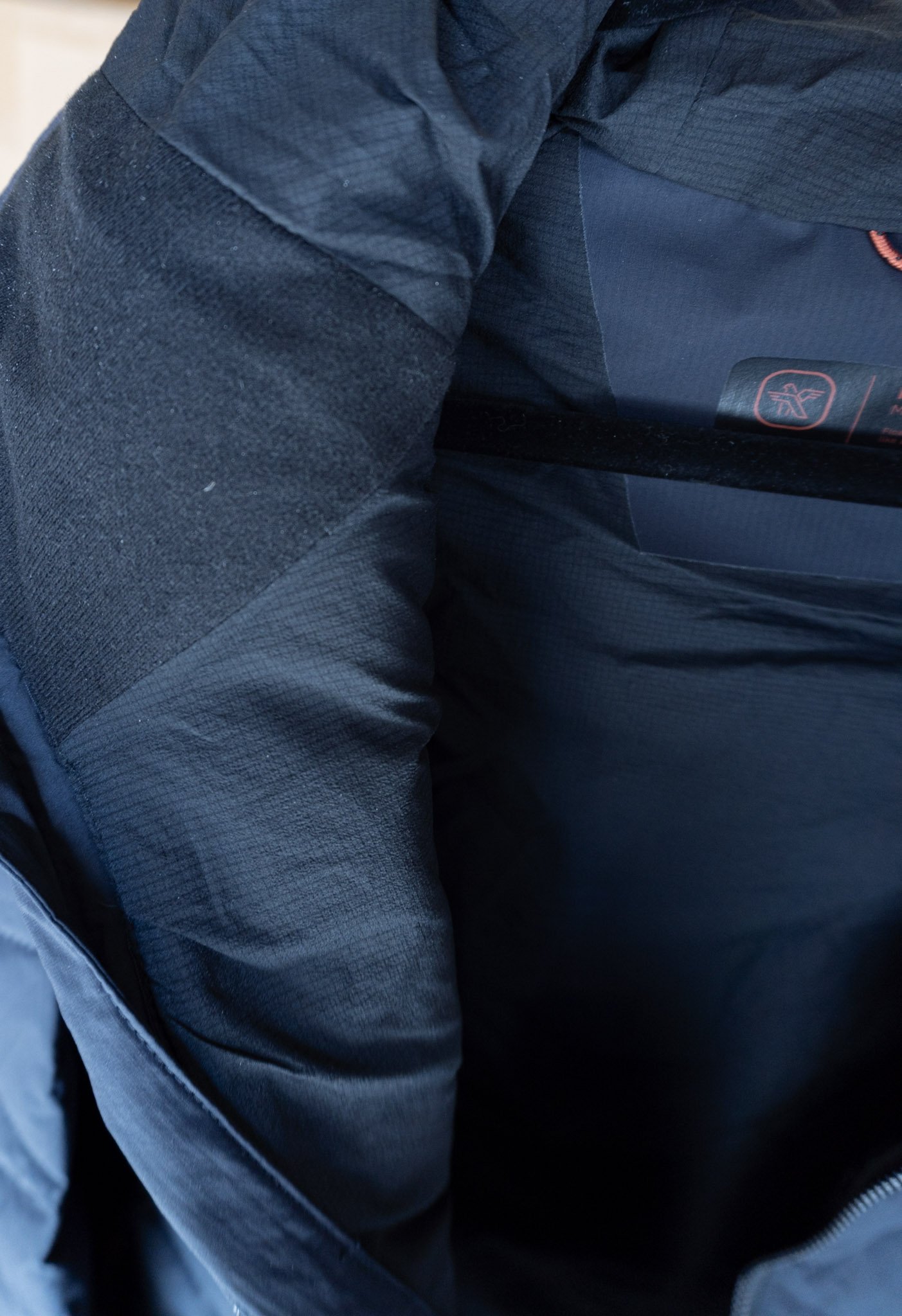
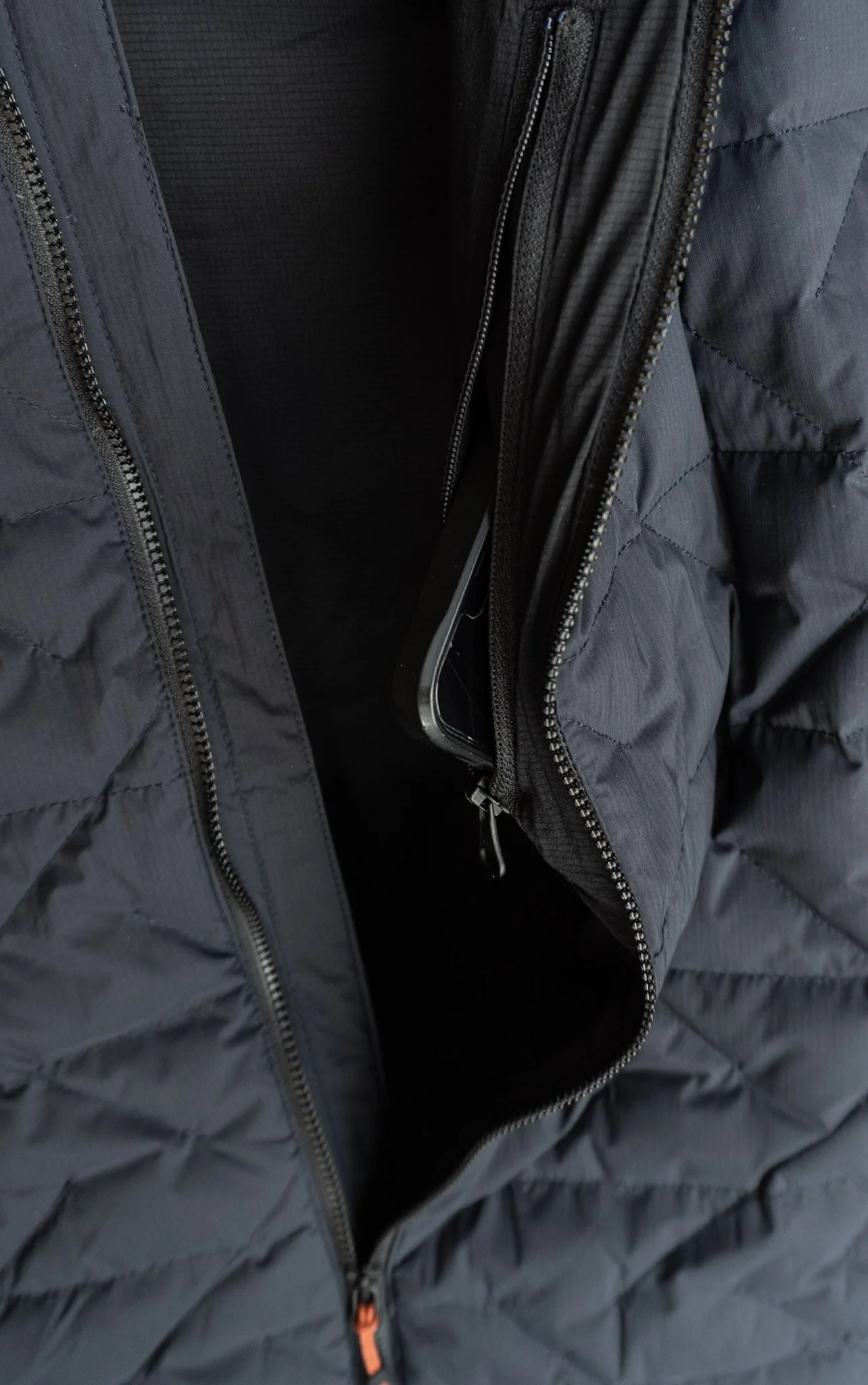
My phone, wallet, and gloves didn't make the hand pockets noticeably sag, and the fleece lining felt good on cold hands. The internal chest pocket was large enough for my phone, wallet, or small field-notes notebook without pressing into me while moving.
Washing and Care
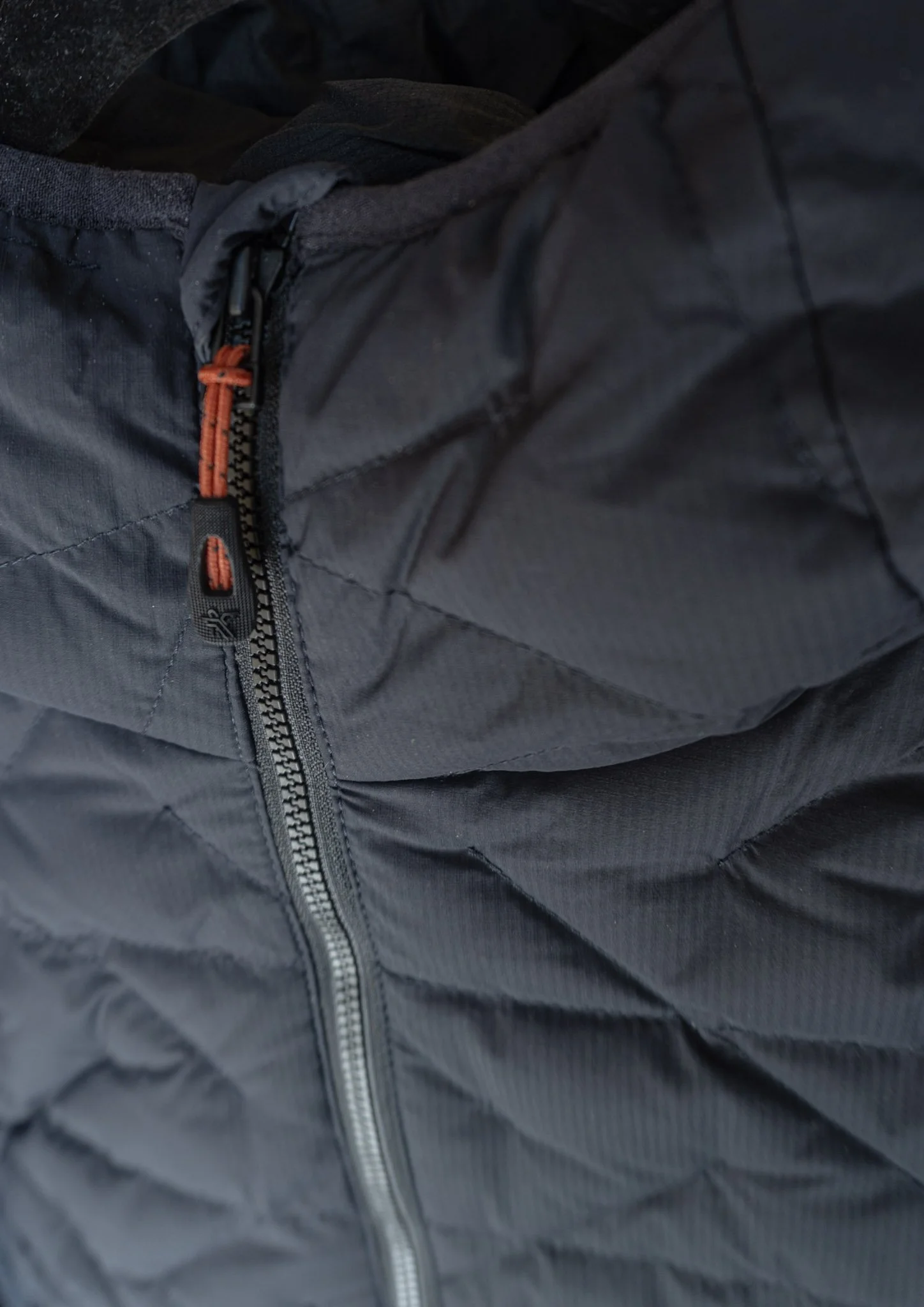
I washed the RockyLoft about ten times and tumble-dried it four times. Otherwise, I hung it to dry, and the down seemed to fluff back up fine. I haven’t noticed insulation staying flattened. That's what I did with mine, not what KETL recommends. Their care instructions call for down detergent and low, slow drying with dryer balls.
How the RockyLoft Compares on Paper
I haven’t tested the Rab Microlight Alpine or Patagonia Down Sweater Hoody side by side with the RockyLoft, so I can’t say which is warmer or tougher. But their listed weights and prices put the RockyLoft’s extra weight into perspective.
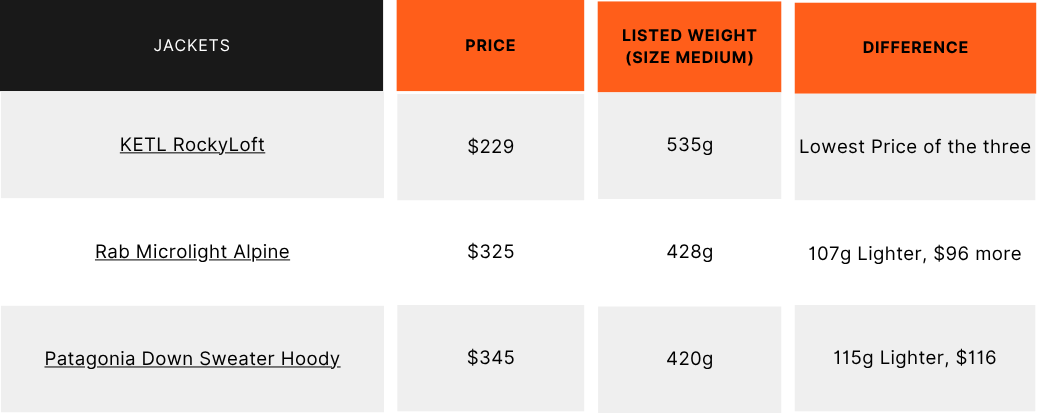
The Rab is the one I’d look at first if weight mattered more. At the manufacturer’s listed Medium weights, it saves 107 grams and costs $96 more. Rab lists 152 grams of 700-fill down, while KETL lists 129 grams of 800-fill down in the Medium RockyLoft. Those numbers don’t tell me which is warmer. If I were carrying my jacket more than wearing it, though, 107 grams would start to matter.
Patagonia lists the Down Sweater Hoody at 420 grams in a Medium, 115 grams lighter than the Medium RockyLoft, but it also costs $116 more. I haven’t worn it, so I can’t say what that lower weight means for warmth or durability.
My RockyLoft spent far more time on my body than in my backpack. I wore it commuting, doing chores, skiing, and climbing. Saving weight mattered less to me than keeping roughly $100 in my pocket.
If most of my jacket’s life were going to be inside a backpack, I’d take a harder look at the Rab or Patagonia. For a jacket I’m wearing constantly through winter, I’d rather keep the extra money.
Who Should Buy It, and Who Should Skip It?
Buy it if your down jacket lives on your body most of winter, gets thrown in the car, worn doing chores, used skiing, and occasionally scraped against things you wish you hadn't scraped it against.
I’d skip it if the jacket will spend more time in a backpack than on your body, or if low weight is the priority. I’d also choose something lighter for milder, active days. On my Mount Rose/Galena hike, it became too warm around 50°F even after I reached flatter terrain.
If you're between sizes like I am, I'd also think about how you'll use it before sizing up. The Large gave me room to layer, but the looser cuffs were the trade-off.