
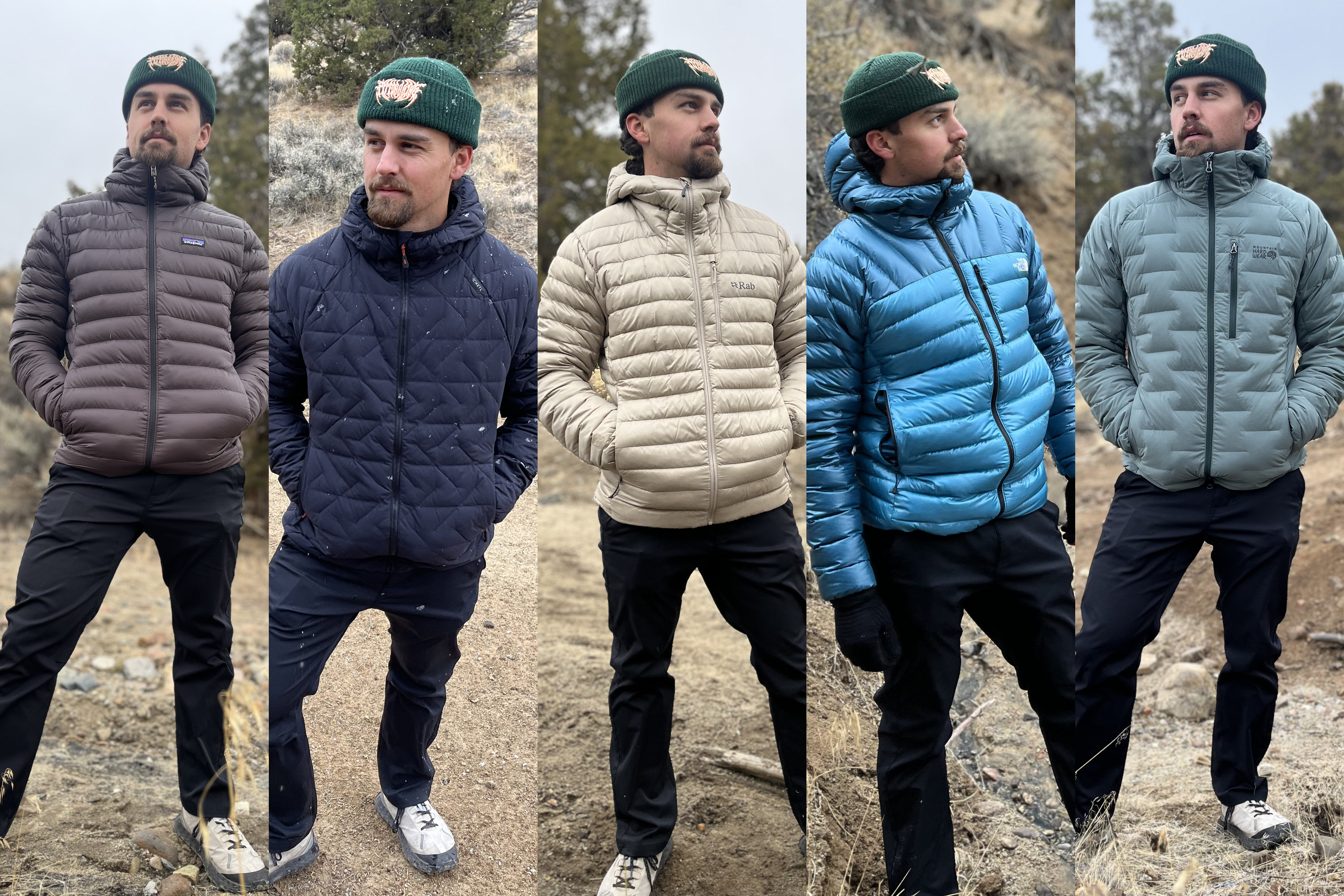
I’ve been wearing these five down jackets for hiking, camping, travel, and everyday use, mostly in the Sierra Nevada. I’ve owned most of them for three to four months and the RockyLoft a little longer. Over time, I started noticing the smaller things: where a collar pressed against my chin, which cuffs let air up my sleeves, and how much room I had for a fleece.

The Patagonia and Rab felt similarly warm, but I preferred Patagonia’s extra pockets for everyday wear. On separate outings, the North Face felt warmer than both under the same shell. The Mountain Hardwear and RockyLoft felt tougher than those three. I’d choose the RockyLoft for its vents while working harder and the Mountain Hardwear when I wanted to keep more heat in during stops.
Disclosure: Adventure Worthy is affiliated with KETL Mountain Apparel. The RockyLoft was purchased at a discounted rate. This is not an affiliate link. KETL did not review, edit, or approve this article.
How I Tested These Down Jackets
I tested every jacket in a men’s Medium. I’m 5 feet 9 inches tall and weigh roughly 170 pounds. I wore a merino wool base layer for the cold outings so I wasn’t changing both the jacket and the shirt underneath it.
Most of the comparisons came from wearing the jackets on different days.
I swapped the Mountain Hardwear and RockyLoft during one hike at about 30°F. The wind was calm, and I didn’t wear a shell over either. Those were the only two I switched between during the same outing.
I hand-washed each jacket three or four times and hung it to dry. None shrank or changed fit. The down in the Rab and The North Face clumped while wet, but both got their puffiness back once fully dry. The Rab got there sooner, although I didn’t time either.
I’ve worn the Rab in rain. I haven’t tested the other four jackets in rain or any of the five in wet snow. I also haven’t taken the Patagonia or Rab on an overnight backpacking trip. When I talk about choosing one for backpacking, that’s based on wearing and packing it so far.
Comparison at a Glance
| Jacket | Best for | Measured weight | Regular price | Fit during testing |
|---|---|---|---|---|
| Patagonia Down Sweater Hoody | Lightweight everyday wear | 424 g | $345 | Roomy through the body; easy to layer |
| KETL RockyLoft | Active winter use | 520 g | $239 | Room for a thin fleece; cuffs seal around my wrists |
| Rab Microlight Alpine | Lightweight warmth with snug cuffs | 413 g | $325 | Similar fit to Patagonia; cuffs seal around my wrists |
| The North Face Summit Breithorn Hoodie | Cold-weather mountain layering | 440 g | $480 | Closer chest and torso, roomier arms |
| Mountain Hardwear Stretchdown Hooded Jacket | Slower hikes on rough trails | 500 g | $350 | Roomiest fit; comfortable over a thin fleece |
I weighed all five in Medium. The table uses listed US regular prices, checked November 18, 2026. The RockyLoft was $191, and some Breithorn colors were $336 when checked. Sale prices can change.
Fill power describes how much space a given weight of down takes up when it lofts. Fill weight is how much the down fill in the jacket weighs. The down-to-feather ratio tells you how much of that fill is down and how much is feathers. An 800-fill jacket isn’t automatically warmer than a 700-fill jacket; the amount of insulation and the way the jacket is built and fits also matter. More on fill power

Patagonia Down Sweater Hoody
Best Lightweight Jacket for Everyday Wear


The Verdict
The Down Sweater is warm for how little it weighs. My Medium came in at 424 grams, with plenty of room for layering. I prefer it to the Rab for everyday wear mainly because there are more places to put things.
I’d buy it again if I wanted a light jacket for everyday wear. If I expected much contact with rock or brush, I’d grab the Stretchdown or RockyLoft. With the hood down, I usually left it partly unzipped to keep the collar off my neck and chin. I rarely ever had the jacket fully zipped without the hood on.
+What We Like
- Warm below freezing over a merino long-sleeve shirt
- Roomy fit makes layering easy
- Two internal drop-in pockets add useful storage
- Packs smaller than the Rab and The North Face in my comparison
-What We Don’t Like
- Fully zipped collar presses against my neck and chin with the hood down
- Down has occasionally poked through the fabric since it arrived
- Cuffs leave a small gap around my wrists
- I felt more wind through the body fabric than I did in the RockyLoft or Stretchdown.
The Nitty Gritty
- Regular price: $345
- Measured weight: 424 g
- Size tested: Men’s Medium
- Tested style: 84702, FA26
- Insulation: 800-fill-power RDS down
- Fill weight: 150 g, according to Patagonia’s product-page customer-service Q&A; reference size unspecified.
- Down-to-feather ratio: Not verified
- Shell: 20D NetPlus recycled nylon ripstop
- Storage: Two zipped hand pockets, one internal zipped chest/stuff pocket, and two internal drop-in pockets
The Medium fits easily over my merino shirt, and I can put a fleece underneath without the body feeling too tight. There’s more room through the chest than in the North Face. The outer fabric also feels more buttery, while the North Face feels and sounds more swooshy.
With the hood down and the zipper fully up, the collar sits tight against my neck and chin and doesn’t really get out of the way. I usually leave it partly open. To put the hood on, I have to unzip slightly first. Once the hood is up, though, I can zip it all the way without the same discomfort.


The hand pockets aren’t fleece-lined and didn’t feel as warm as the RockyLoft’s or Stretchdown’s. I also carried pens in an internal drop-in pocket to help keep them warm and keep the ink from freezing while I was taking notes on the jackets.
I haven’t found tears, scratches, or wear marks, but down has occasionally poked through the fabric since the day I received it. The shell doesn’t give me the confidence I get from the RockyLoft or Stretchdown. Mine came with repair patches on the product tag.

The Patagonia packs smaller than the Rab and The North Face and just slightly smaller than the RockyLoft. Its stuff pocket is a little tight when fitting the whole jacket inside, but I didn’t find that annoying.

Who Should Buy It?
Buy it for everyday wear if you want warmth without much weight and like having extra pockets. I’d also choose it over the RockyLoft for a multi-day backpacking trip where I was being more careful about weight.
Who Should Skip It?
I wouldn’t choose it for regular contact with rock or brush. I’d be more comfortable in the Mountain Hardwear or RockyLoft. Try it fully zipped with the hood down before buying, too; that collar kept bothering me.
KETL RockyLoft
Best for Active Winter Use


The Verdict
I like how tough the RockyLoft’s shell feels, but the vents are why I’d pick it over the Stretchdown for a harder hike. When I switched between them around 30°F, I could feel the airflow under my arms in the RockyLoft. Once I’d been stopped for a while, I preferred the Stretchdown.
My Medium weighed 520 grams, the heaviest of the five.
+What We Like
- Better airflow through sweaty areas while hiking
- Medium cuffs seal fully around my wrists
- Room for a thin fleece underneath
- Comfortable collar and fleece-lined hand pockets
-What We Don’t Like
- Heaviest measured jacket in this group
- Felt colder than the Mountain Hardwear during longer stops
The Nitty Gritty
- Regular price: $239; listed sale price: $191 at the November 18 check
- Measured weight: 520 g
- Size tested: Men’s Medium
- Insulation: 800-fill-power down
- Listed fill weight: 129 g in Medium
- Down-to-feather ratio: 90:10
- Shell: Recycled nylon; Nylon 66 lining
- Listed fabric weight: 52 gsm
- Storage: Two fleece-lined zipped hand pockets and one internal zipped chest/media pocket
- Features: Laser-perforated underarms and adjustable hem. Packs into the left front pocket
The RockyLoft isn’t as puffy as the Mountain Hardwear and sits flatter against me. A thin fleece still fits under my Medium. The cuffs wrap all the way around my wrists, and I can leave the jacket fully zipped with the hood down without the zipper bothering me. I can also put the hood on without unzipping first.


Both jackets saw about the same amount of light contact with rock and brush. I didn’t notice a difference in how they held up.

The fleece-lined hand pockets feel about as warm as the Mountain Hardwear’s.
The RockyLoft packs just slightly larger than the Patagonia, but my Medium weighs 96 grams more. If I were carrying it for several days, I’d take the lighter Patagonia.

Dom tested a Large for our standalone RockyLoft review, which I edited for publishing. I’m wearing a Medium for this comparison, so the weight and fit notes here are from my jacket.
Who Should Buy It?
I’d take the RockyLoft on cold hikes where I’ll keep moving and work up a sweat.
Who Should Skip It?
If it will spend most of the trip in your pack, I’d look at the Rab or Patagonia. For slower outings and longer stops, I’d prefer the Mountain Hardwear.
Rab Microlight Alpine
Lightweight Pick with Snug Cuffs


The Verdict
The Rab was the lightest jacket on my scale at 413 grams in Medium. It felt about as warm as the Patagonia, and the cuffs sealed around my wrists where the Patagonia left a gap.
The Rab saves 11 grams over the Patagonia. I also prefer the Rab’s collar. I could leave it fully zipped with the hood down without it pressing into my chin.
+What We Like
- Lightest measured jacket in this group
- Cuffs seal around my wrists
- Collar stays comfortable when fully zipped with the hood down
-What We Don’t Like
- No internal drop-in pockets
- Coldness and drafts became noticeable across my back after removing a pack
- A small amount of down has poked through the fabric
- Need to unzip slightly to pull the hood on
The Nitty Gritty
- Regular price: $325
- Measured weight: 413 g
- Size tested: Men’s Medium
- Tested model: QDB-92
- Insulation: 700-fill-power recycled down with Grangers hydrophobic treatment
- Listed fill weight: 152 g in Medium
- Down-to-feather ratio: Rab customer service couldn’t specify a precise ratio for this recycled-down model
- Shell: 30D Pertex Quantum with NetPlus and fluorocarbon-free DWR
- Storage: Two zipped hand pockets and one zipped chest pocket; integrated hand-pocket storage for packing
At about 28°F, the Rab kept me warm while I stood still with a merino base layer underneath, although I preferred moving around. The Rab and Patagonia felt about as warm as each other when I wore them under the same shell on different days.
The body fits similarly to the Patagonia, with a hood that’s a little bigger but still smaller than the North Face’s. I have to unzip slightly to pull it on. The collar is tall, but it doesn’t sit as tightly against my neck and chin as the Patagonia’s. I can comfortably leave it zipped with the hood up or down.


I felt less wind through the front than in the Patagonia and The North Face. The back was different. I noticed drafts across my back after I took my backpack off.

I wore the Rab in steady rain before its first wash. The DWR shed rain well at first, but after about 20 minutes, the outer sleeve fabric and the down inside were wet. The jacket’s inner lining wasn’t soaked yet.
The hand pockets feel about as warm as the Patagonia’s and are slightly taller, but they aren’t as deep as the North Face’s. There are no internal drop-in pockets. Down has poked through the fabric a couple of times, although I’ve noticed it less than with the Patagonia.
Who Should Buy It?
I’d try the Rab if the Patagonia’s collar presses into your chin or its cuffs leave gaps. If I were counting every gram, I’d take the Rab. It was 11 grams lighter on my scale, though the Patagonia packed smaller.
Who Should Skip It?
If you’d use the two internal drop-in pockets, I’d take the Patagonia. For more contact with rock and brush, look at the Mountain Hardwear or RockyLoft.
The North Face Summit Breithorn Hoodie
Best for Cold-Weather Mountain Layering


The Verdict
The Breithorn made the most sense to me on cold outings under a shell. It felt warmer than the Patagonia and Rab when I wore each under the same shell on different outings. The large pockets also hold heavier items close without much bouncing.
The Breithorn looks like a dedicated mountain jacket. I’d grab something else to go to the pub with friends in winter. I don’t do enough cold mountain outings to pay $480 for the Breithorn. It felt a little warmer under my shell, but at regular prices I’d add a layer under the Patagonia or Rab before paying more for the Breithorn.
+What We Like
- Felt warmer than the Patagonia and Rab under the same shell on separate outings
- Large hand pockets hold heavier items close with little bounce
- Internal drop-in pockets add storage
- Can pull the hood on with the jacket fully zipped
- No down leakage or visible wear noticed so far
-What We Don’t Like
- Cuffs left gaps around my wrists and let air up my sleeves
- Closer chest and body fit leaves less room for a bulky fleece
- Large hood shifts into my vision unless adjusted
- Mountain styling is not my preference for everyday wear
The Nitty Gritty
- Regular price: $480
- Measured weight: 440 g
- Size tested: Men’s Medium
- Tested model: NF0A87ZM
- Insulation: 800-fill-power RDS ProDown with hydrophobic treatment
- Fill weight and down-to-feather ratio: Not published in the product specifications, according to The North Face customer service
- Shell: 15D Pertex Y Fuse recycled nylon ripstop
- Storage: Zipped hand and chest pockets and two internal drop-in pockets; stows in the left hand pocket
- Manufacturer-listed hood: Climbing-helmet compatible; I have not tested helmet fit
I wore the North Face over merino and under a shell while it was snowing at about 20°F. I was mostly walking at an easy pace, and it kept me warm. I wore the Patagonia and Rab under that same shell on different days in similar cold conditions. The North Face felt warmer to me.
I noticed more draft in the Breithorn than in the Patagonia. Most of it came in at the cuffs, which left gaps around my wrists.
The Medium’s arms feel roomier than the Patagonia’s, but the chest and body fit tighter. I can layer underneath, although I wouldn’t put a bulky fleece under it the way I would with the Patagonia. The collar sits lower, and I can pull the hood on while fully zipped. The hood is huge on my bare head. Left loose, it shifts into my peripheral vision; tightening the adjustment cord fixes that.


The hand pockets are significantly taller and bigger than the Patagonia’s. They have enough structure to keep heavier items close to me with little bounce, and there are internal drop-in pockets for more storage. The outer fabric feels more swooshy than the Patagonia’s, but I haven’t found down leaking out, snags, or other visible wear.


Who Should Buy It?
I’d consider the Breithorn if you spend a lot of time out in the cold wearing a shell and want a closer fit through the chest and big hand pockets.
Who Should Skip It?
I’d choose something else for everyday wear or for layering over a bulky fleece. I’d also skip it for windy hikes without a shell because the cuffs let air up my sleeves.
Mountain Hardwear Stretchdown Hooded Jacket
Best for Slower Hikes on Rough Trails


The Verdict
I’d take the Stretchdown on slower cold-weather hikes where I expect to rub against rock or brush. The Patagonia, Rab, and North Face felt warmer to me when I stood around on other outings, but I’d still grab the Stretchdown for its tougher-feeling shell.
It kept me warmer than the RockyLoft during stops on our comparison hike. There’s also room for a thin fleece without feeling restrictive. My contact with rock and brush has been light, but I haven’t found any damage. I’d buy it again; I just wish it had a stuff sack.
+What We Like
- Shell feels thicker and tougher than the Patagonia’s, Rab’s, and Breithorn’s
- Room and stretch for a thin fleece without feeling restrictive
- Fleece-lined hand pockets feel warm
- Items don’t bounce around in the hand pockets
- Accessible hood adjustment; hem control inside the pocket
-What We Don’t Like
- Cuff openings let in drafts around my arms and shoulders
- Smallest hand pockets in this group
- No dedicated stuff pocket or supplied stuff sack
- Heavier than the Patagonia, Rab, and The North Face
The Nitty Gritty
- Regular price: $350
- Measured weight: 500 g
- Size tested: Men’s Medium
- Tested model: 2166121 / OM1817
- Insulation: 750-fill-power RDS down
- Fill weight: Estimated 140–180 g in Medium, according to Mountain Hardwear customer service
- Down-to-feather ratio: Estimated 90:10, according to Mountain Hardwear customer service
- Shell: 20D DoppleWeave, 85% nylon / 15% elastane
- Storage: Zipped hand and chest pockets and one internal drop pocket
- Features: Two-way front zipper, adjustable hood, and adjustable hem
The Medium fits bigger than the other four. The Stretchdown felt bulkier over a thin fleece, but I could still move freely. That’s when I noticed the stretch most.
Standing around at about 30°F with just merino underneath, I could feel air coming in at the cuffs and reaching my arms and shoulders. I didn’t feel the same cold through the body fabric.
When I switched between the two jackets on the 30°F hike, I liked the airflow through the RockyLoft’s vents while moving. After about 20 minutes standing still, I preferred the extra warmth of the Stretchdown.

The shell feels closer to the RockyLoft’s than to the other three jackets. I haven’t found scrapes, cuts, or down leaking through it, although my rock and brush contact has been light. The Mountain Hardwear is puffier, with more room for another layer.
The Stretchdown has the smallest hand pockets of the five jackets. Items don’t bounce around in them, and the fleece lining feels about as warm as the RockyLoft’s. The hem drawcord is inside the pocket, and the right pocket has a loop you could attach keys to so they don’t fall out.


I also prefer the hood adjustment to the Rab’s. The cord sits higher, so I don’t have to unzip as far to reach it. Once tightened around my head, the hood stays out of my peripheral vision.
There’s no dedicated stuff pocket or sack. I can fold the jacket a particular way into its own hood and tie the hood down. Packed like that, it’s roughly the same size as the packed North Face jacket. It works, but a stuff sack would make this a more useful jacket for me.
Who Should Buy It?
Buy it for cold hikes where you expect to rub against rock or brush, particularly if you want room for a fleece underneath. The warmer pockets are nice for everyday wear, too.
Who Should Skip It?
I wouldn’t choose it for the same harder efforts where I’d wear the RockyLoft. If you’ll be packing it away frequently or counting every gram, I’d look at the lighter jackets here.
Which Down Jacket Should You Buy?
For everyday wear, I’d take the Patagonia for the extra pockets. If its collar or cuffs bother you, I’d try the Rab. For the occasional cold outing under a shell, I’d add a layer to either jacket before paying more for the Breithorn.
If durability were my main concern for everyday wear and hard physical work, I’d take the RockyLoft. On cold hikes through rock or brush, I’d pick the RockyLoft when I’ll be moving most of the time and the Stretchdown when I expect longer stops.
Leave a Reply