

Patagonia Capilene Cool Merino Blend Shirt Review: A Trail Shirt That Works Best on Cleaner Days

I’ve been wearing the Patagonia Capilene Cool Merino Blend Shirt for late-spring and summer hikes around Reno/Tahoe and the Sierra Nevada, along with plenty of casual use before and after the trail. I put the shirt through dry climbs, exposed sun, dusty trailheads, granite, brush, pack straps, and the usual “I’ll just wear this one more time before washing it” merino test.
The shirt won me over pretty quickly for normal hiking use. It disappears under a pack, breathes well on warm climbs, and does the merino thing where you can wear it more than once without immediately regretting your decisions.
But this is not the shirt I’d grab for a rough, brushy hike. The fabric has a light, easy-wearing feel, but it is not as soft as some merino blends I’ve used, and it starts to look a little delicate when the trail gets grabby. For maintained hikes, travel, and casual wear, it is much easier to recommend.

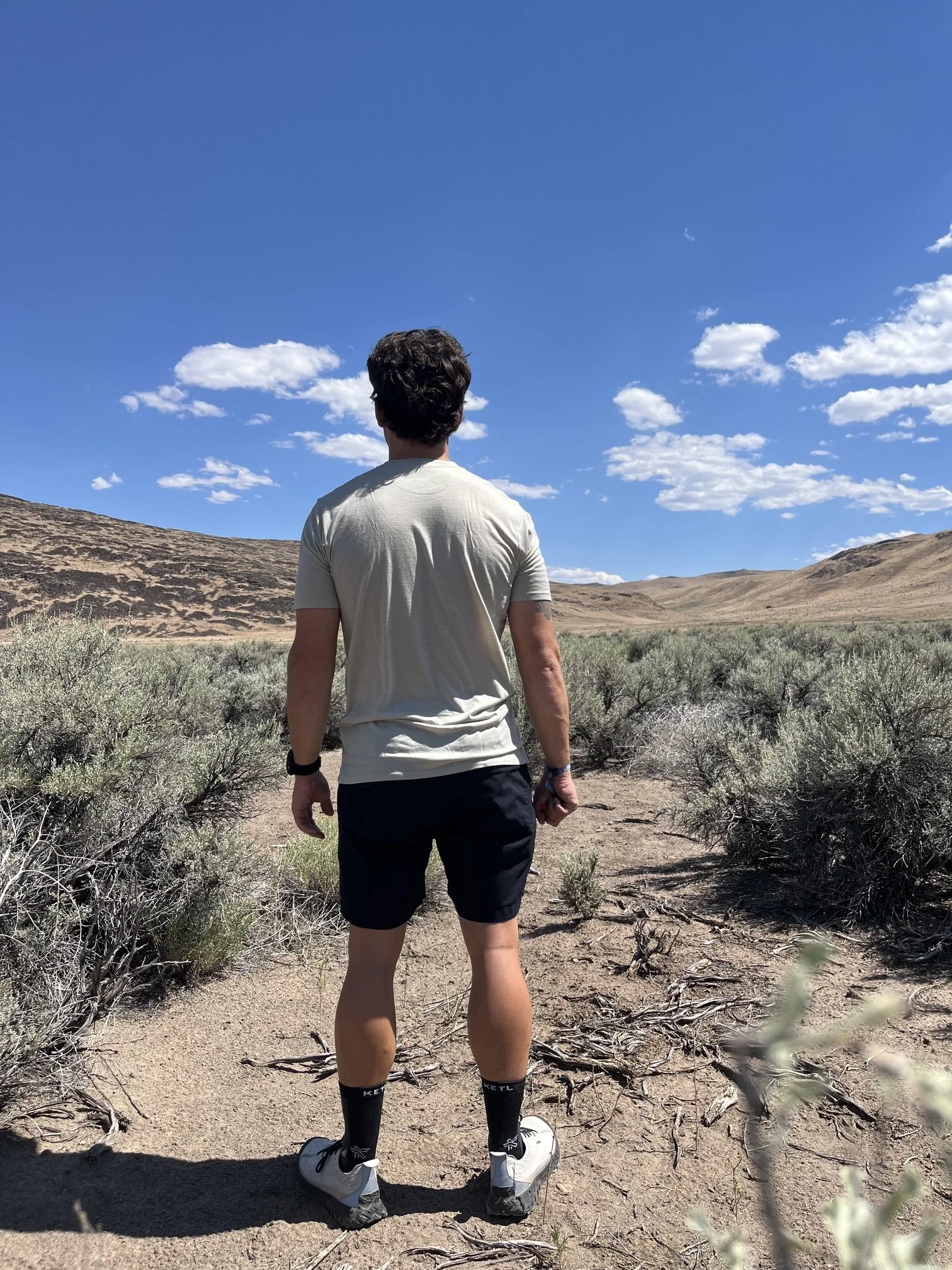
The Verdict
The Patagonia Capilene Cool Merino Blend Shirt is at its best when the day is simple: warm hike, light pack, maybe a stop in town afterward. It keeps stink down better than a normal synthetic tee, has enough stretch to move naturally under a pack, and never felt like too much shirt on late-spring and summer hikes in the Sierra Nevada.
The tradeoff is that the fabric does not have much of an armor layer to it. The 65% wool and 35% recycled polyester blend is nice for airflow and movement, but brush, granite, and repeated washing all made me wish there was some nylon in the mix. It is not falling apart, but it asks for more careful treatment than I prefer from a hiking shirt.
I still like the shirt. I just like it with some boundaries. It fits clean Sierra hikes, travel days, and casual wear really well. Once the day starts looking brushy, rocky, or hard on clothing, I start wishing Patagonia had added nylon to the blend.
+ What We Like
Lightweight and breathable for spring and summer hiking
Strong odor control for multi-day wear
Stretchy enough to stay comfortable under a backpack
Clean enough for casual wear before and after the trail
- What We Don’t Like
Not as soft as some other merino wool blends
Durability is the weak point around brush, rock, and repeated washing
Nitty Gritty
Fabric: 65% wool, 35% recycled polyester
Fabric Weight: 3.5 oz
Weight: 111 g / 3.9 oz
Fit: Slim fit
Sleeves: Set-in sleeves
Hem: Straight hem with side vents
Extra Details: Back-neck yoke with hanger loop, small woven Patagonia logo at left-front hem
Care: Machine wash cold, gentle cycle, dry flat
MSRP: $75
Tested In
Location: Reno/Tahoe, Sierra Nevada
Activities: hiking and casual wear
Conditions: spring and summer mountain use, dry trails, exposed sun, brushy sections, repeated washing
Best Use: hiking, travel, casual wear, warm-weather layering

Fit and Comfort Under a Pack
Patagonia calls it a slim fit, and that tracks with how it wears. It is not baggy, but it also does not have that clingy base-layer fit where you feel like you need to be actively exercising for the shirt to look normal.
Under a backpack, the shirt stays in place and does not bunch up in a way that becomes annoying after a few miles. I did not notice hot spots from the shoulders, and the fabric has enough stretch that it moves naturally when scrambling over rocks, reaching for trekking poles, or adjusting a pack strap for the hundredth time because somehow that is just part of hiking.
The stretch is probably what saves the comfort of the shirt for me. The fabric itself is not the softest merino blend I’ve worn, but it is easy to move in. Some merino shirts can feel a little flat or stiff once they get damp. This one has a little more give to it, which helps it stay comfortable when you are hiking in warm weather and sweating through the back panel under a pack.
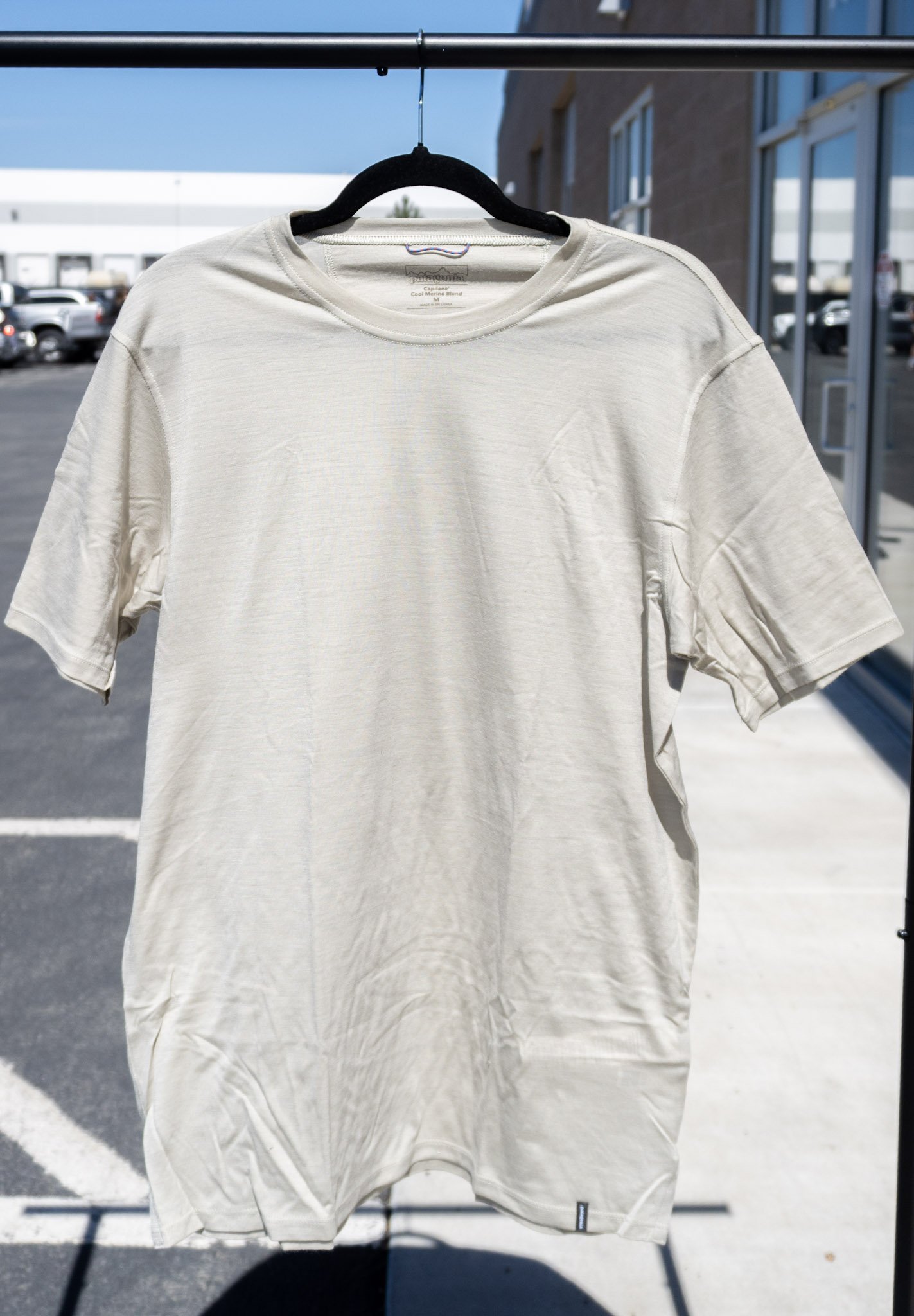
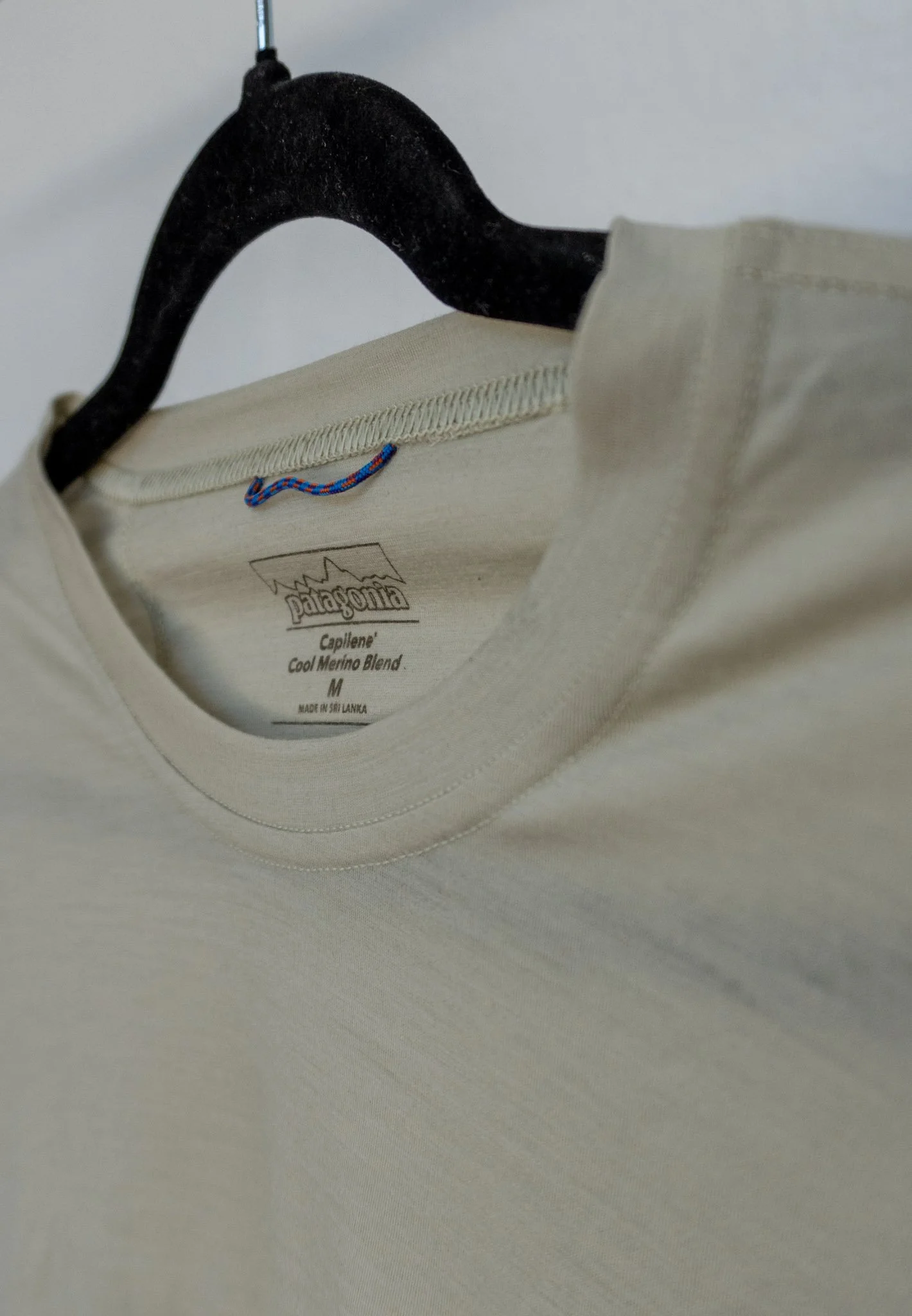
Fabric and Skin Feel
This is where the Capilene Cool Merino Blend lands in a slightly different place than some other wool shirts. It is not scratchy in a way that would keep me from wearing it, but it has more of a dry, technical hand than a soft lifestyle-merino feel.
The fabric is light, stretchy, and airy before it is plush. For hiking, I don’t think that is a bad trade. A super soft shirt is great when you first put it on, but once you are sweating, wearing a pack, and brushing against trail junk, I care more about breathability and movement than a shirt that wins the couch test.
If you are chasing that buttery-soft merino feel, this probably is not the one. It wears more like a technical hiking tee with wool benefits than a cozy merino shirt you baby around the house.
Hiking Performance in the Sierra
Most of my testing was in the Reno/Tahoe area during spring and summer, which is a good place to learn pretty quickly if a shirt runs too warm. The sun can be strong, the air is dry, and hikes often start cool before turning into exposed, dusty, full-sun slogs.
That is the range where the shirt felt the most at home. It stayed cooler than I expected from a wool-heavy shirt, and it never had that swampy feeling that some merino pieces can get when the pace picks up. On warm Sierra hikes, I found it comfortable enough to keep wearing instead of wishing I had gone with a thinner synthetic tee.
It still is not going to dry quite like a paper-thin synthetic shirt, and I would not pretend it is the absolute coolest option for brutal heat. But for spring and summer mountain hikes, especially when I wanted one shirt that could handle a little sweat and still be wearable afterward, it worked well.
The breathability also helped on casual days. This is the kind of shirt I could wear around town, then roll straight into a short hike without feeling like I had dressed wrong for either one.
Odor Control
The odor control is one of the strongest arguments for this shirt. I used it on multiple day hikes and wore it casually between outings, and it did a good job avoiding that sharp synthetic funk that can show up fast in polyester trail shirts.
This is where the shirt earns its spot in a weekend bag. I could hike in it, let it dry, wear it again, and not feel like I was pushing my luck the next morning. That is still one of the biggest reasons merino blends beat normal synthetic tees for travel and hiking.
It is not magic. If you soak it, stuff it in the bottom of a pack, and let it sit, it is still going to smell like a used shirt. But compared to a normal synthetic tee, it stays much more civilized. For road trips, weekend hikes, camping, or travel where you want to bring fewer shirts, that is a real advantage.
Durability and Washing
Durability is where the shirt loses some trust. The fabric is light and comfortable, but it is not the kind of piece I’d throw into every hike without thinking about it.
On hikes where I rubbed against brush or brushed up against rock, the shirt started to show wear faster than I’d like. Nothing about it made me think, “Yeah, this is the shirt I want for a bushwhack.” It has more of a clean-trail personality. Great for normal hiking. Less great when the trail turns into a scratchy little argument with every plant in the Sierra.
Washing is another place where I’d be careful. Patagonia recommends a gentle cold wash and drying it flat, and this is one of those shirts where I would actually pay attention to that. If you treat it like a cheap cotton tee, it probably will not reward you.
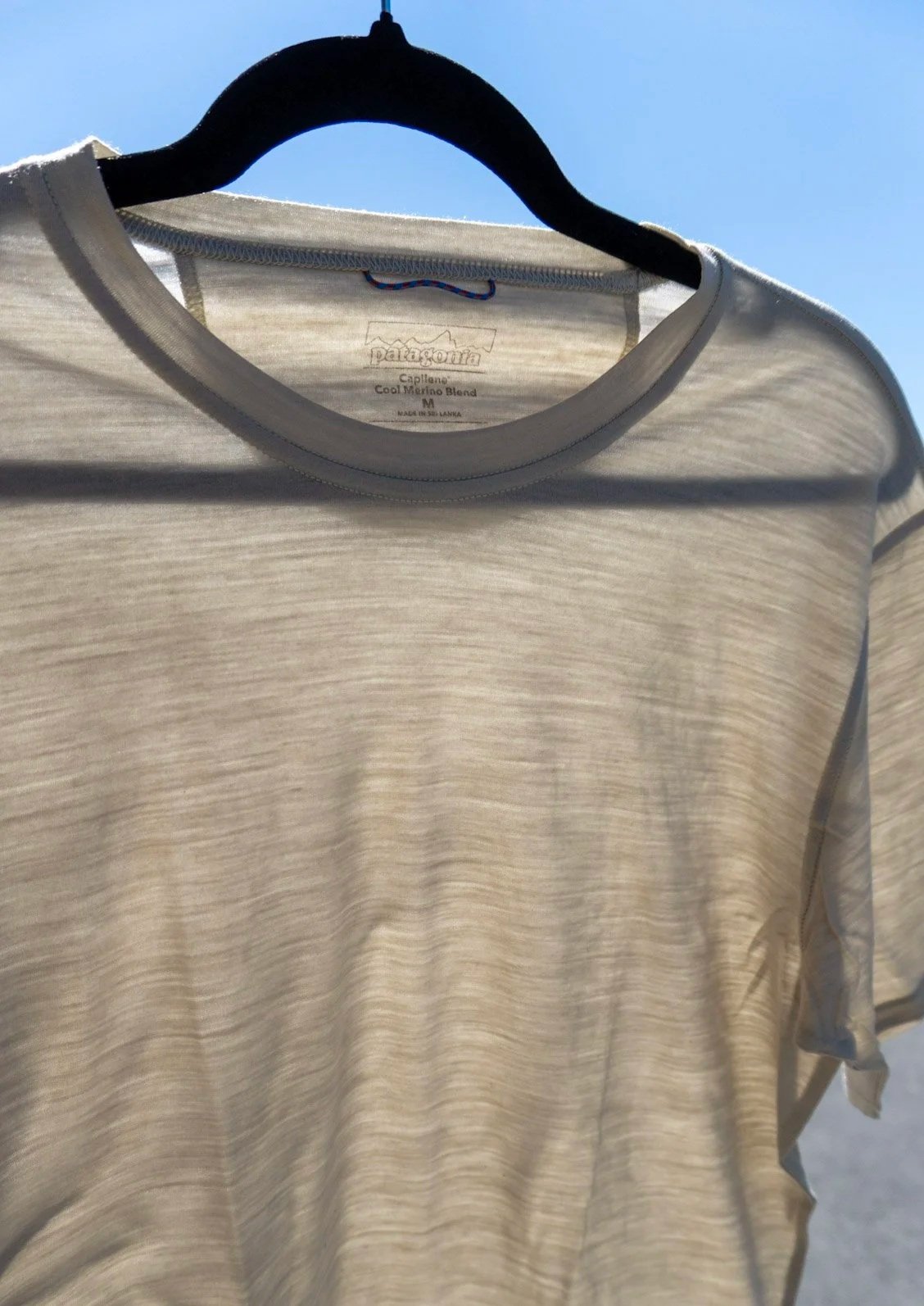
This is also where I wish the blend had nylon instead of only recycled polyester. Polyester can help with drying and structure, but nylon usually gives merino shirts a better chance against abrasion. For the price, the Patagonia shirt is not wildly expensive compared with a lot of merino gear. Even so, I would personally rather spend a bit more on a merino nylon blend if it meant getting similar comfort with better durability.
Casual Wear
For casual wear, the Capilene Cool Merino Blend is easy to live with. It does not look overly technical, it does not have loud trail-run styling, and the fit is clean enough to wear around town without looking like you just stepped out of an outdoor catalog shoot in the worst way possible.
That is probably why it kept sneaking into normal days. Some hiking shirts look like they are waiting for a permit check at all times. This one is quiet enough to wear around town and still useful if the day turns into a hike.
That same low-stink benefit helps here, too. If I wore it on a hike and then stopped for food or ran errands afterward, it did not immediately become a liability. That sounds like a small thing, but it is a big part of why certain shirts stay in rotation while others sit in the drawer waiting for the exact right activity.
Where This Shirt Works Best
This shirt is best for the person who wants one tee for warm hikes, travel days, camping mornings, and casual wear, but is not planning to drag it through every bush on the mountain.
It is also a good pick if you like the idea of merino but do not want a thick, warm, old-school wool shirt. The Capilene Cool Merino Blend wears more like a light hiking tee with better odor control than a traditional wool shirt.
Once the day starts involving scrambling, heavy pack rub, or too much brush, I’d rather have a tougher merino blend with nylon in the fabric.
Final Thoughts
The Patagonia Capilene Cool Merino Blend Shirt is good in the exact way I wanted it to be good: easy to hike in, easy to wear casually, and reliable enough for warm Sierra days when I did not want to think too hard about what shirt to grab.
The catch is that I would be picky about where I use it. Clean trails, travel, and everyday wear are right in its lane. Once the day starts getting rough on clothing, I’d rather spend a little more on a tougher merino blend.