

Merino Wool Explained: Why It Works So Well for Hiking, Running, and Travel

Merino wool is easy to underestimate if your only reference point for wool is an old sweater that lived in the back of a closet.
That version of wool had a very specific job. Be warm. Maybe be itchy. Probably look like something you wore because the weather forced you into it. Merino is a different thing. It is softer, finer, lighter, and a lot more useful than the word “wool” gives it credit for.

A merino shirt can start the morning as a cold-weather baselayer, turn into your hiking shirt once the sun comes out, and still be something you are willing to wear around other people later. That is a strange little combination of traits. Most fabrics are good at one or two things and pretty average everywhere else. Merino is not perfect, but it has a way of being comfortable through the messy parts of a day outside.
Cold trailhead. Sweaty climb. Wind at the top. Long drive home. Travel day. Camp clothes. One shirt that gets worn more than you planned.
Merino Is Not Just “Warm Wool”
A lot of people still think of wool as a cold-weather-only fabric. That makes sense, but it is also why merino gets misunderstood.
Merino can be warm, but warmth is only part of the story. The more useful thing is how it handles change. Outdoor clothing has to deal with your body doing a lot of different things in a short window. You are cold standing around at the car, sweating 20 minutes later, then cooling off again the second you stop moving.
That is the kind of day where a normal cotton shirt can turn into a wet rag, and a thin synthetic tee can feel good on the climb, but a little clammy once the effort drops. Merino sits in a different place. It feels more stable. Not dry forever. Not warm and cool at the same time. Just less dramatic when conditions keep changing.
That is probably the easiest way to think about it. Merino does not make bad weather disappear. It just makes the weird in-between parts of the day a little easier to deal with.
What Makes Merino Different
Merino wool comes from merino sheep, but its performance in clothing has more to do with the fiber itself. Merino fibers are much finer than traditional wool fibers, which is why good merino does not feel like the scratchy wool people remember. The fibers are soft enough to wear against the skin, and they have a natural crimp that helps trap small pockets of air. That gives merino some warmth without needing to feel bulky.
The other part is moisture. Merino can take in moisture vapor before your shirt feels fully wet, which is one reason it feels comfortable during stop-and-go activity. You are still sweating. The shirt can still get wet. If you get caught in the rain, it is not going to save you from needing a shell. But the feel against your skin is often better than you would expect.
That is where merino earns its place in a layering system. It can sit against your body, handle sweat reasonably well, and still feel wearable once you slow down. On a hike, that might be the difference between being comfortable at the overlook and immediately digging through your pack for a dry shirt.
It Proves Itself Over Time
Some fabrics are easy to understand in five minutes. A super airy synthetic shirt feels fast and breathable right away. A rain shell either keeps water out or it does not. Merino is a little slower to prove itself.
You notice it after a full day. You notice it when you pull the same shirt back on the next morning, and it does not feel like a mistake. You notice it when you travel with fewer clothes and somehow still have something decent to wear.
That is the part that makes merino interesting. It is not just a performance fabric for one effort. It is a comfortable fabric for a whole day, and sometimes for a few days in a row.
For hiking, that means less stink and less clamminess. For camping, it can still be comfortable enough to sleep in. For everyday use, it means you can wear something technical without looking like you are dressed for a trail race at the grocery store. That kind of versatility sounds boring until you actually rely on it.
Moisture Management Without the Gym Shirt Feel
Moisture management is one of those outdoor terms that has been used so much that it almost loses meaning. With merino, the basic idea is pretty simple.
The value is less about staying perfectly dry and more about not feeling terrible while your effort level keeps changing.
Cotton feels great until it gets wet. Then it gets heavy, cold, and slow to dry. Polyester is usually the opposite. It dries fast, which is why it is so common in running and hiking shirts, but some synthetic tops can feel slick or clammy once sweat starts building.


Merino lands between those two. It will not dry as fast as the lightest polyester shirts, especially after a full soak, but it usually feels better while you are wearing it through changing conditions. It does not have that same plastic-bag feel that some synthetic baselayers can have, and it does not turn into the cold, wet mess that cotton does.
Odor Resistance Is the Thing People End Up Caring About
The first time you buy merino, you might buy it because you heard it regulates temperature. After you use it for a while, the odor resistance is probably what keeps you coming back.
This is the real travel and backpacking trick. Most synthetic shirts are great during the activity and questionable after it. They dry fast, but they can pick up that permanent funk that never fully leaves. Anyone who has owned a favorite running shirt for too long knows the smell. It can come back the second the shirt gets warm, even if it technically came out of the wash clean.
Odor resistance is a big part of merino’s reputation. It can be worn hard, hung up overnight, and worn again without immediately making you question your choices. That does not mean you never wash it. It just means it buys you time.
On a backpacking trip, that matters because you are already wearing the same stuff too much. On a road trip, it matters because your clothes are living in a duffel in the back of the car. On a flight, it matters because airports can make everyone feel a little gross by the time they land. A good merino tee is not exciting in the way a new jacket is exciting. The appeal is quieter. It lets you pack less and get away with it.
Where It Fits on the Trail
Hiking is probably the easiest way to understand the appeal. A normal hike has more temperature changes than people think. You start in the shade, climb into the sun, stop for a snack, get hit by wind, and then drop back down into cooler air. If you are wearing a pack, you also have sweat building under the straps and against your back. That is a lot to ask from one shirt.
Merino handles that kind of use well because it is comfortable across a range of conditions. As a baselayer, it works really well in cool weather. As a standalone shirt, it is great for mild days, long hikes, and slower efforts where you want comfort more than maximum airflow.

It is also just nicer to live with after the hike. A merino shirt can be sweaty and still not feel completely cooked. That is helpful if you are camping, grabbing food after the trail, or driving home with friends who did not sign up to smell your entire layering system.
The one thing to keep in mind is abrasion. Thin merino under a heavy pack can wear faster than a synthetic shirt, especially at the shoulders, lower back, and anywhere the fabric rubs repeatedly. For mellow day hikes, that may not matter much. For backpacking, daily pack use, or rougher trips, a merino blend is usually the smarter call.
Why Merino Works for Running, But Not Every Run
Merino makes a lot of sense for running, but I would not put it in the same category as a super-light race-day synthetic top. For cool mornings, winter training, easy trail runs, and shoulder-season miles, merino can be excellent. It takes the chill off at the start, breathes better than people expect, and does not stink the second the run is over. That is a nice combination if your run includes warmups, stops, changing weather, or hanging around afterward.
Trail running is where it can feel especially useful. The pace is rarely steady. You climb, descend, hike a steep pitch, stop at a viewpoint, run through shade, then pop back into the sun. Merino fits that less-perfect rhythm well.


For hot and humid intensity, I would usually reach for synthetic first. If the whole point of the shirt is to dump heat and dry as fast as possible, polyester still has the edge. A lightweight merino blend can work, but pure merino is not always the best tool for that job.
That is not a knock against merino. It is just choosing the fabric for the day in front of you.
Where It Works for Travel
Travel is where merino starts to feel less like an outdoor specialty fabric and more like a piece that quietly earns its spot in the bag.
The reason is simple. Travel clothes have to do too much. A shirt might need to handle a flight, a long walk through the airport, dinner, a casual day around town, and a hike the next morning. It might get stuffed into a packing cube, hung over a hotel chair, or washed in a sink because you were too optimistic about how much clothing you brought.
Merino handles that kind of trip well. It packs small, resists odor, layers well, and usually looks more normal than a shiny synthetic workout shirt. A plain merino tee does not scream “outdoor gear,” which is useful when you are trying to bring one shirt that can work in a few different settings.
This is why merino is so popular with people who travel light. Two merino shirts can cover a surprising amount of ground. Add a hoodie or long sleeve, and you have a pretty capable little clothing system for planes, rental cars, morning walks, hikes, and whatever else the trip turns into.
Merino Blends Are Usually the Practical Choice
There is an instinct to think 100% merino must be the best version. It sounds cleaner. More premium. More authentic. Sometimes it is the right choice, but not always.
For outdoor shirts, blends are usually the more practical move. Merino is soft because the fibers are fine. That softness is part of the appeal, but it also means lightweight merino can be more vulnerable to abrasion, pilling, and small holes. If you are wearing it under pack straps, washing it constantly, traveling with it, or using it as an everyday shirt, a blend can help.


Nylon is commonly added for strength. Polyester can help with dry time and shape retention. Elastane or spandex adds stretch. Tencel can make the fabric feel smoother and drape a little better. The point is not to make the shirt less merino. The point is to make it more wearable in real life.
A good merino blend keeps enough wool to give you the comfort and odor resistance people want, then adds a little more toughness where pure wool can struggle.
If you are buying one merino shirt to use for hiking, travel, training, and regular wear, I would usually start with a blend. It is the safer all-around bet.
Where 100% Merino Still Makes Sense
Pure merino still has a place, and when it is good, it is really good.
A 100% merino baselayer has a soft, quiet feel that blends do not always match. It is comfortable against the skin, warm without feeling overly bulky, and especially nice in cool or cold conditions. For sleeping on backpacking trips, layering under a shell, wearing around camp, or using as a travel shirt that is not getting beaten up every day, pure merino can be excellent.
It also makes sense for people who simply prefer natural fibers. Maybe they do not like how synthetic shirts feel. Maybe they want fewer plastic-based fabrics in their closet. Maybe they just like the way wool wears over time. Those are fair reasons.
The tradeoff is that 100% merino usually asks for a little more care. It may not be as tough as a blend, and very lightweight versions can be easier to wear through if you use them hard. That does not make pure merino fragile in a useless way. It just means you should be honest about how you will use it.
If the shirt is going under a heavy pack all summer, I would lean toward a blend. If it is a baselayer, travel tee, sleep layer, or cold-weather piece, 100% merino starts to make a lot more sense.
Fabric Weight Matters More Than People Think
Not all merino shirts are trying to solve the same problem.
A thin merino tee and a thick winter baselayer can both say merino wool on the tag, but they are completely different pieces of clothing. This is where people can get crossed up. Someone wears a heavy baselayer on a warm hike and decides merino is too hot. Someone else wears a paper-thin 100% merino tee under a loaded pack and decides merino falls apart.
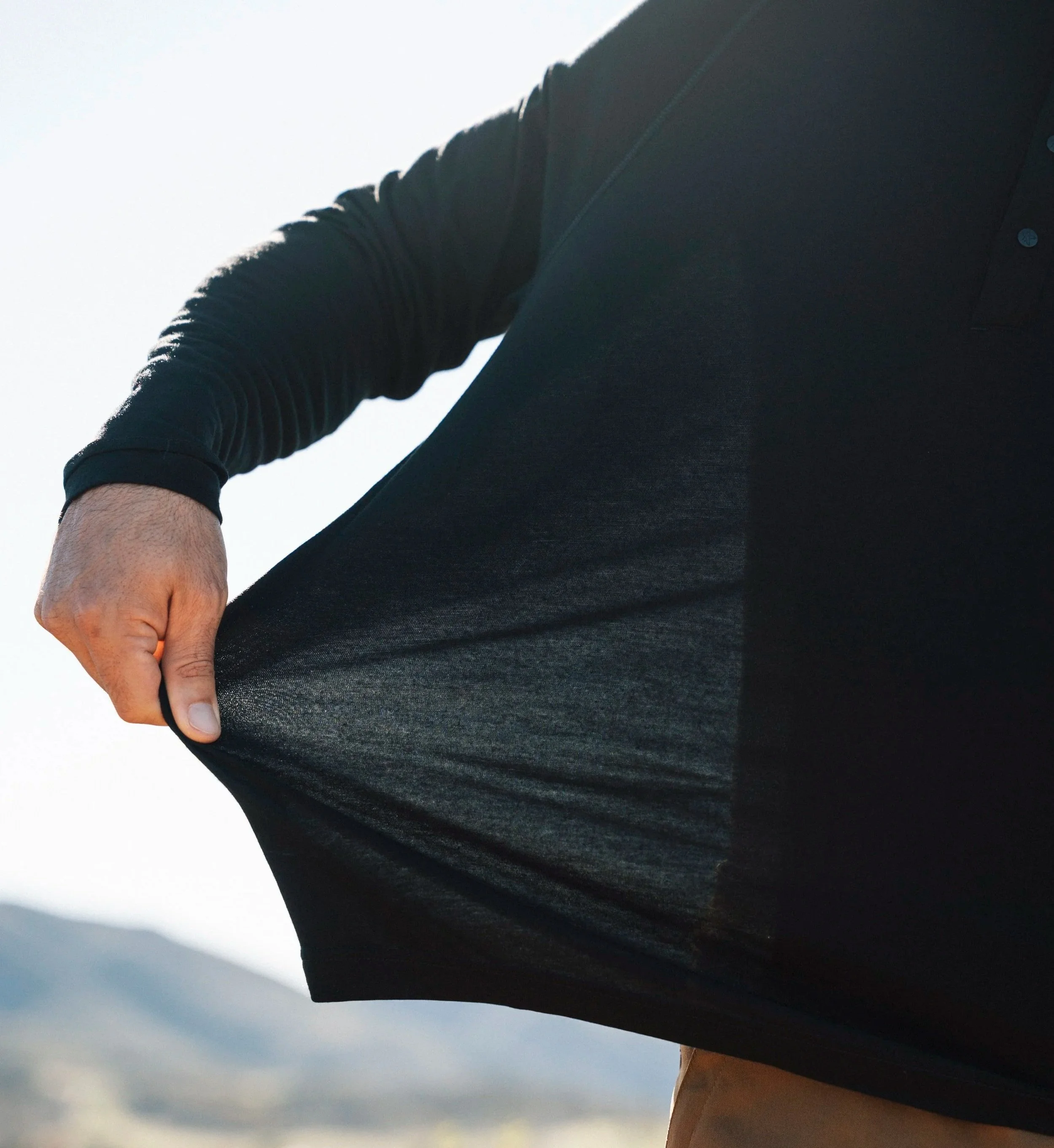
Lightweight merino is best for travel, mild hiking, layering, and everyday wear. Midweight merino is better for cooler conditions and true baselayer use. Heavier merino can be great in winter, around camp, or for lower-output days, but it can be too much if you are moving hard.
The blend matters. The knit matters. The fit matters. A loose, airy merino tee will behave differently from a dense baselayer. A merino sun hoodie is not trying to do the same thing as a thermal long sleeve.
The label gets you in the ballpark. The actual garment decides whether it works.
Merino Rewards Better Laundry Habits
Merino is not hard to care for, but it does not love being treated like a cheap gym shirt.
Wash it cold. Use a gentle cycle. Skip fabric softener. Air dry it when you can. Do not cook it in the dryer every week and then act surprised when it ages quickly.
The nice part is that you usually do not need to wash it as often. That is one of the reasons to own merino in the first place. Hang it up after wear. Let it air out. If it still smells fine and feels fine, wear it again.
That is especially useful while traveling or camping. Less washing means less wear on the garment, fewer clothes in your bag, and less time dealing with laundry when you would rather be doing literally anything else.
Treat merino like a piece of gear, and it tends to last longer. Not precious. Just not careless.
The Fabric Still Has a Place
Outdoor clothing keeps getting more technical. Lighter fabrics, faster drying fabrics, more stretch, more vents, more specific use cases. A lot of that is great. I like plenty of synthetic gear, especially when the weather is hot or the effort is high.
It is not the fastest, toughest, or cheapest fabric out there. What it does well is keep you comfortable through the in-between parts of outdoor life. The cold start. The sweaty climb. The windy stop. The long drive. The second wear. The trip where you packed a little too lightly.
Merino wool is not some miracle fabric, and it gets a little annoying when it is treated like one. It is just useful, especially when it is used in the right piece of clothing. If you spend enough time outside, that usefulness is pretty easy to feel.
A good merino shirt does not need to do anything dramatic. It just needs to be comfortable, not stink too quickly, layer well, and stay useful longer than a normal shirt probably should. For outdoor clothing, that is still a pretty good trick.