
The Best Sun Hoodies for Hot, Exposed Days

Disclosure: Adventure Worthy is associated with KETL Mountain Apparel, but this review is based on real testing and the same honest standards we apply to every product we review. All of the products in this review were paid for with our own money.
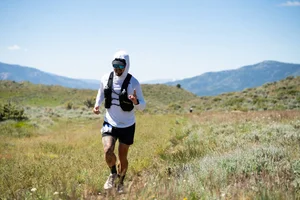
Over the summer, I noticed sun hoodies becoming more common on hikers, trail runners, and around town while hanging with family. With so many fabric blends, weaves, and UPF ratings available, I wanted to know which was best. After testing them, the answer depended on the activity and temperature. A hoodie can have an impressive UPF rating but make you want to rip it off when the trail gets hot. Another can feel incredibly airy but leave you shivering when temperatures drop at higher elevations.
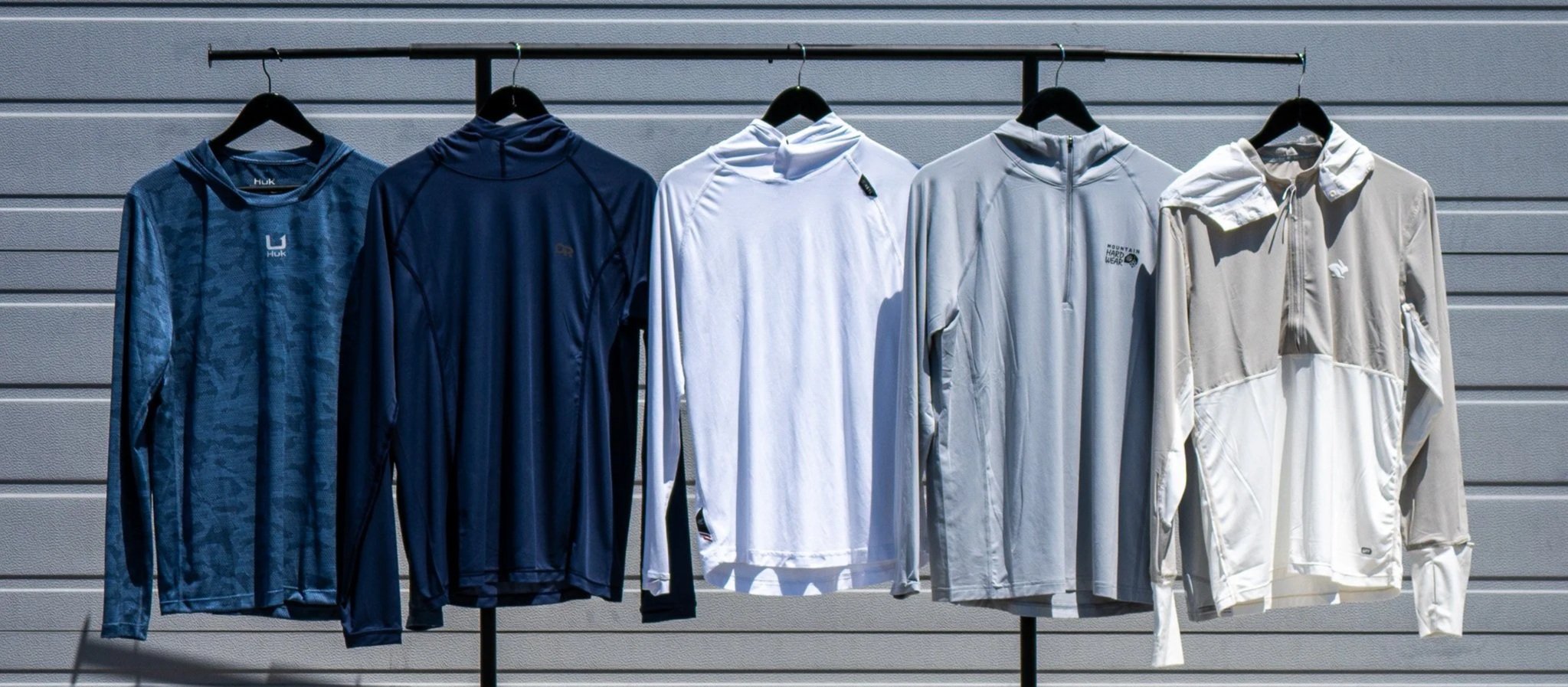
I chose these hoodies based on what I saw people wearing while trail running, hiking, and around town, then used Google to help find some of the lightest options available.
I tested five synthetic sun hoodies through the summer in the Reno-Tahoe area of the Sierra Nevada. Temperatures ranged from roughly 75 to 100 degrees, with most testing done while hiking, trail running, backpacking, traveling, fishing, camping, mountain biking, or spending time at the lake with family and friends.
The KETL NoFry won because it worked for nearly everything. The Outdoor Research Echo was a close second, especially for backpackers who prefer a more technical cut. The other three were more specialized for high-alpine hiking, running, or fishing and lake use.
How I Tested These Sun Hoodies
I wore every hoodie in a men’s Medium. I am 5 feet 9 inches tall, weigh 170 pounds, have a 40-inch chest, and normally wear a Medium shirt. I spent a few months testing them on separate but comparable outings on the same trails, in similar temperature ranges, with little to no wind.
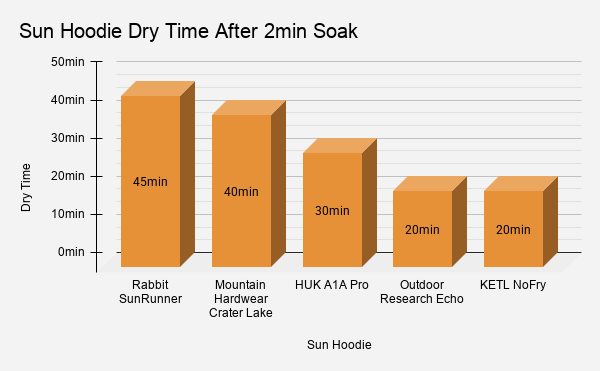
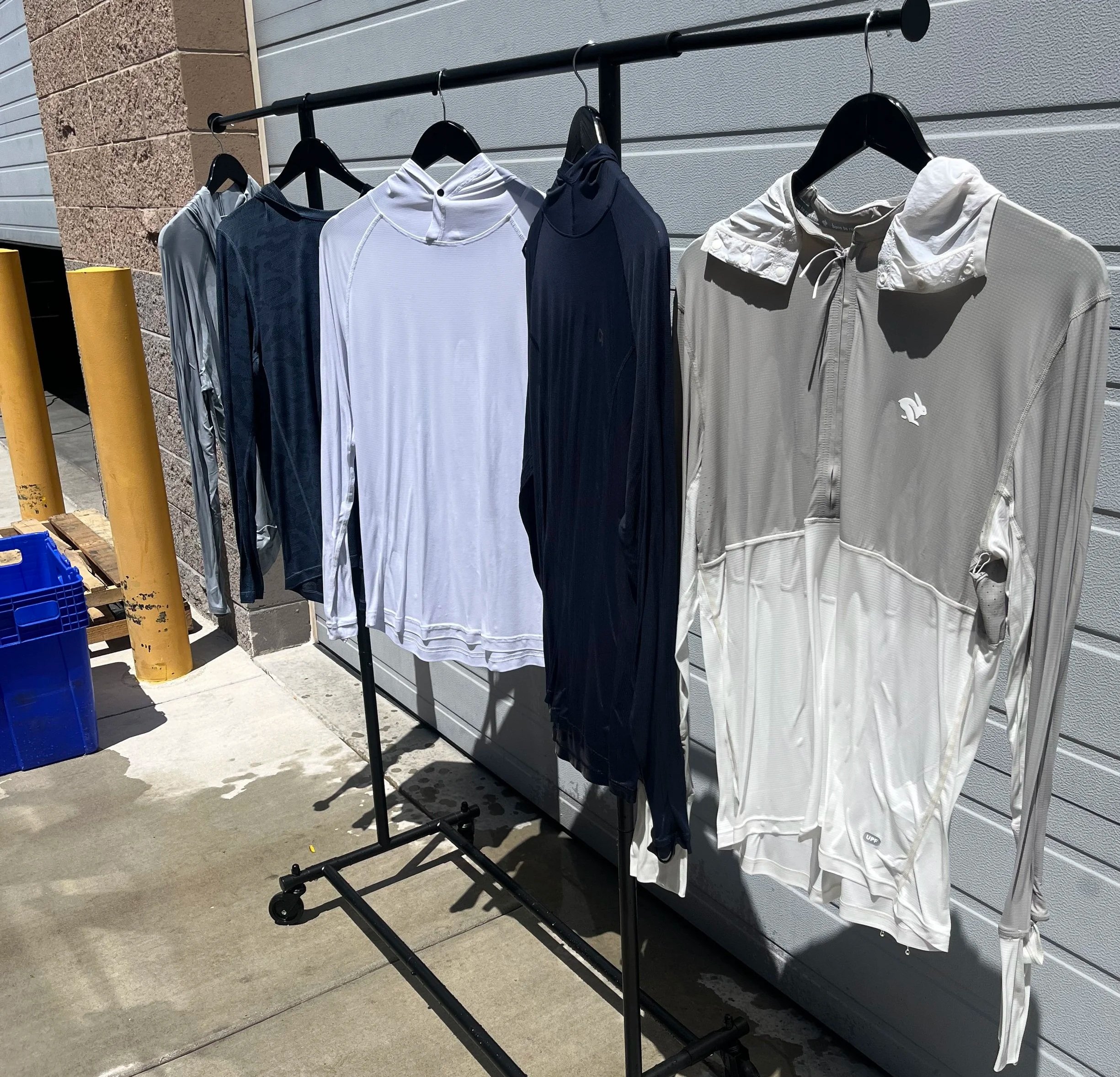
I also soaked each hoodie at the same creek crossing while hiking the same trail, then continued hiking and timed how long it took to feel completely dry. This was not a laboratory test. I wanted to replicate getting soaked at a creek crossing or cooling off in a stream while in the mountains. I also did a side-by-side comparison at the office where I took a plastic bucket and submerged each sun hoodie for 2 minutes all at once. Then I hung up each sun hoodie in the sun and timed how quickly they dried. The temperature was 87 degrees with no wind. The small table below shows how well each garment dried.
Every hoodie was washed and machine-dried normally after each use. None noticeably shrank or changed shape after multiple wash and dry cycles.
DIY Airflow Test: How Easily Air Passed Through Each Fabric
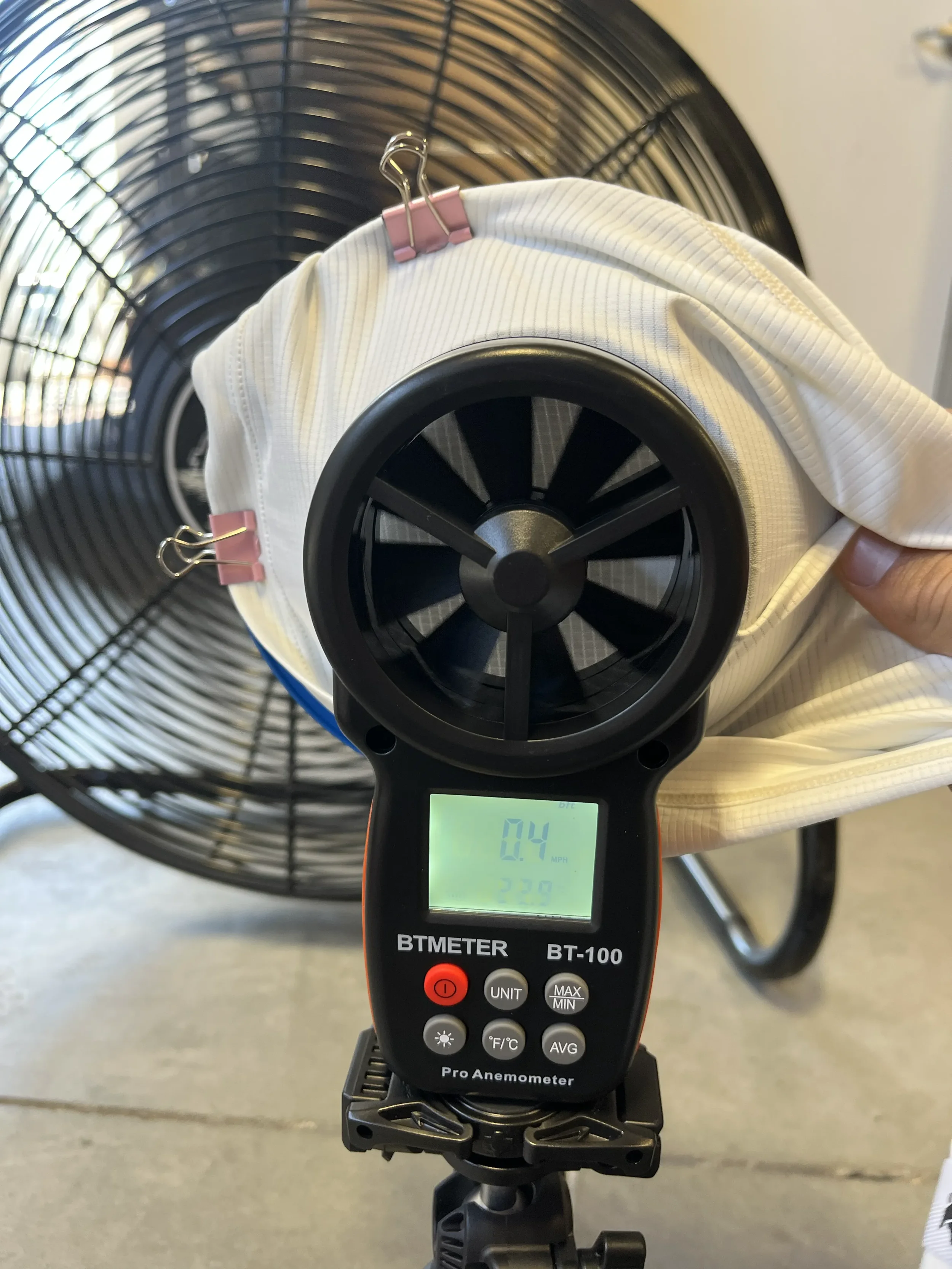
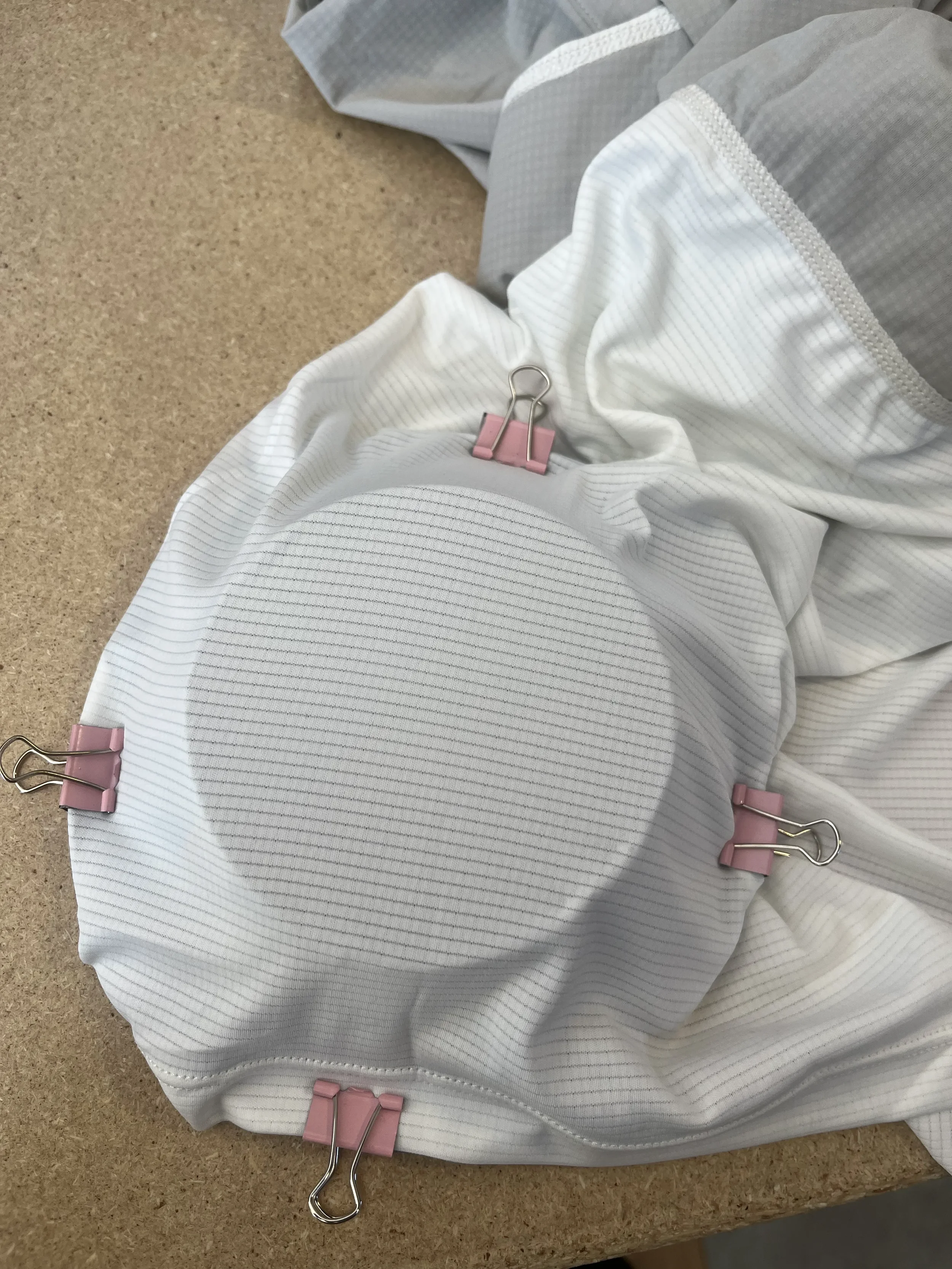
To compare airflow, I mounted each hoodie over the same funnel and placed it directly in front of an anemometer, which was 12 inches from the fan. The empty funnel’s control measured 13 mph. I removed and remounted each fabric for three tests, using a 20-second average for each. The results show each material’s average airspeed as a percentage of the control.
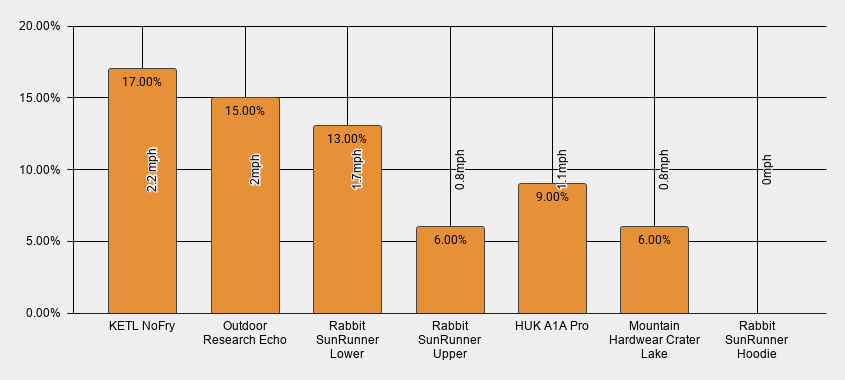
The NoFry and Echo led at 17% and 15% of the empty-funnel control. The gap was too small to call either dramatically airier. Both felt noticeably cooler than the rest on hot, low-wind hikes.
The SunRunner’s lighter lower fabric recorded 13%, while the more protective upper section reached 6%. Its detachable hood produced no measurable reading with this setup.
The Crater Lake also recorded 6%, matching its warmer feel during harder efforts. The HUK reached 9%, though its loose fit still circulated air around my body while fishing or standing on a boat.
This DIY test compares relative airspeed through dry, clean fabrics. It does not measure lab-certified air permeability, sweat evaporation, or total garment ventilation. I did not stretch the fabric over the funnel and clipped it in place to prevent movement.
Activities varied slightly by hoodie:
KETL NoFry: Hiking, backpacking, trail running, mountain biking, travel, casual use
Outdoor Research Echo: Hiking, backpacking, trail running, travel, casual use
Mountain Hardwear Crater Lake: Hiking, backpacking, trail running, travel
Rabbit SunRunner: Hiking, backpacking, trail running
HUK A1A Pro: Hiking, fishing, travel, casual use, boat days
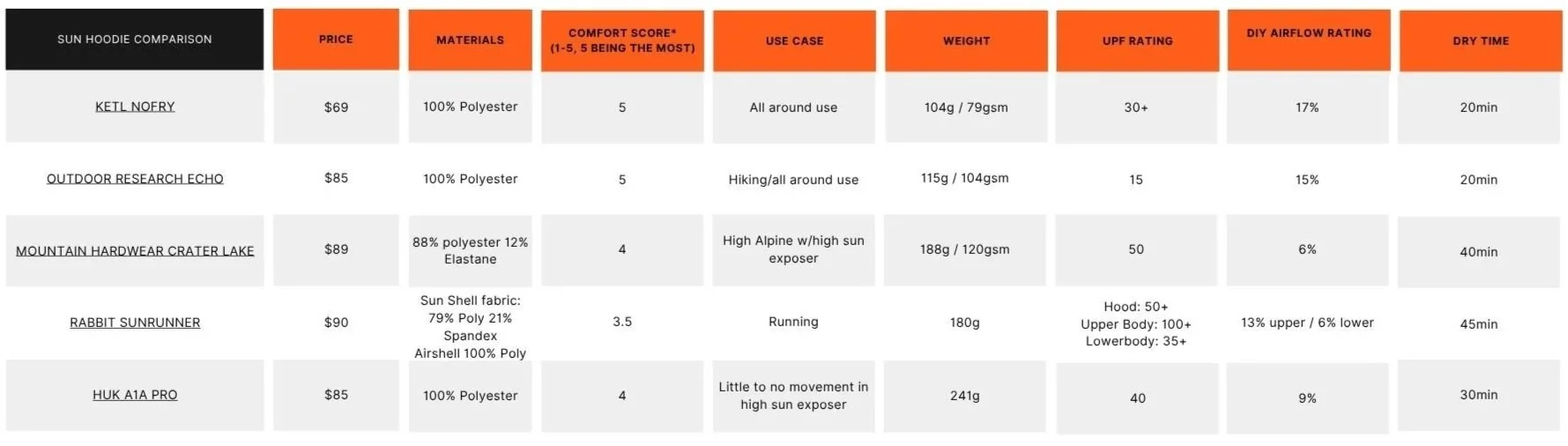
Comparison at a Glance
Best Overall Sun Hoodie
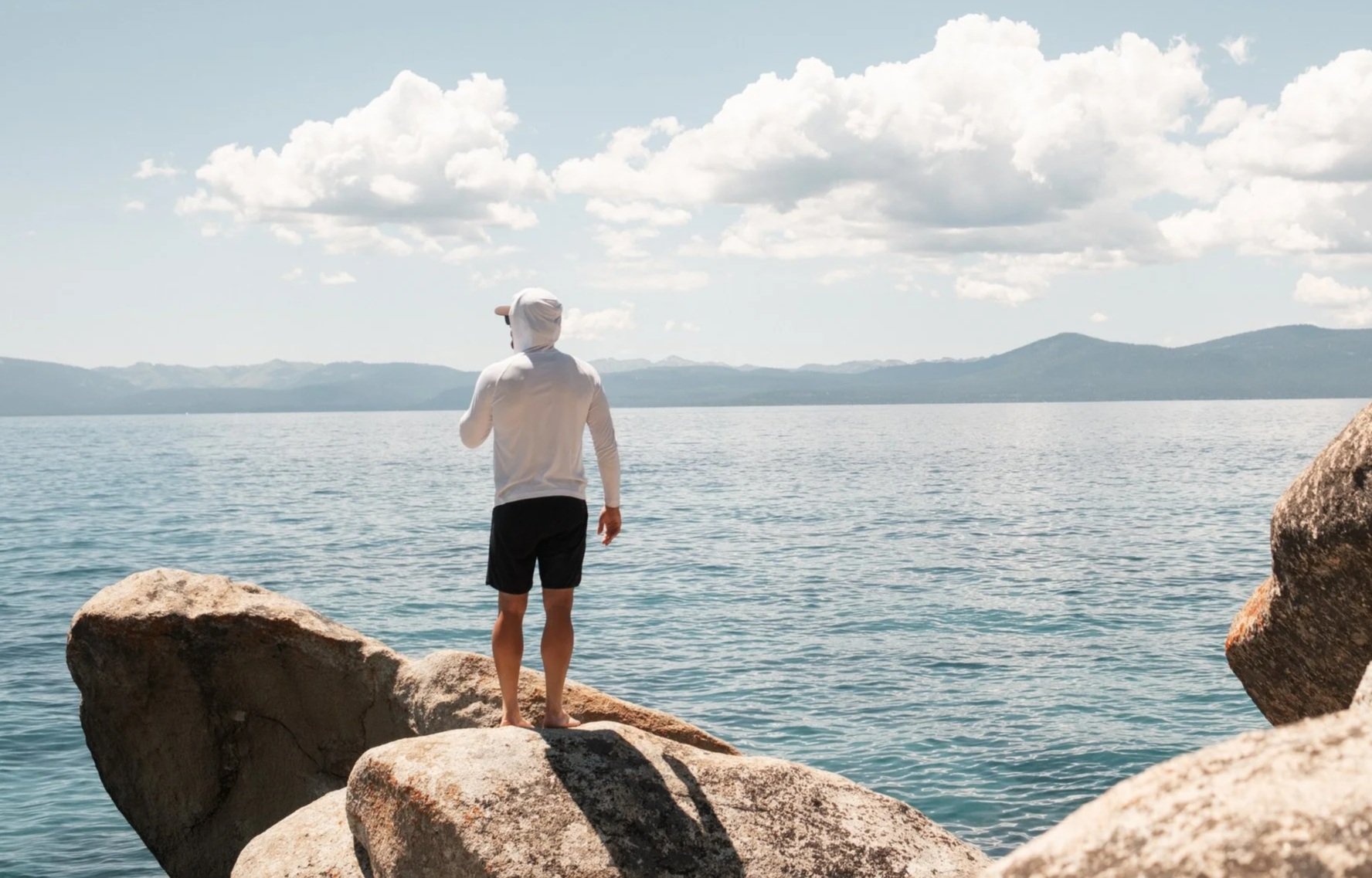
The Verdict:
At 104 grams in a men’s Medium, the NoFry was the lightest hoodie tested. It worked for hiking, running, traveling, backpacking, and mountain biking while costing less than every other option.
+What We Like
Lightest hoodie in the test
Excellent airflow and fast drying
Versatile fit and adjustable neck coverage
-What We Don’t Like
Thin material can snag or pill
UPF 30+ provides less protection than the heavier high-UPF options
The Nitty Gritty
Price: $69
Measured weight: 104 g, One Snap
Tested color: White
Fabric: 79 gsm grid-knit polyester
Sun protection: UPF 30+
Fit: Athletic without feeling tight
Disclosure: Adventure Worthy is associated with KETL Mountain Apparel, but this review is based on real testing and the same honest standards we apply to every product we review. All of the products in this review were paid for with our own money.
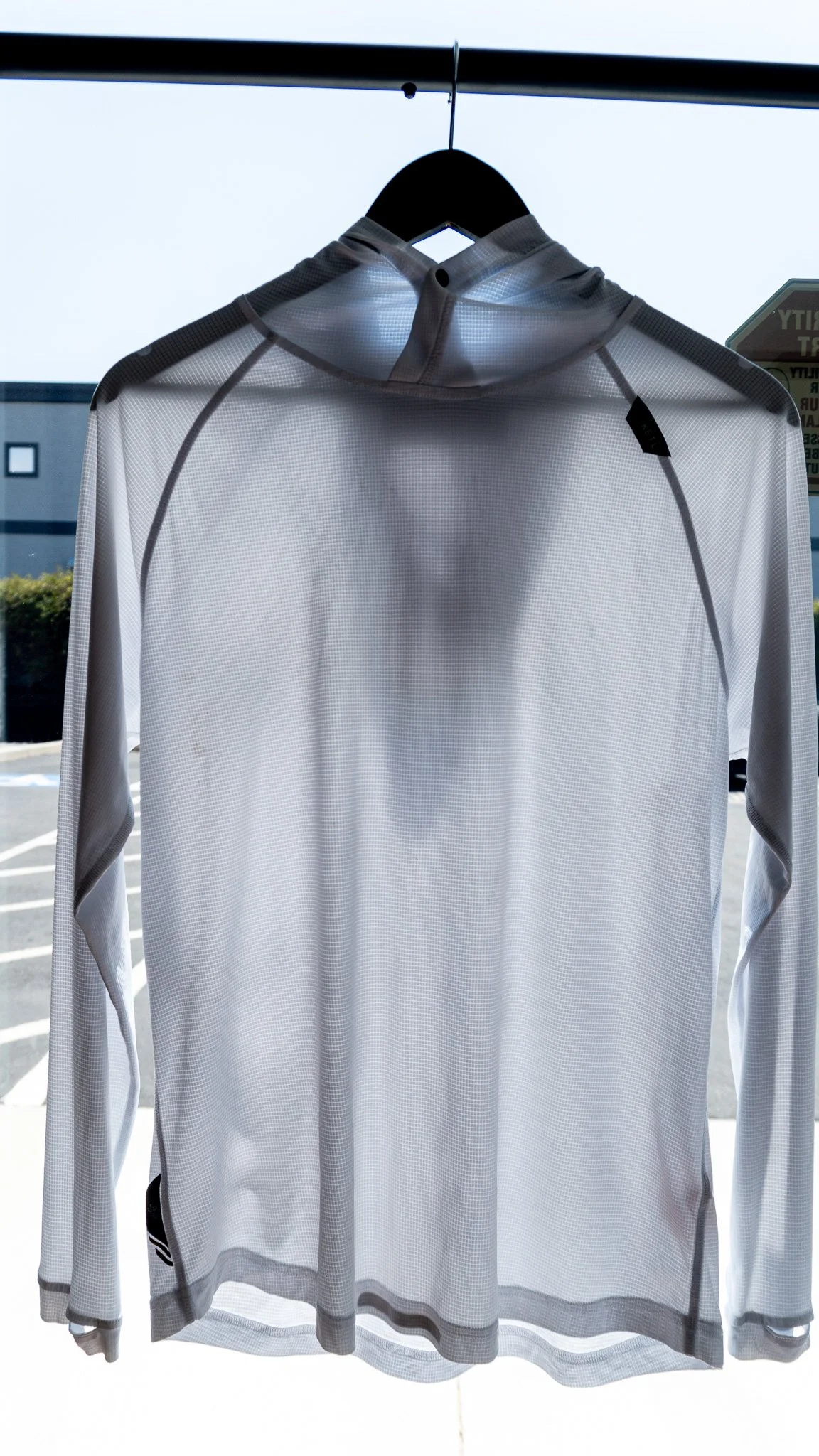
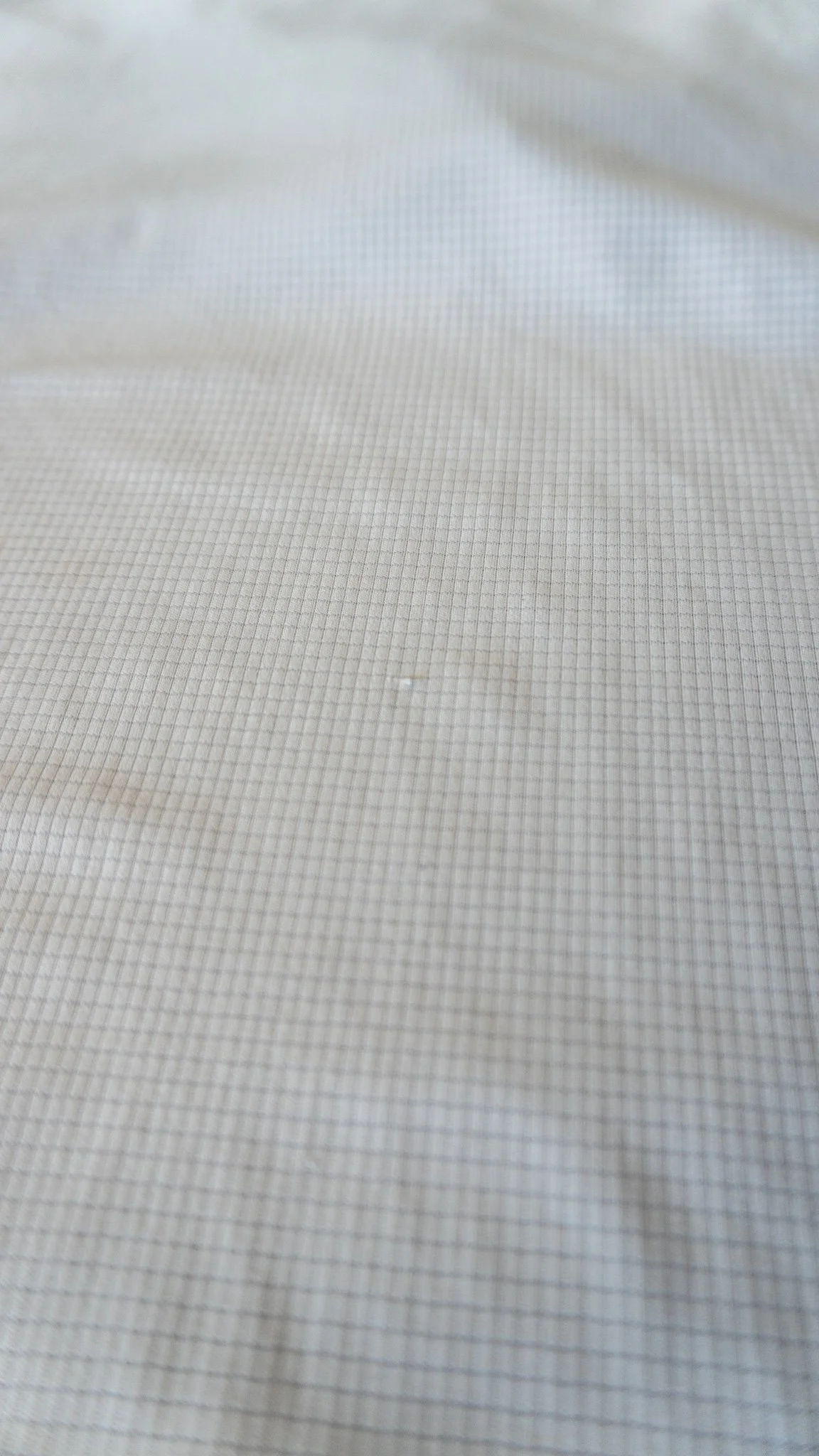
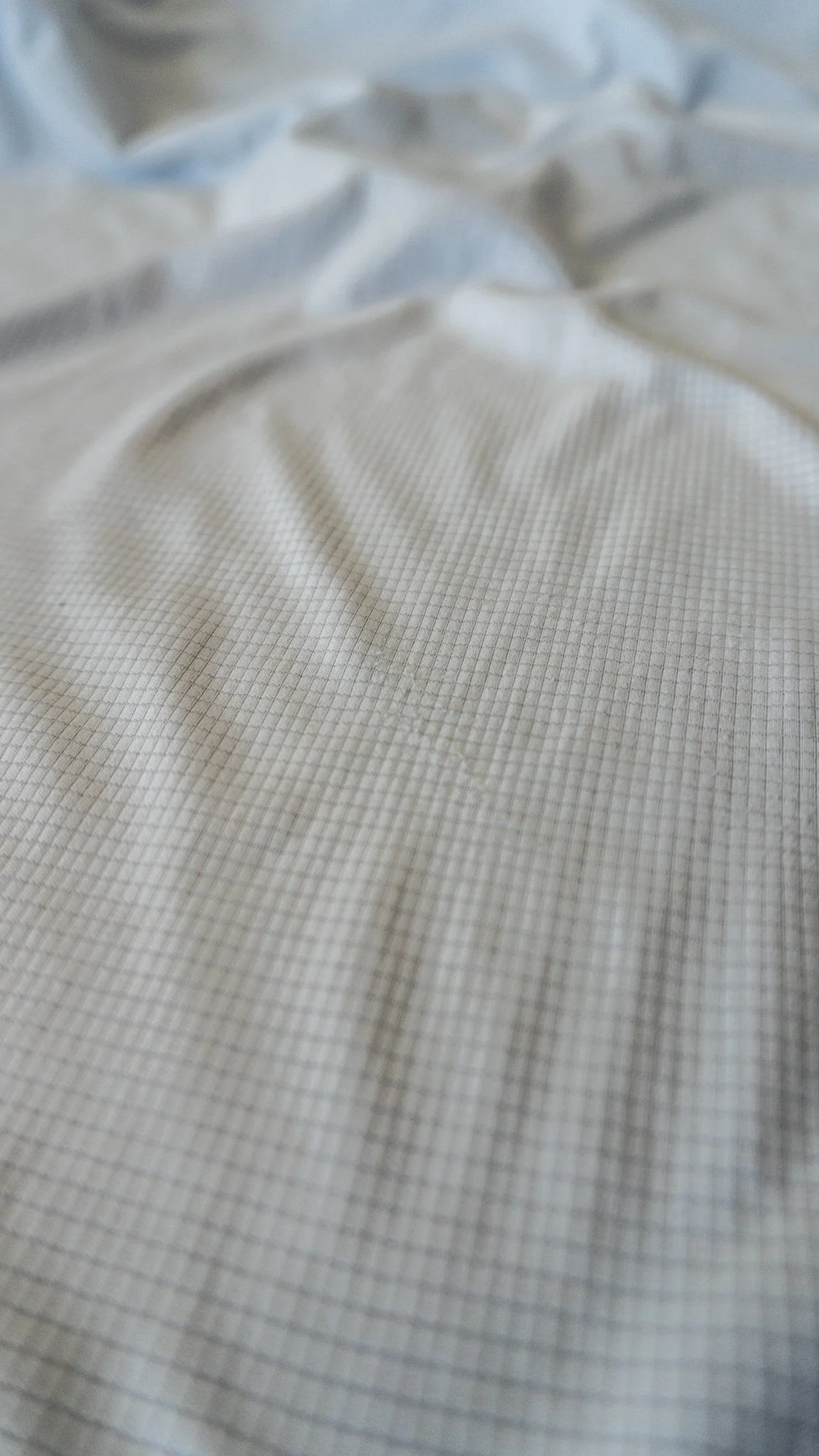
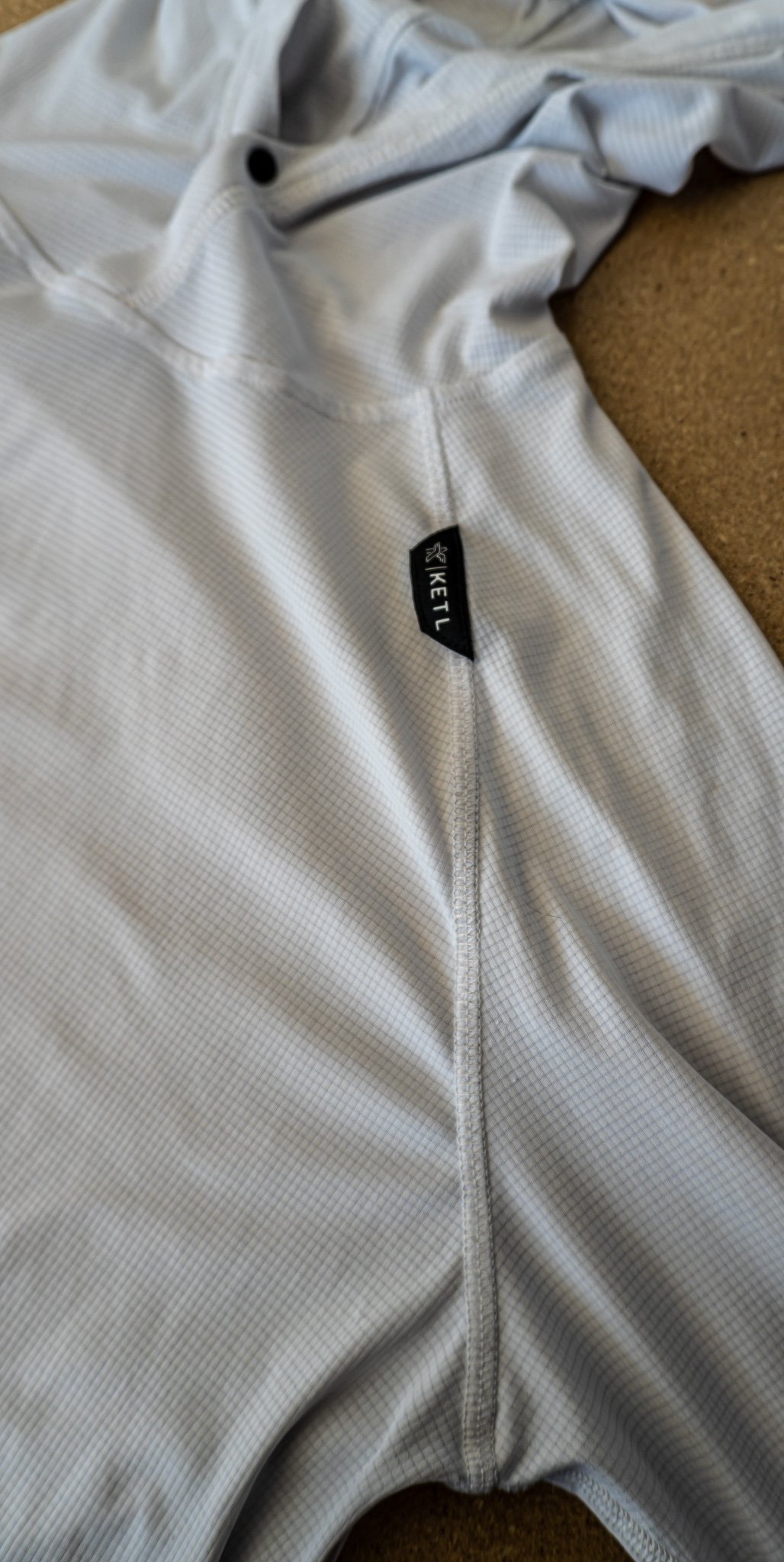
KETL lists thumbholes and odor control and warns that the lightweight material needs care around Velcro and abrasive surfaces.
The NoFry and Echo shared the top airflow tier, but the NoFry’s lower weight and adjustable hood gave it the edge. Its torso and shoulders felt neither baggy nor restrictive, and the body stayed beneath my backpack hip belt. The sleeves fit closer than the Echo’s. Some may find them tight, but they stayed in place when wet.
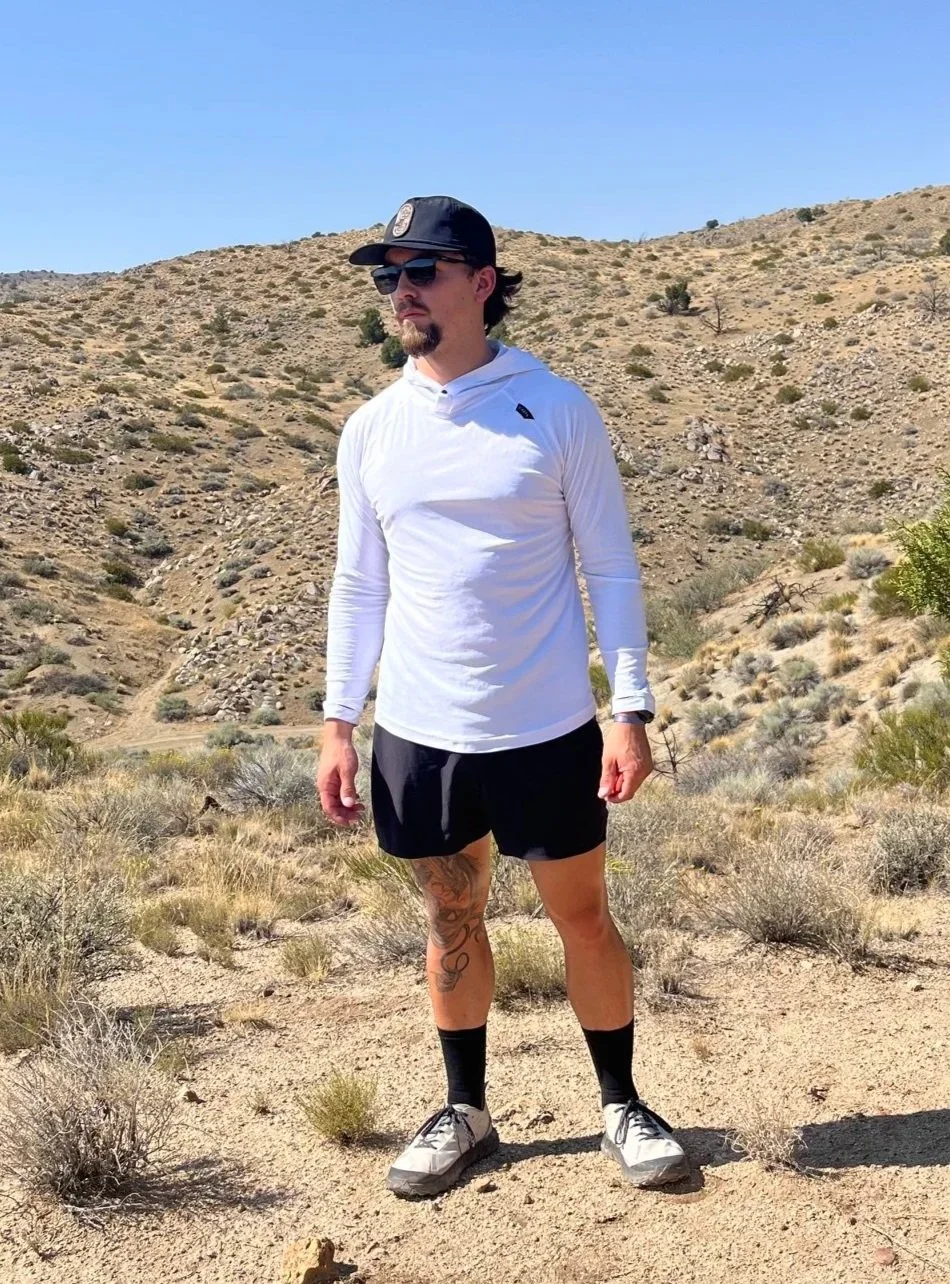
When the one snap is closed, the hoodie covered more of my neck and lower face. Opening it created more space when the air went still. That mattered because it helped with airflow throughout the garment.
After the creek soak, it dried in roughly 15 to 20 minutes while I hiked. It handled sweat without clinging and controlled odor through full days outside.
KETL’s advice to treat it carefully holds up. One of my backpack’s adjustable shoulder straps sat slightly off, exposing a small piece of Velcro that rubbed against the hoodie and caused pilling. After spotting it, I became more careful with pack straps and sharp objects. The pilling never developed into a hole.
One Snap or Four Snap?
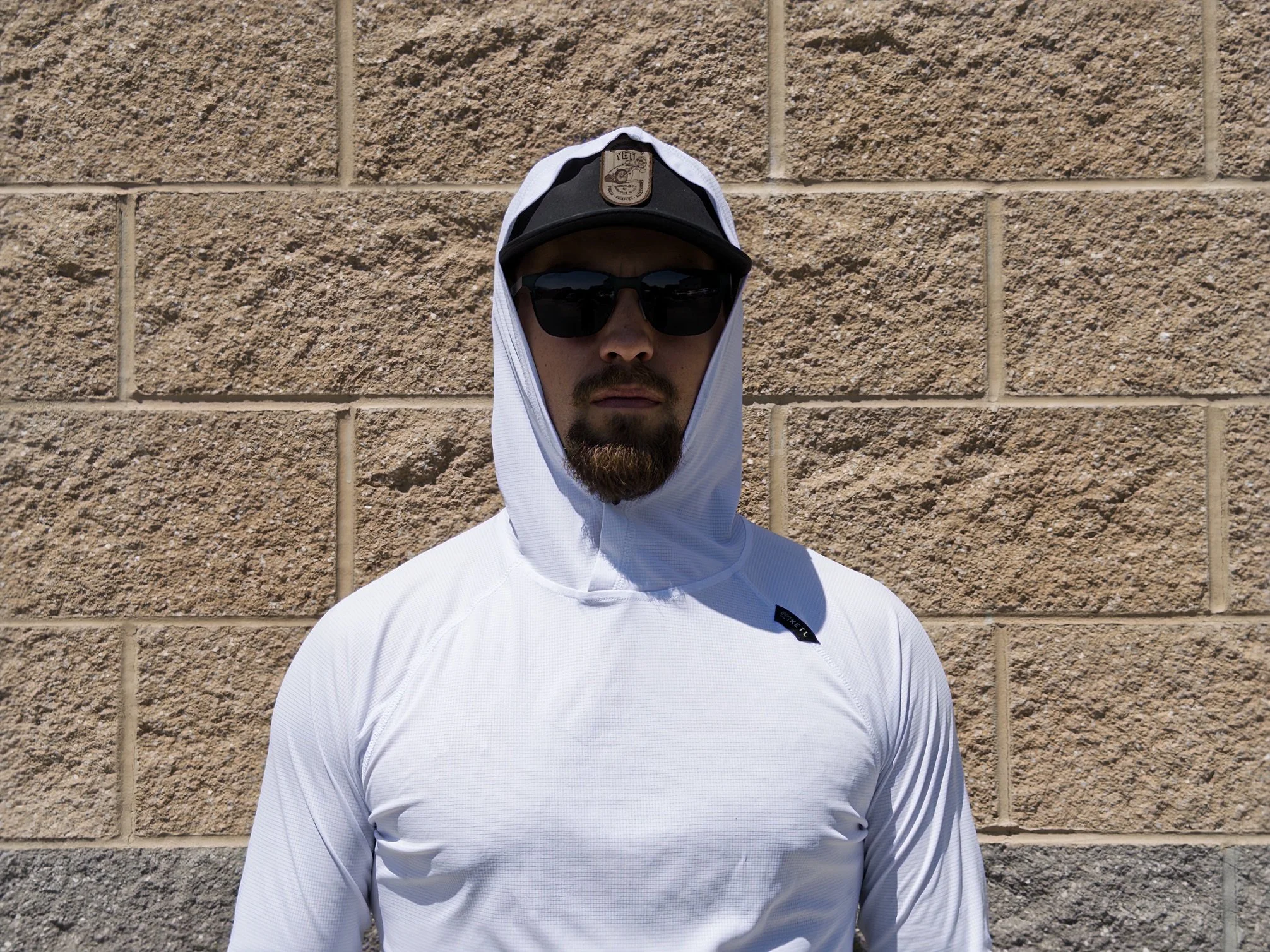
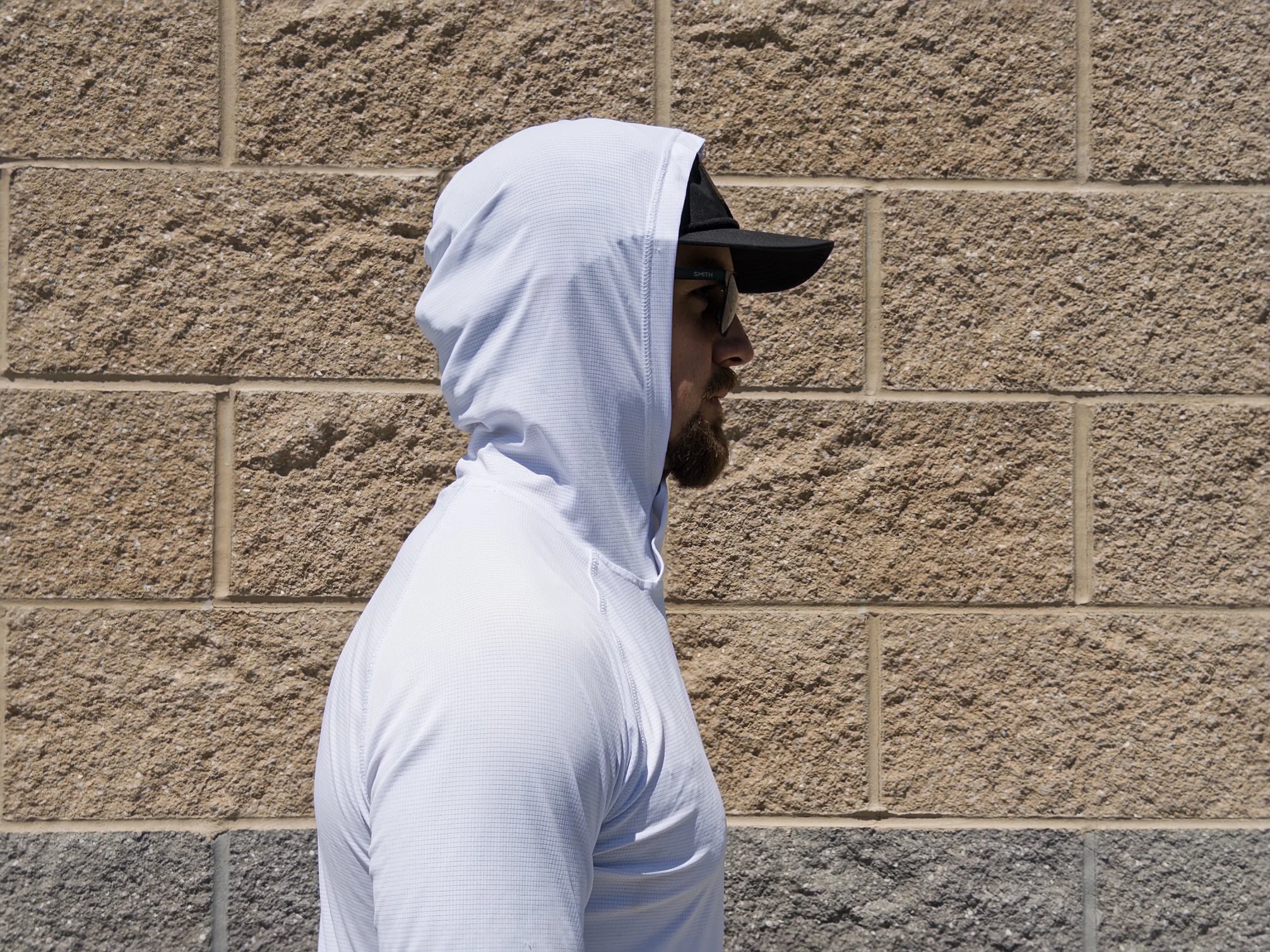
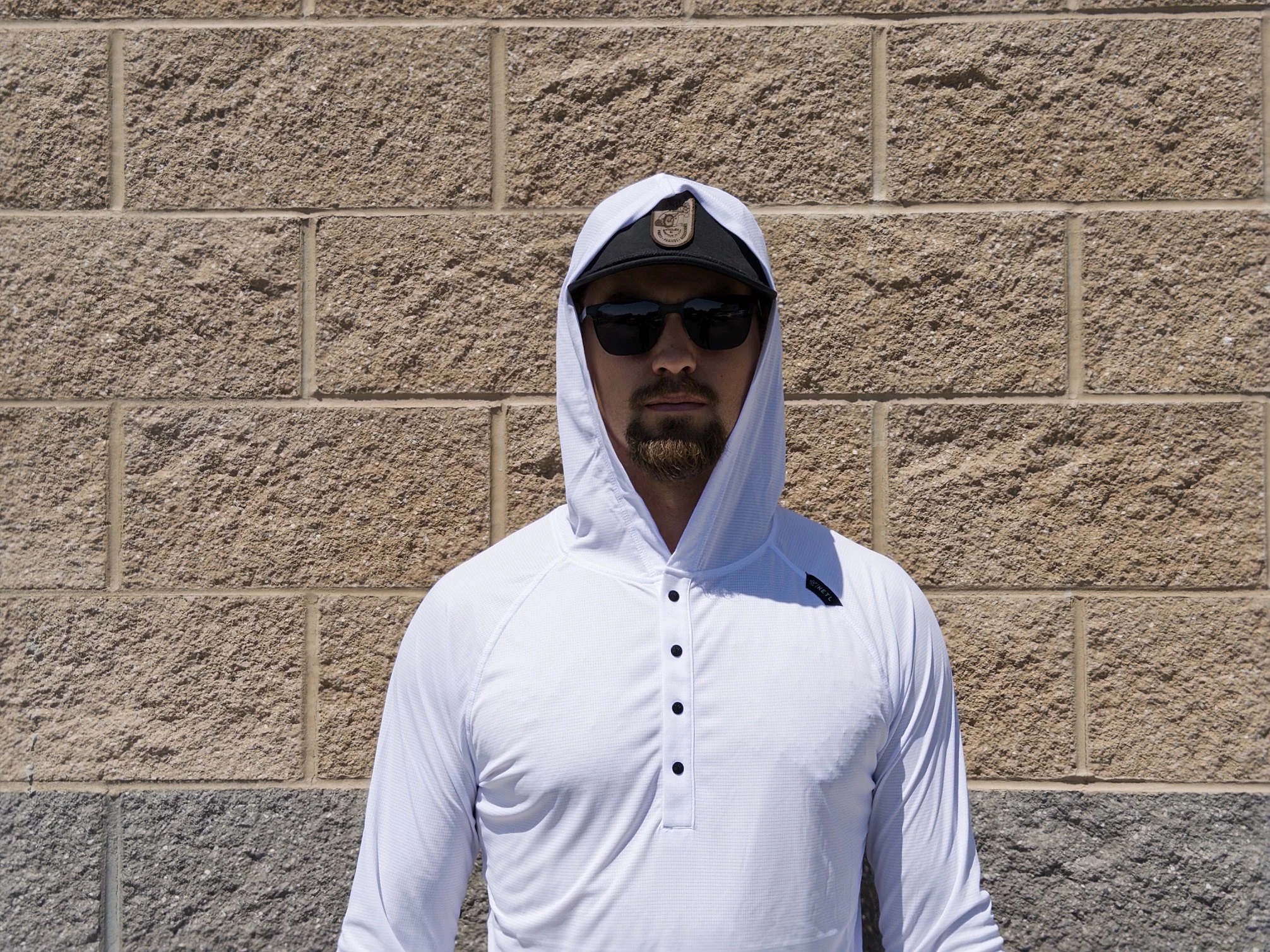
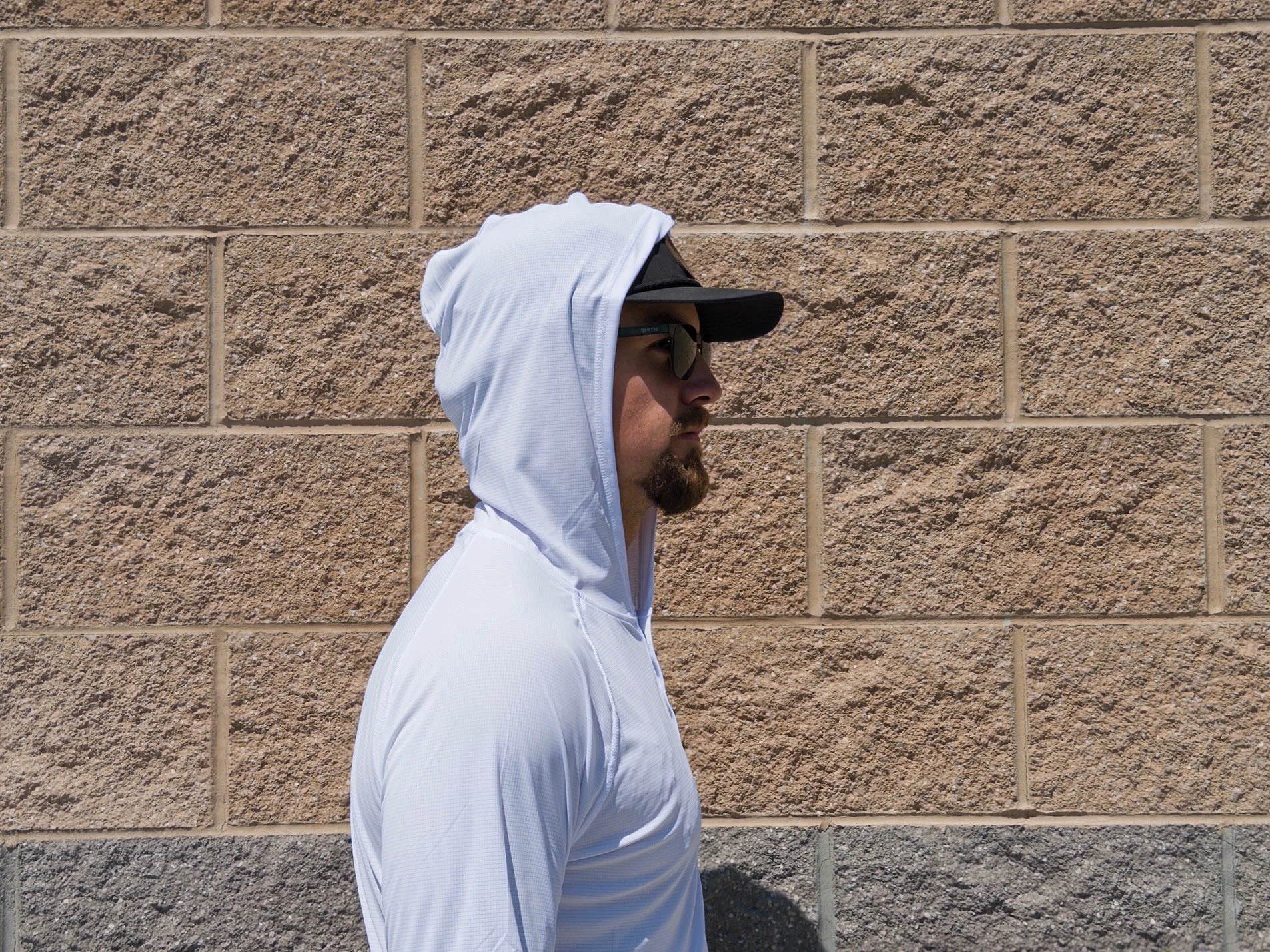
I prefer the 104-gram One Snap because it covers more of my neck and face. The 114-gram Four Snap opens farther in brutal heat, but its looser hood blew off more easily in strong wind.
Who Should Buy It?
Buy it for hiking, backpacking, trail running, travel, mountain biking, and everyday summer use if you run hot and value airflow over maximum UPF.
Who Should Skip It?
Skip it for exposed high-alpine terrain, large temperature swings, or maximum UPF. Its airflow can feel chilly when temperatures drop.
Best for Hot-Weather Backpacking
The Verdict
The Echo is exceptionally well cut and sits in the same airflow and drying tier as the NoFry. Its low UPF rating and loose wet cuffs kept it in second place.
+What We Like
Excellent airflow and drying speed
Technical cut moves well under a pack
Secure, comfortable hood
-What We Don’t Like
Lower UPF rating than the rest
Wet cuffs slide over the hands
Lightweight fabric requires care around snags
The Nitty Gritty
Price: $85
Measured weight: 115 g
Tested color: Naval Blue
Fabric: 100% recycled polyester
Sun protection: UPF 20 in dark colors
Fit: Trim, technical cut
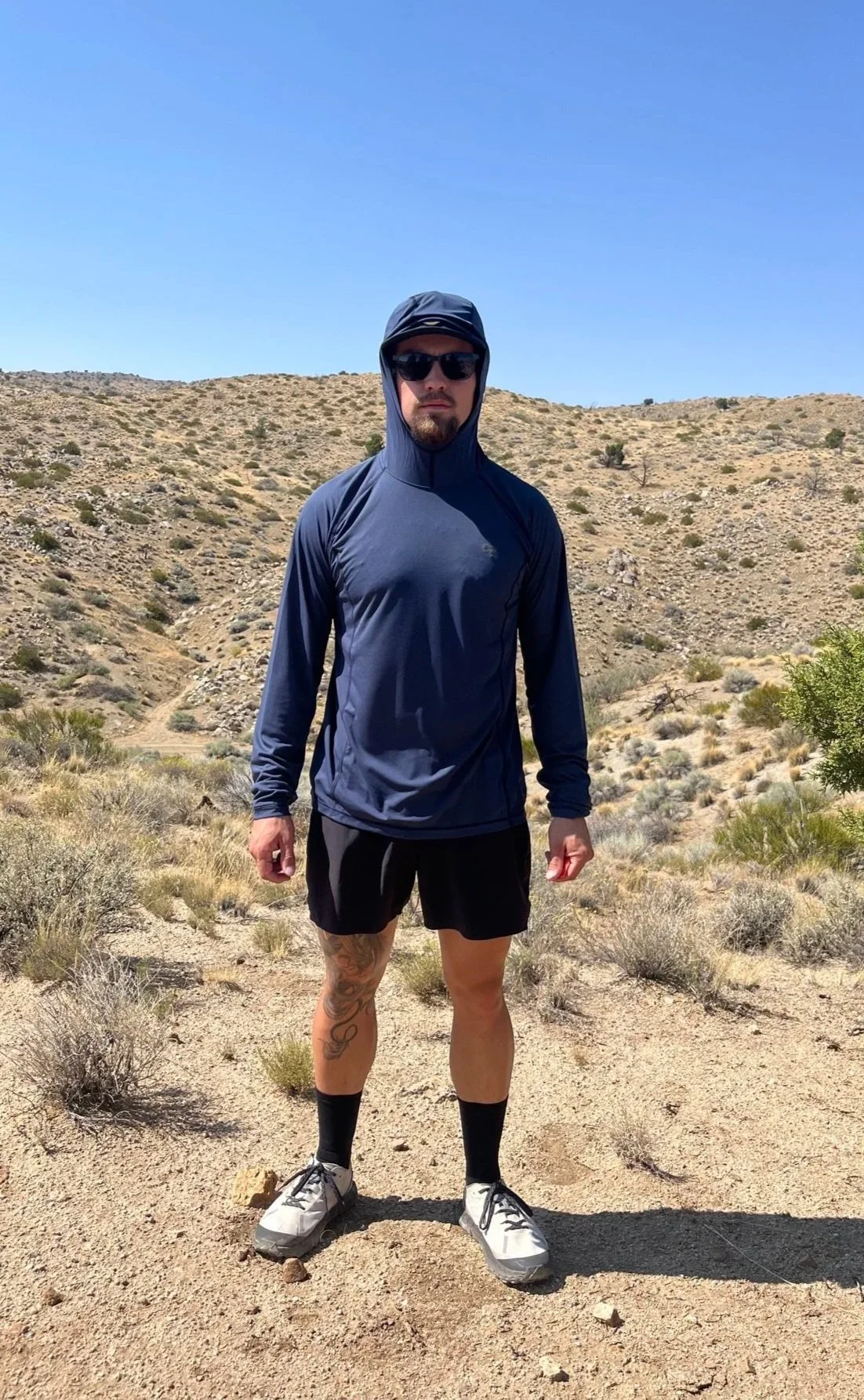
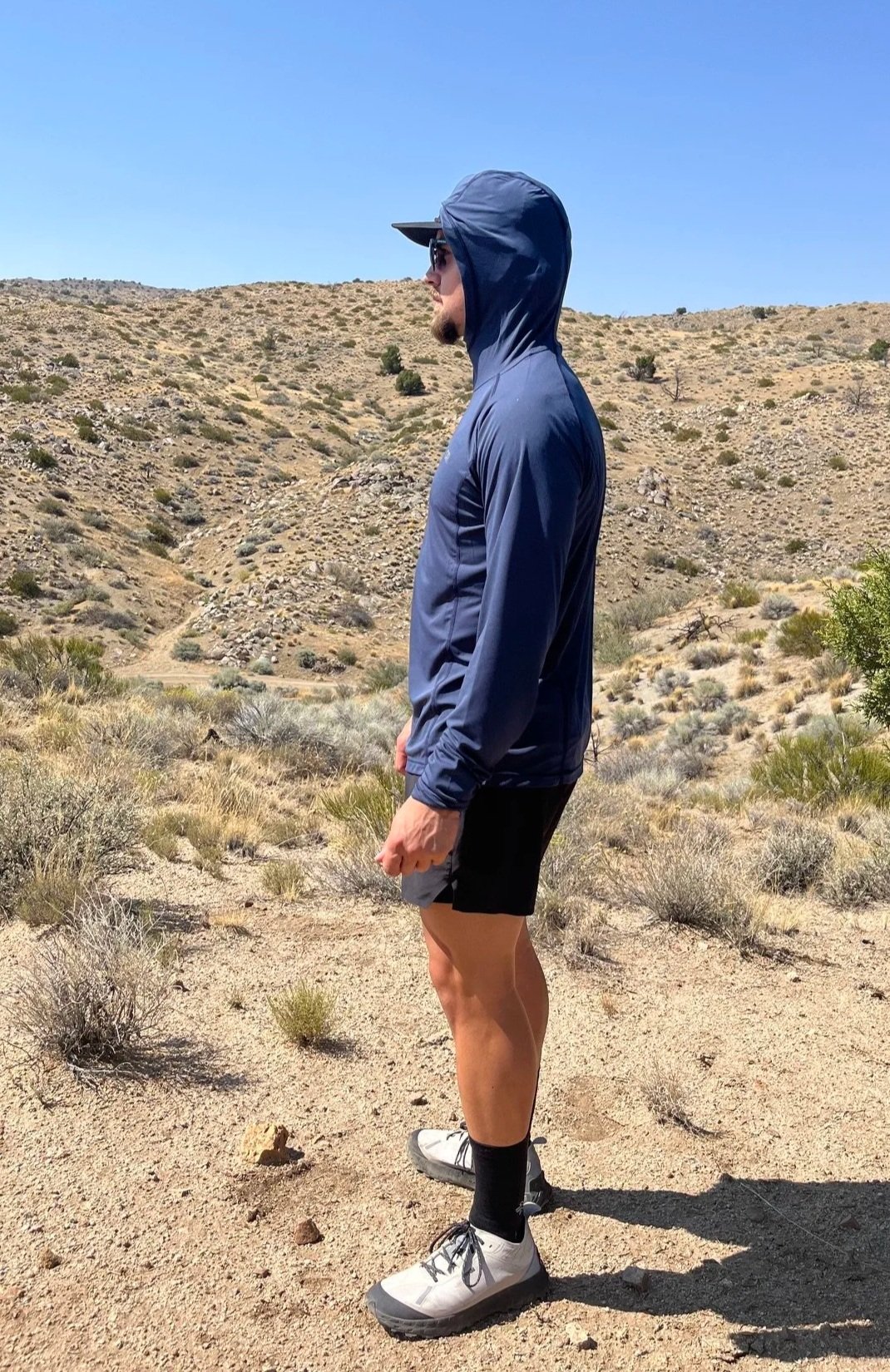
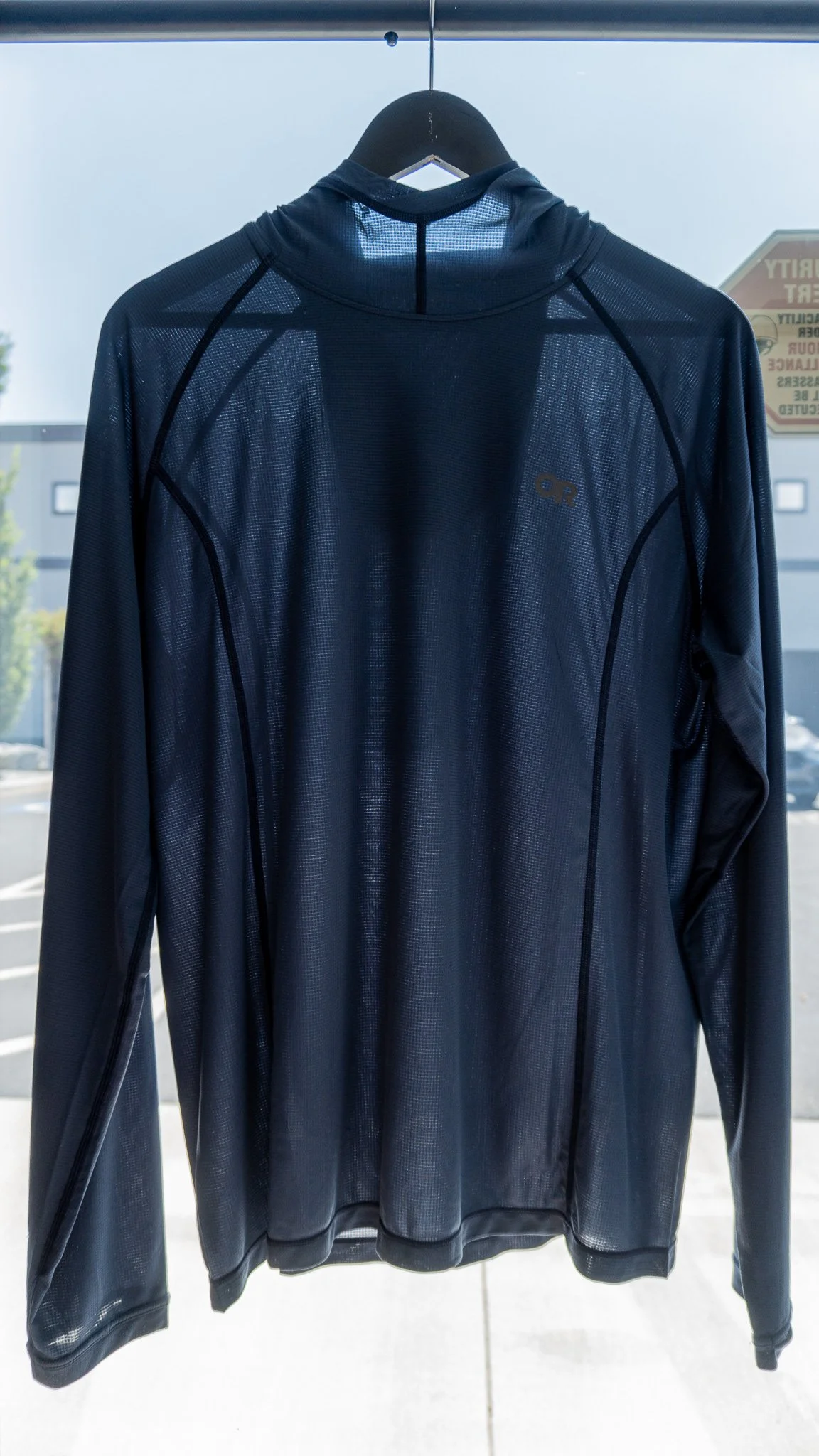
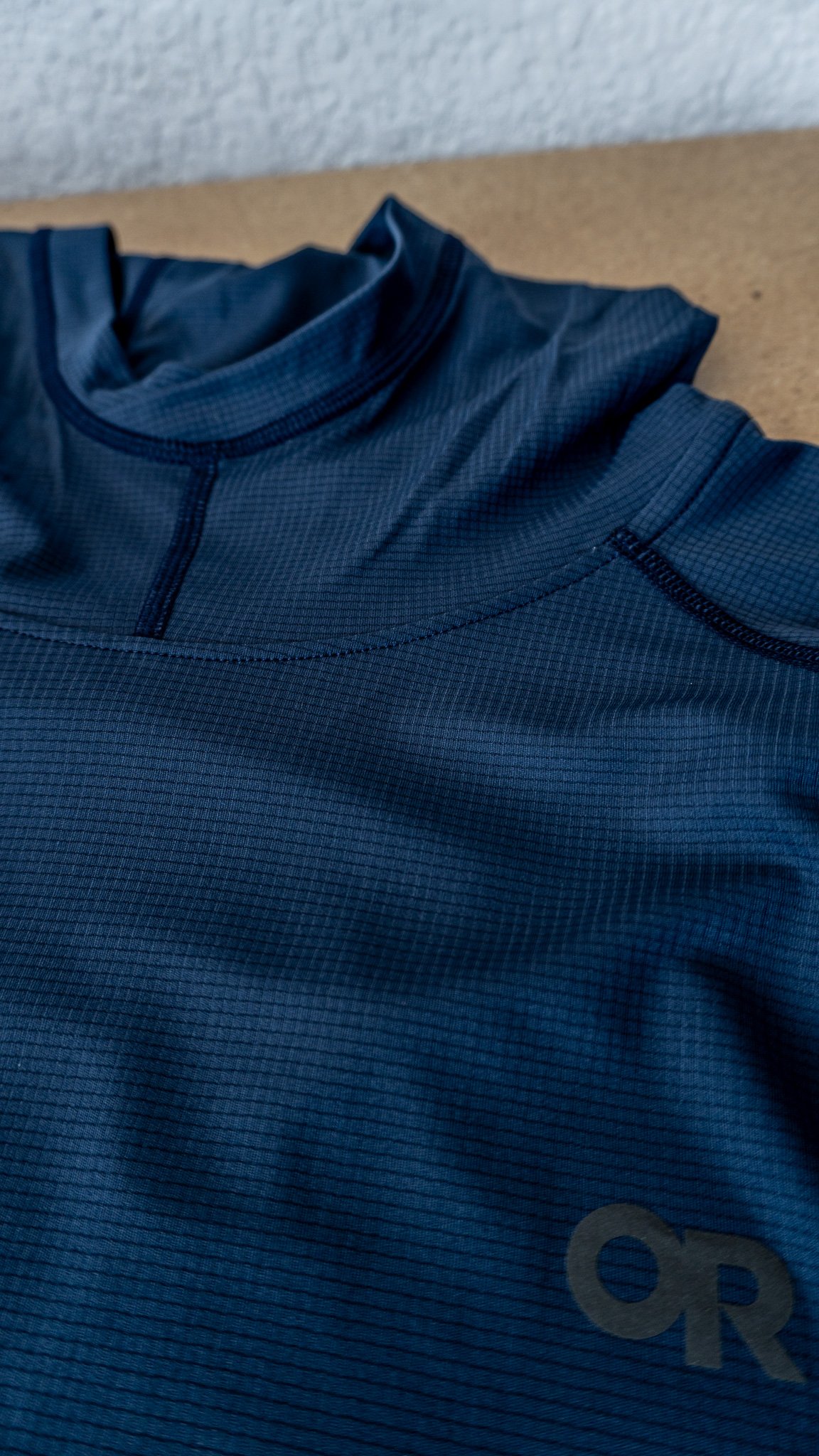
The Echo has flat seams, raglan sleeves, thumbholes, and a three-panel hood. Outdoor Research rates light colors UPF 15 and dark colors UPF 20, including Naval Blue.
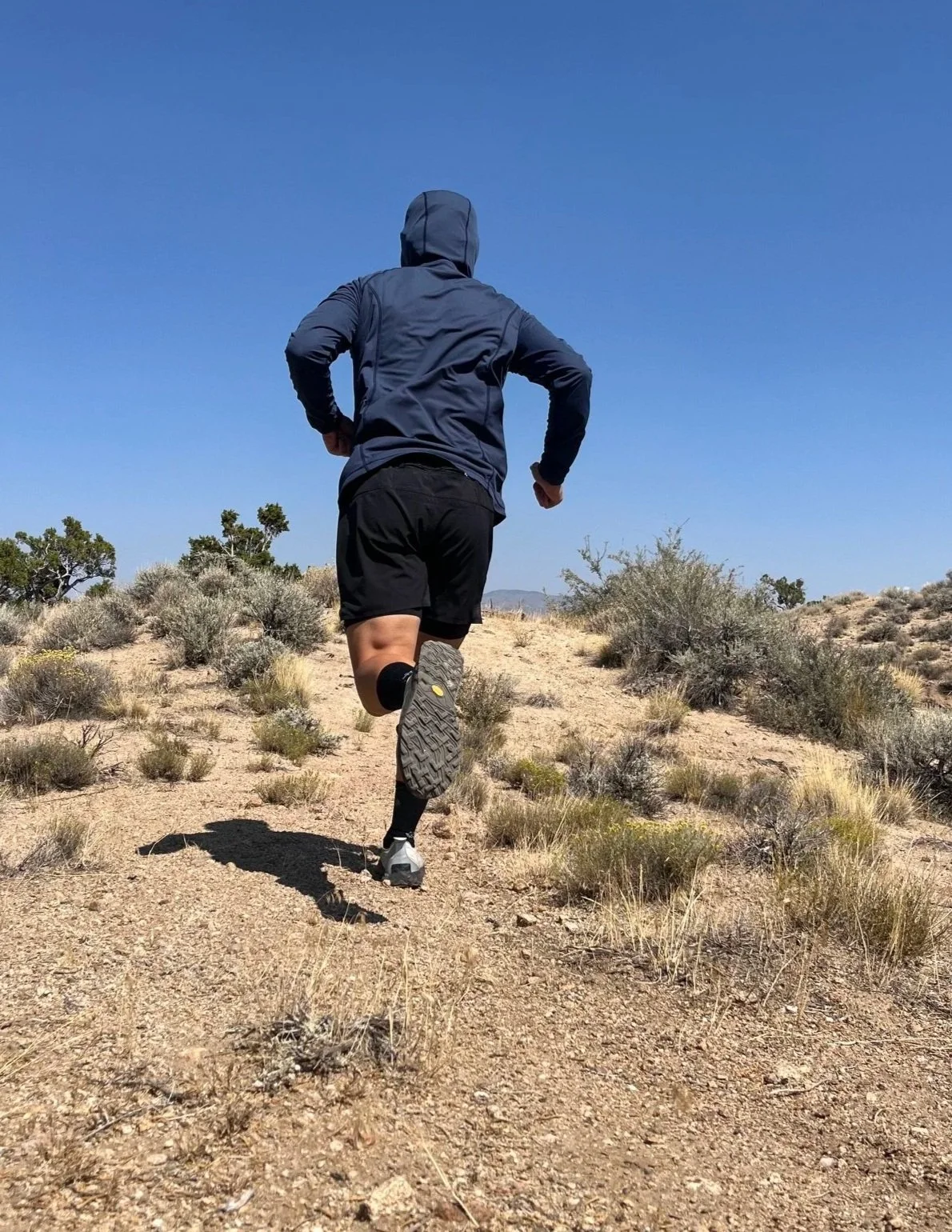
The fabric felt about as airy as the NoFry and dried in the same 15-to-20-minute range. Multiple panels shape it around the body instead of hanging like a long-sleeve shirt with a hood. The torso and shoulders moved naturally under a pack, and the longer body stayed beneath the hip belt.
The hood stayed secure in wind, fit over a hat and glasses, and sat cleanly beneath a bike helmet. It lacks the NoFry’s adjustable opening, but the hoodie has the best shape tested.
The sleeves and cuffs fit looser than the NoFry’s. I found that when the Sun Hoodie is fully soaked, the cuffs slid farther over my hands than I wanted.
Naval Blue gets the Echo’s higher rating, but UPF 20 remains well below the Crater Lake, SunRunner, or HUK. That is the tradeoff for its lower weight and greater airflow.
Its thin material also demands care around brush and abrasive pack hardware, though mine did not lose stretch or develop hood problems during testing.
Who Should Buy It?
Buy the Echo for long, hot hikes or backpacking trips. Its low weight, clean fit, and secure hood work well under a pack.
Who Should Skip It?
Skip it for maximum UV protection or cold, windy alpine conditions. It offers little warmth once temperatures fall.
Mountain Hardwear Crater Lake Hoody
Best for High-Alpine Use
The Verdict
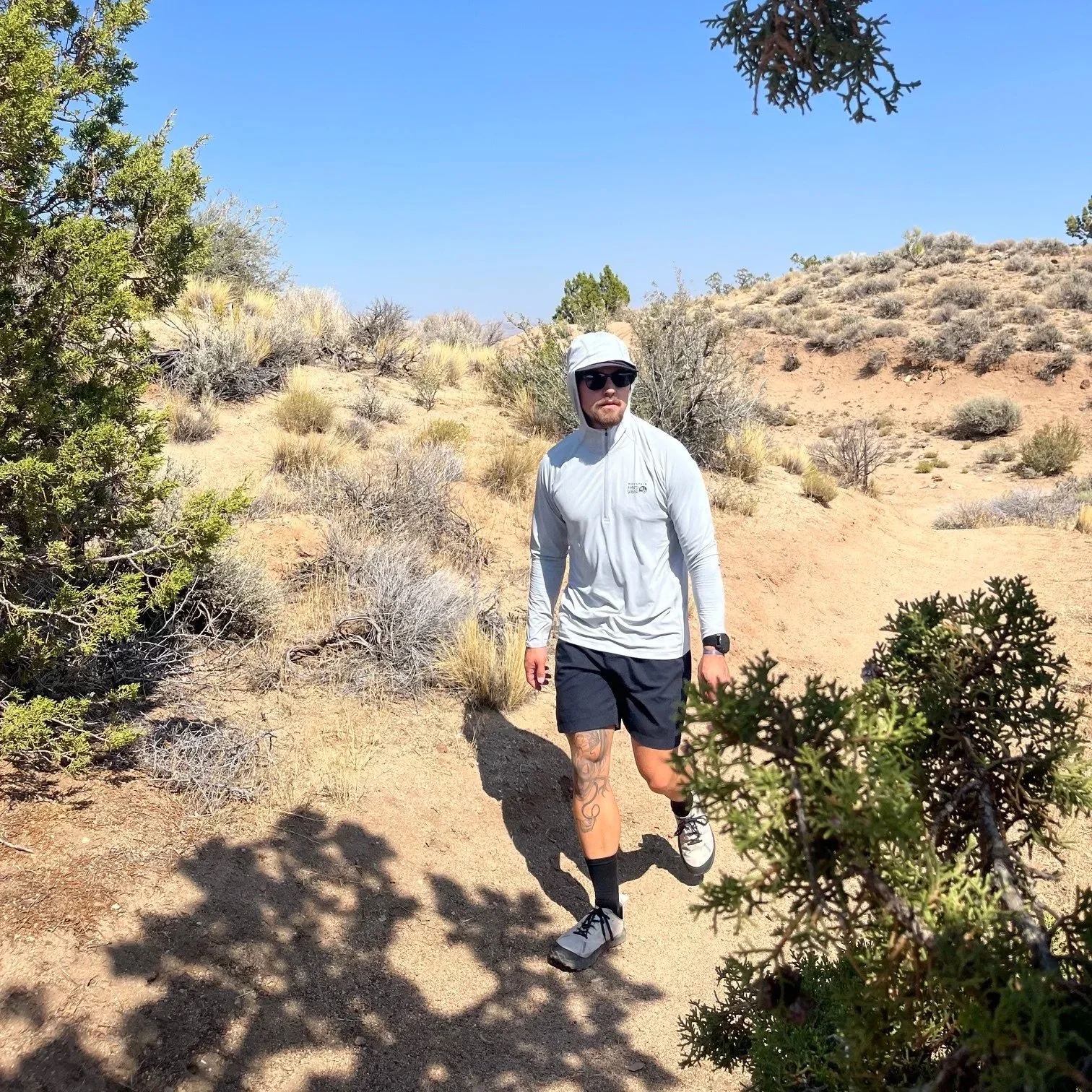
The Crater Lake has the softest fabric in the group. It felt warmer and stayed wet longer than the top two, but its UPF 50+ protection and extra warmth better suit changing high-alpine conditions.
+What We Like
Softest fabric in the test
UPF 50+ coverage
No snagging, pilling, stretching, or other damage during testing
-What We Don’t Like
Stayed wet longer than the top two
Retains more heat
Developed more odor after a full day
The Nitty Gritty
Current listed price: $85
Price paid: $89
Measured weight: 188 g
Tested color: Glacial
Fabric: 88% polyester, 12% elastane
Sun protection: UPF 50+
Fit: Standard
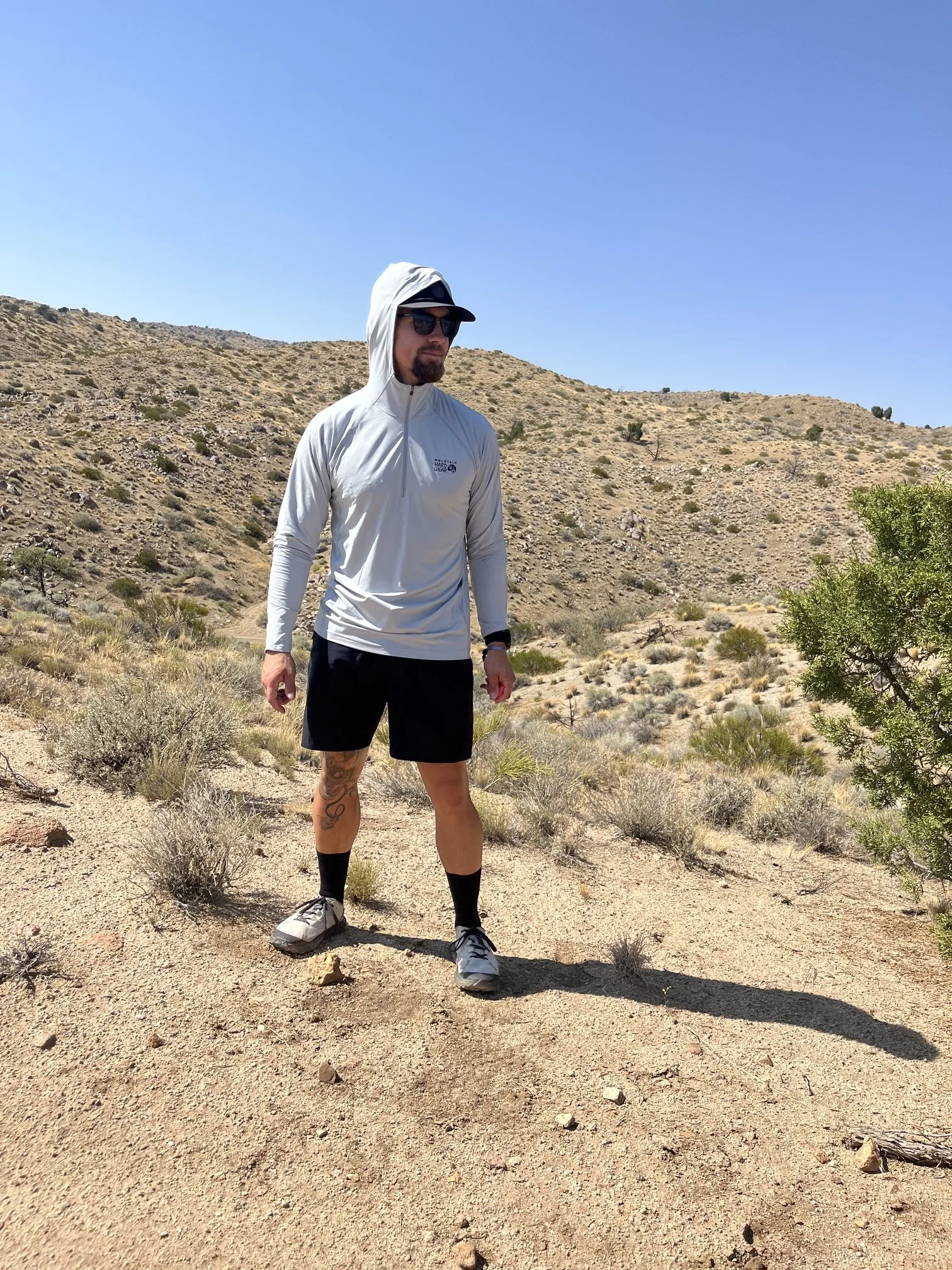
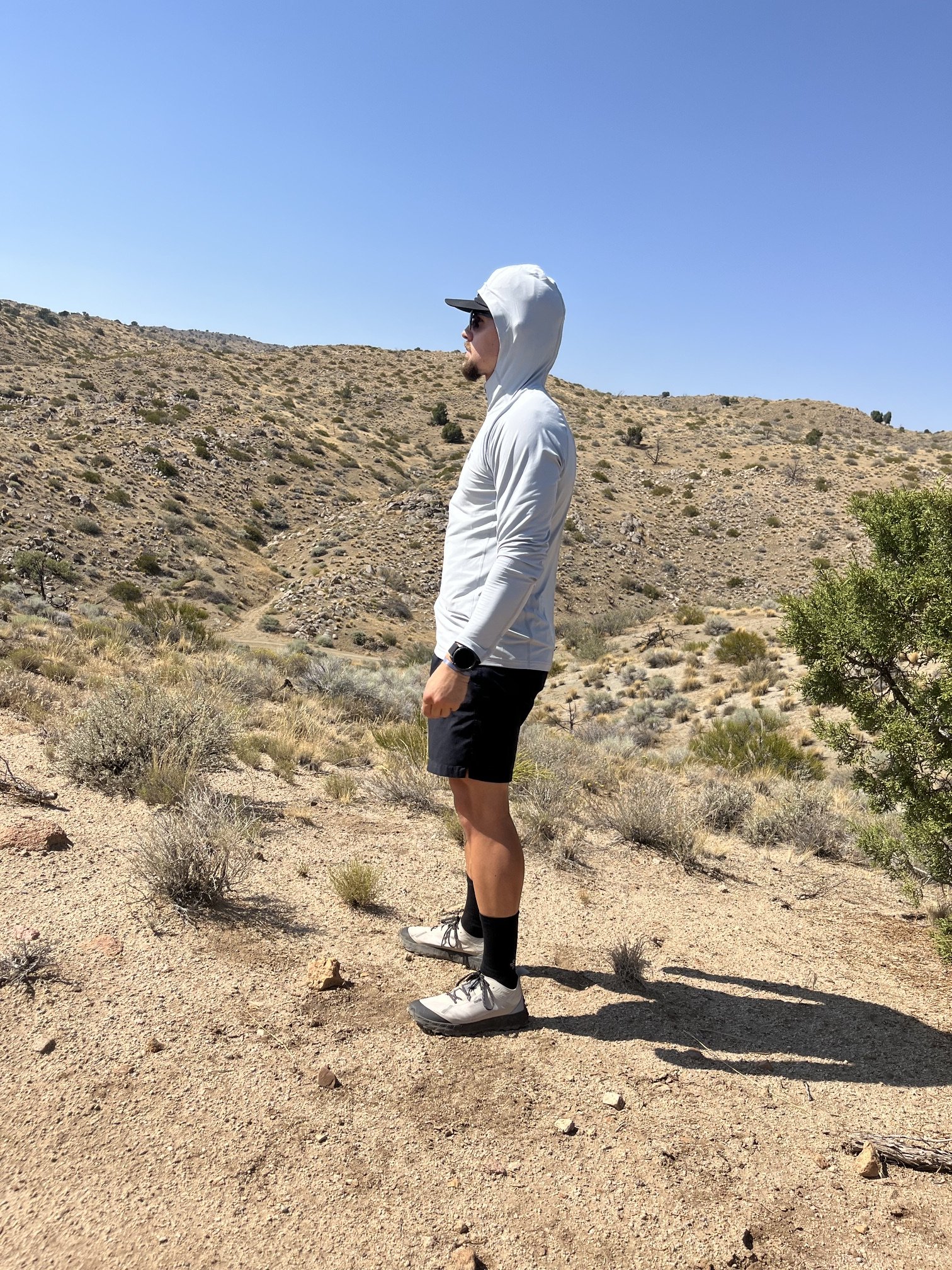
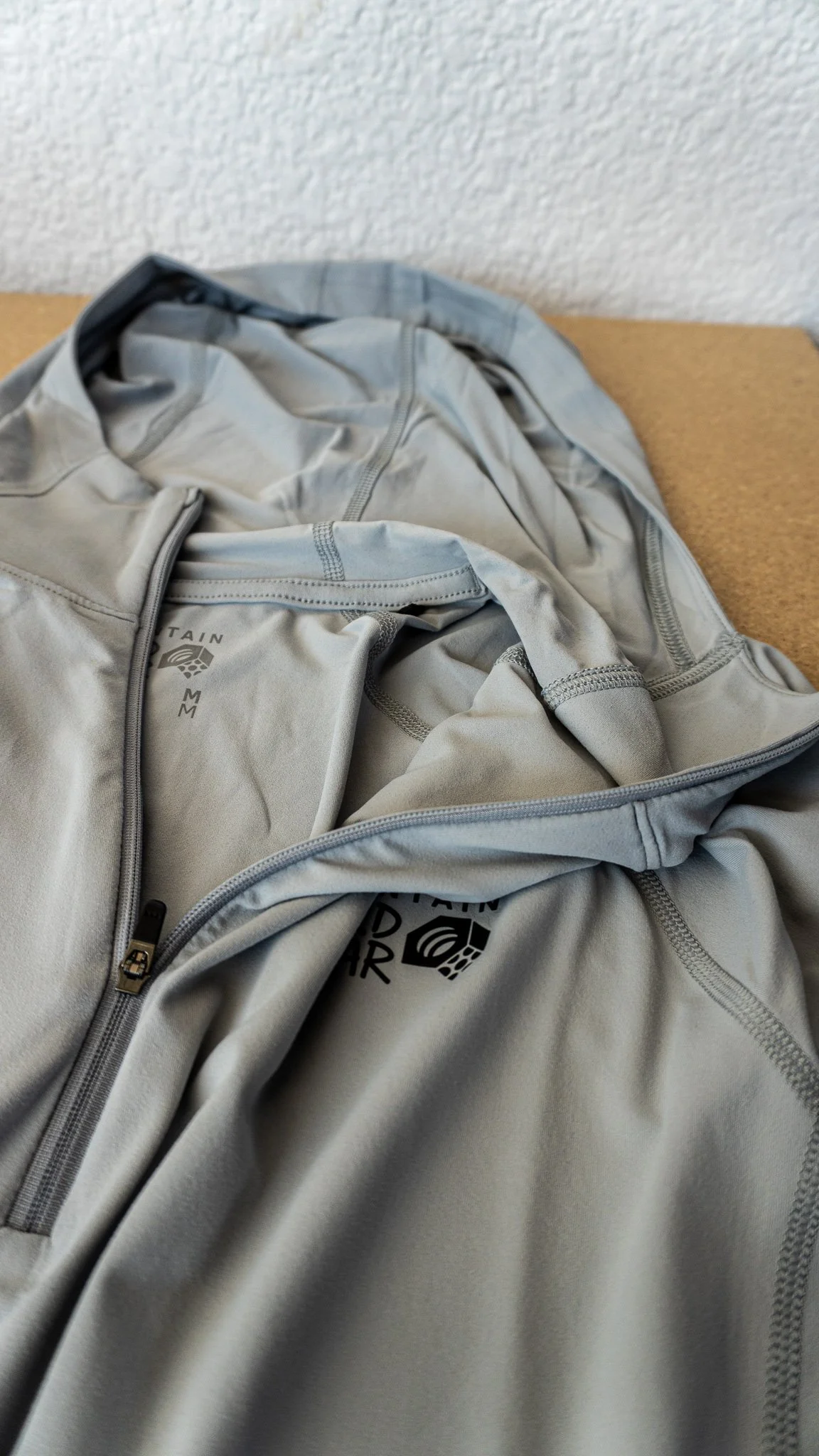
Mountain Hardwear lists a high-neck three-piece hood, low-profile thumbholes, and HeiQ Mint odor treatment.
The fabric feels softer than anything else tested and stretched easily beneath a backpack. Its torso was slightly shorter than the top two but did not ride up enough to become a problem. The scuba hood covered my neck, fit over a hat and glasses, and sat beneath a helmet without much bulk.
During harder efforts and higher temps, it felt warmer than the NoFry and Echo, took about 25 minutes to dry after the creek soak, and stayed wetter against my skin during trail runs.
Because the garment stretched so easily due to the elastane, unfortunately, it also smelled worse after a full day of sweating despite the listed odor treatment. It was not unusually bad for a synthetic, just the weakest here.
My Crater Lake did not snag, pill, stretch, or show other damage. Its 120 gsm fabric provides UPF 50+ coverage and felt warmer when the sun dropped behind a ridge, or wind picked up. That makes more sense high in the mountains than on a still 100-degree afternoon.
Who Should Buy It?
Buy it for hiking, climbing, camping, or backpacking at elevations where sun is intense, and temperatures change quickly. It adds protection and warmth without becoming an insulating layer.
Who Should Skip It?
Skip it for stagnant heat or trail running. It is not as airy or quick-drying as the top two.
Rabbit SunRunner UPF LS Hoodie:
Best for Long-Distance Running in High Sun Exposure
The Verdict:
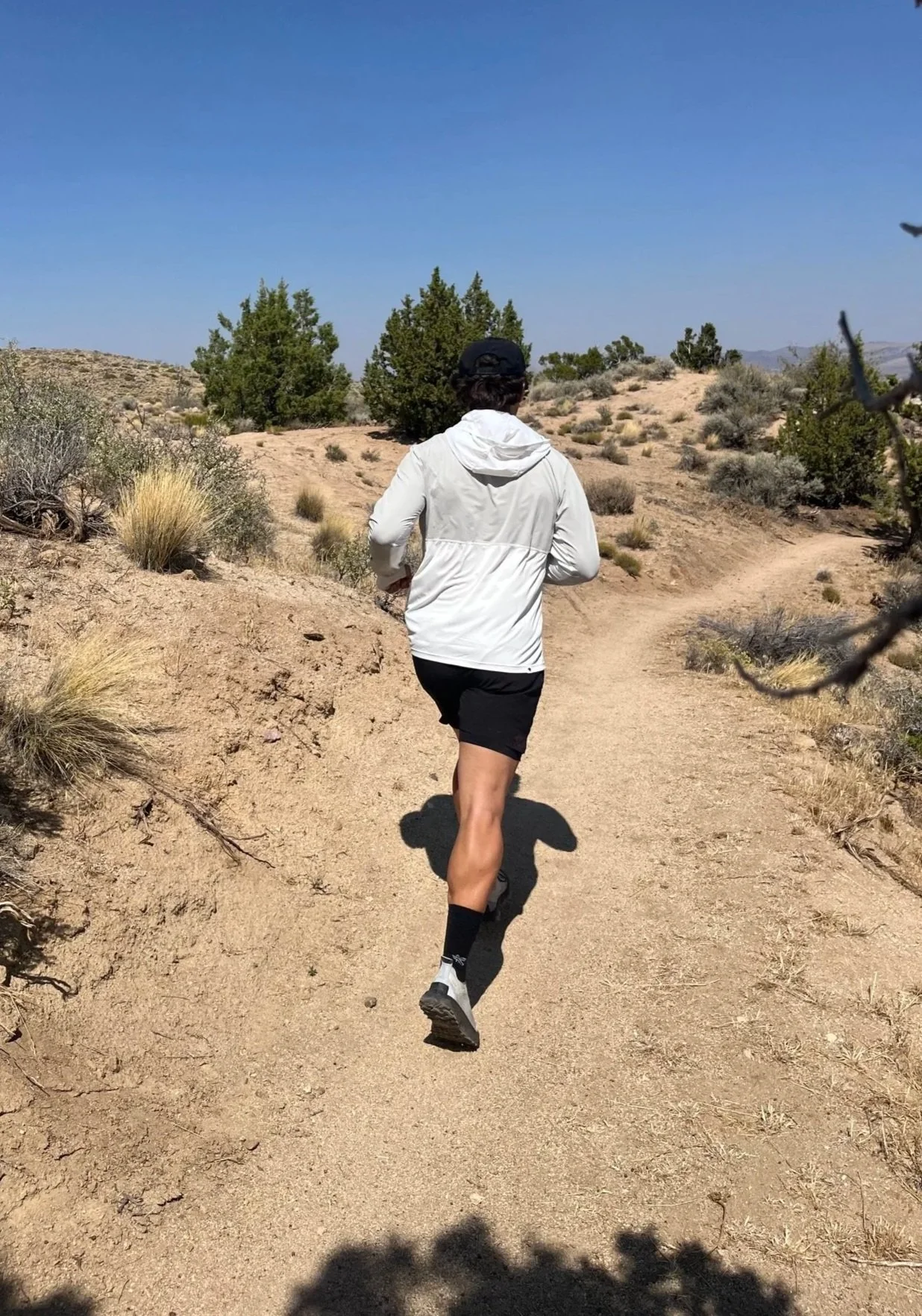
The SunRunner packs in features for long, exposed runs. It performed well, but its restrictive collar, noisy hood, and dedicated running design make it less versatile off the trail.
+What We Like
Useful long-distance running features
Secure fit beneath a hydration vest
High, zoned UPF protection
-What We Don’t Like
Collar felt tight in the tested Medium
Hood makes a distracting swishing noise
Stowed hood can create pressure beneath a pack
The Nitty Gritty
Price: $90
Measured weight: 180 g
Tested color: White
Fabric: Zoned SunShell and AirShell materials
Sun protection: UPF 50+ hood, UPF 100+ upper body, UPF 35+ lower body
Fit: Semi-relaxed body with closer shoulders and arms
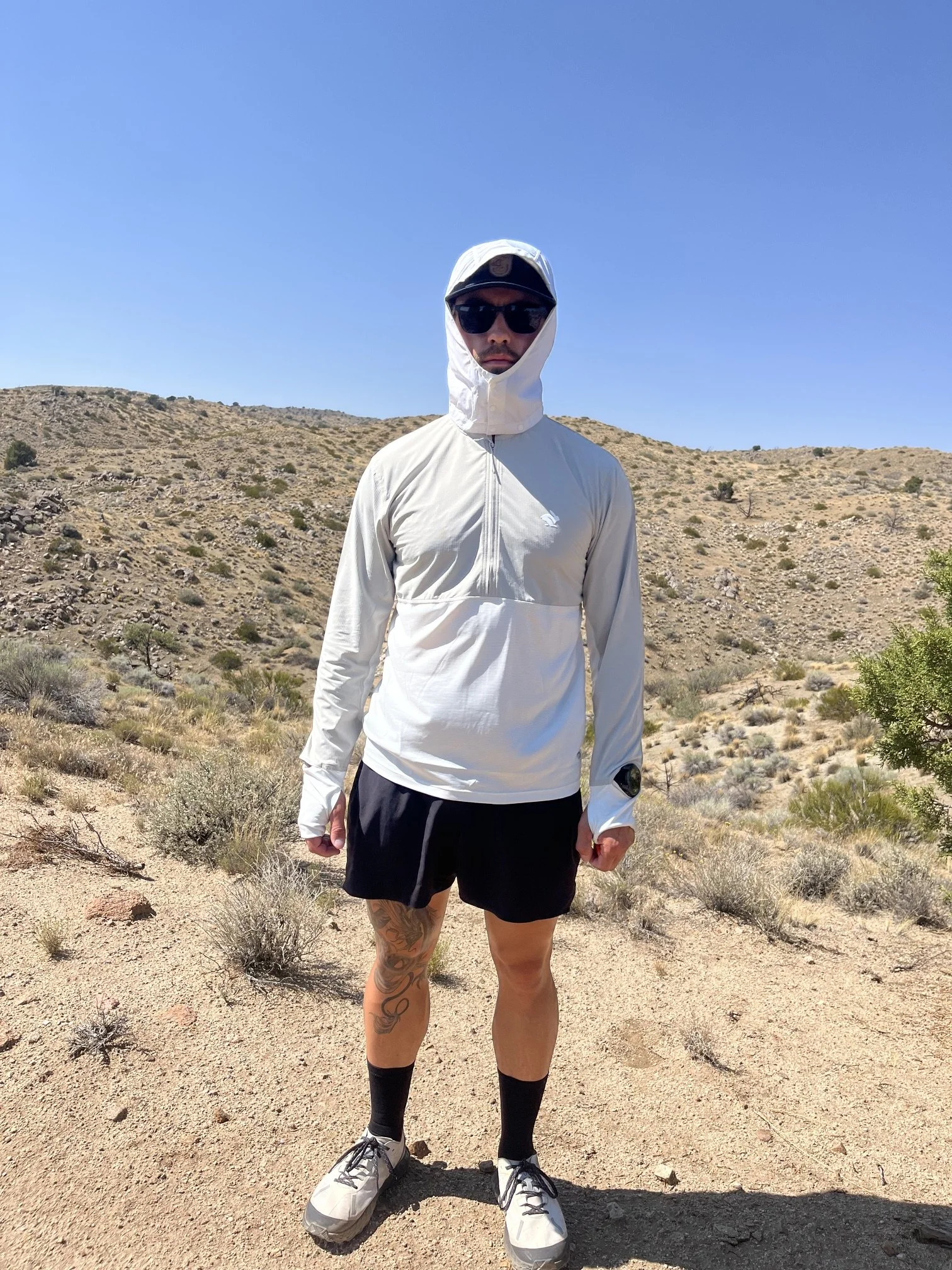
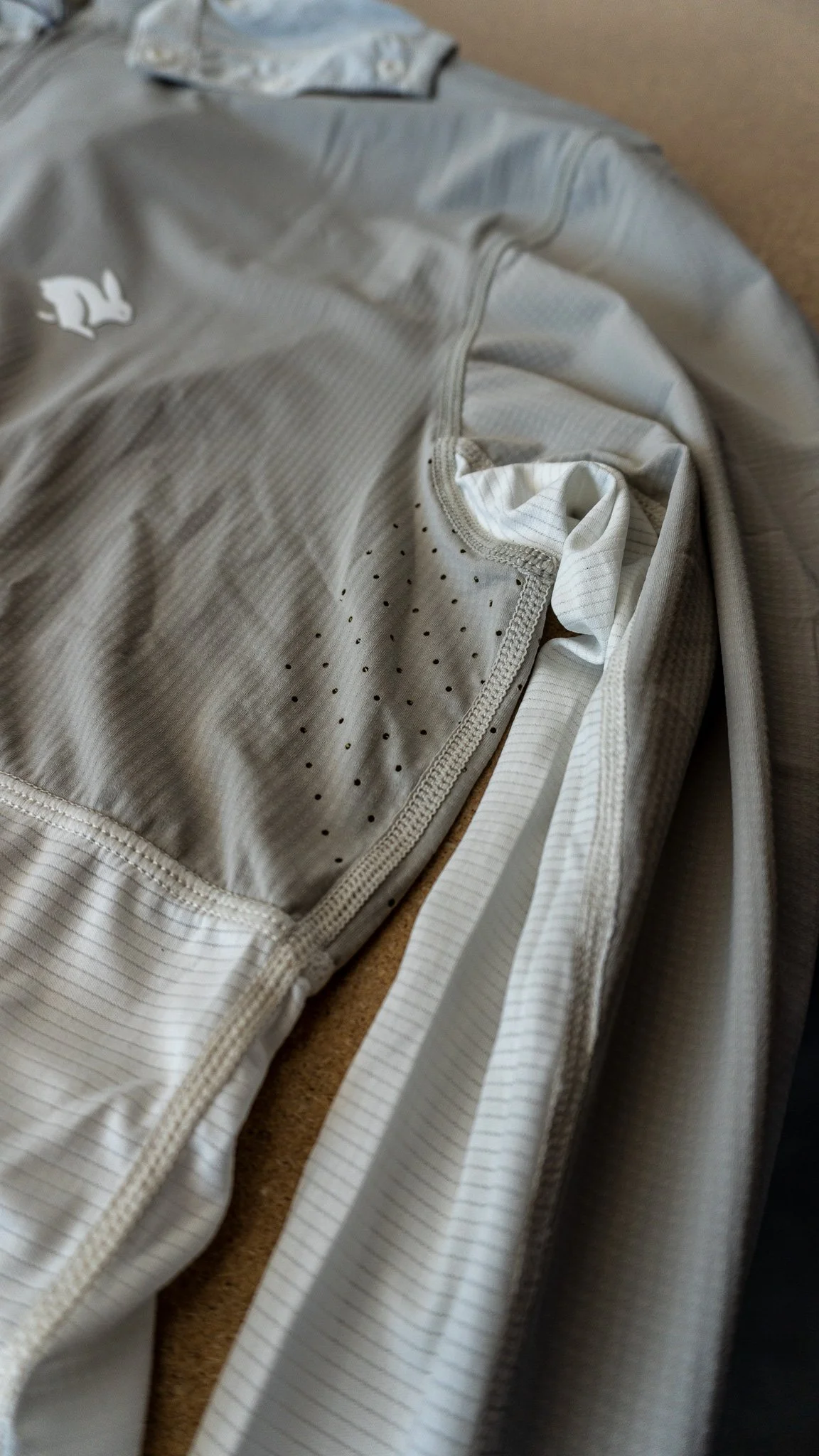
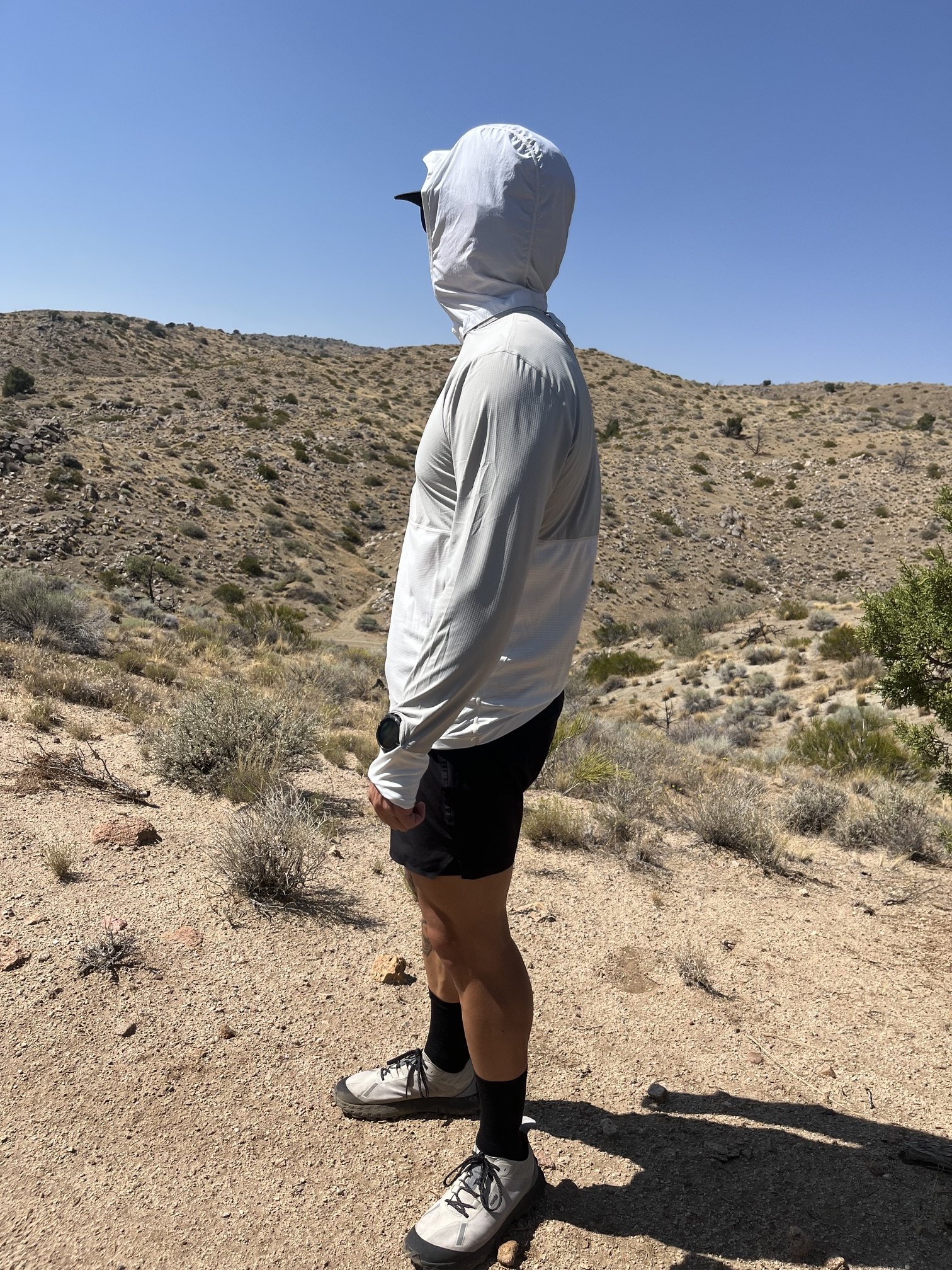
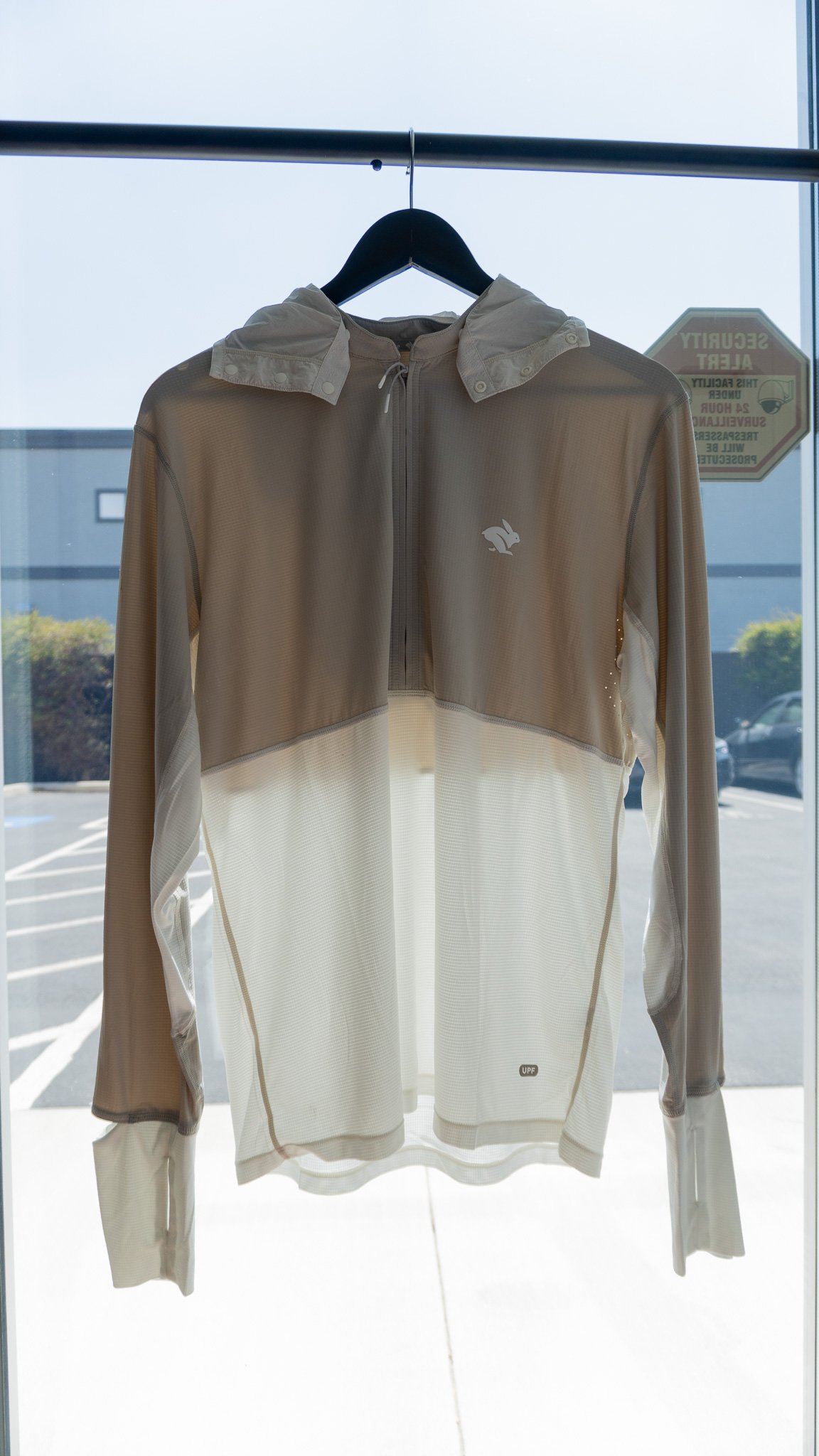
Rabbit pairs a higher-protection upper fabric with a lighter lower section, then adds a detachable hood, underarm perforations, concealed half zipper, watch opening, extended sleeves, and hood-storage pocket.
The SunRunner felt best on long runs under a hydration vest. Its close upper fit did not shift, and the sleeves provided generous coverage. On my longest run, 18 miles in temperatures rising from 75 to 93 degrees Fahrenheit, it stayed comfortable throughout. The lower section feels lighter and more breathable, but the more protective upper body did not feel particularly airy while running or hiking.
The low-stretch collar felt tighter than the others. I noticed it less once moving, but it never matched the NoFry, Echo, or Crater Lake for comfort. My 40-inch chest sits just outside Rabbit’s Medium range, although I normally wear Medium shirts. A Large may have changed the fit, so this is a good reminder to check the chart rather than assuming your usual size.
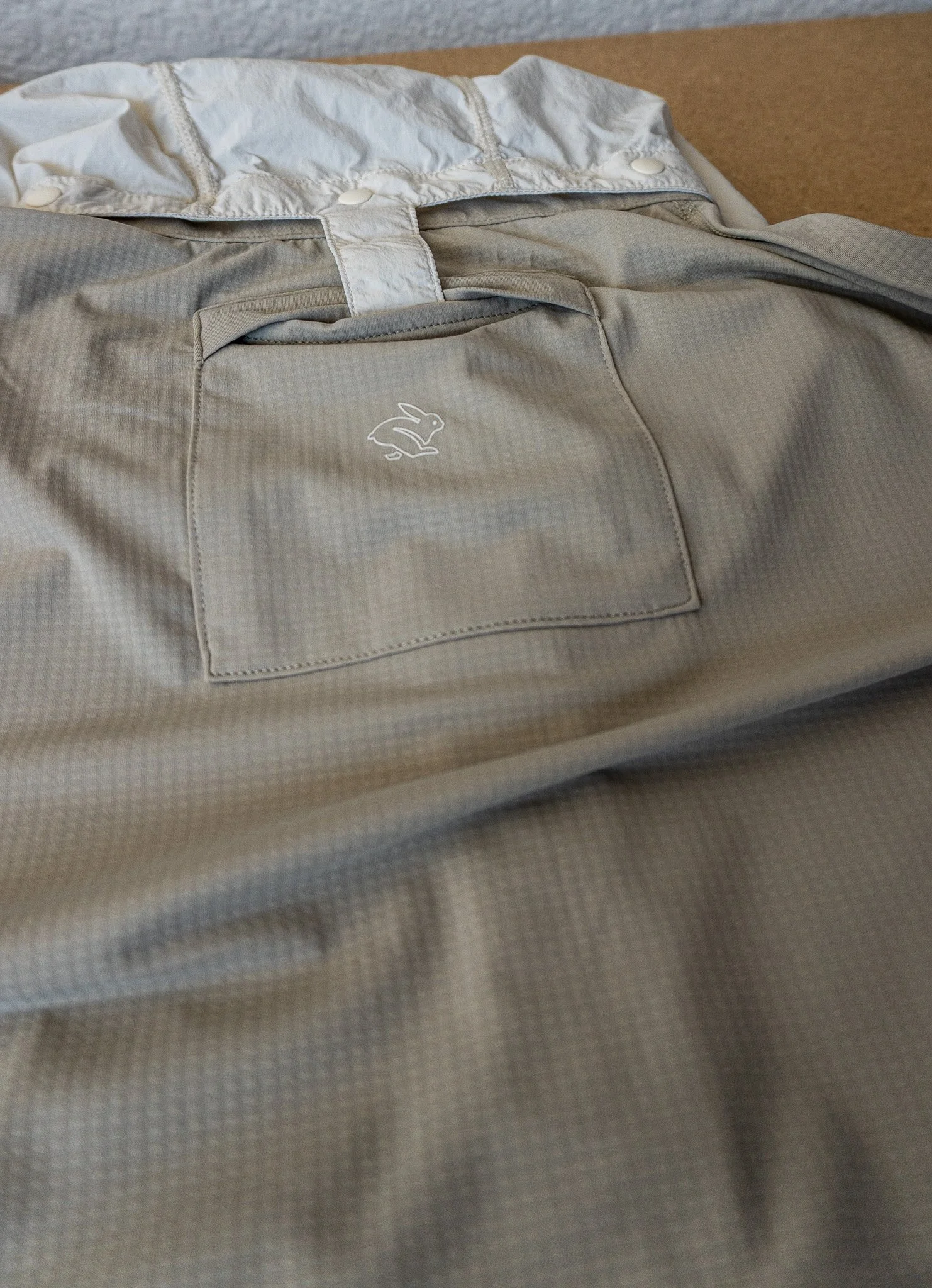
The detachable hood protected well, but its windbreaker-like material swished beside my ears whenever I moved. On long runs, it became irritating enough that I often removed it. When the hoodie is packed into its upper-back pocket, the hood created a noticeable bump that could sit beneath a hydration vest or pack and create noticeable pressure that can cause annoyance.
When saturated, the sleeves nearly covered my fingers. The body dried in about 25 minutes; the detached hood took closer to 30.
It still beats the HUK for running, but I would not wear it casually around town or on a relaxed hike.
Who Should Buy It?
Buy it for long runs through exposed terrain if you will use its specialized features.
Who Should Skip It?
Skip it for travel and casual use. It weighs considerably more than the NoFry or Echo and feels like a dedicated running garment.
Best for being stagnant under the sun. (Boat/lake days)
The Verdict:
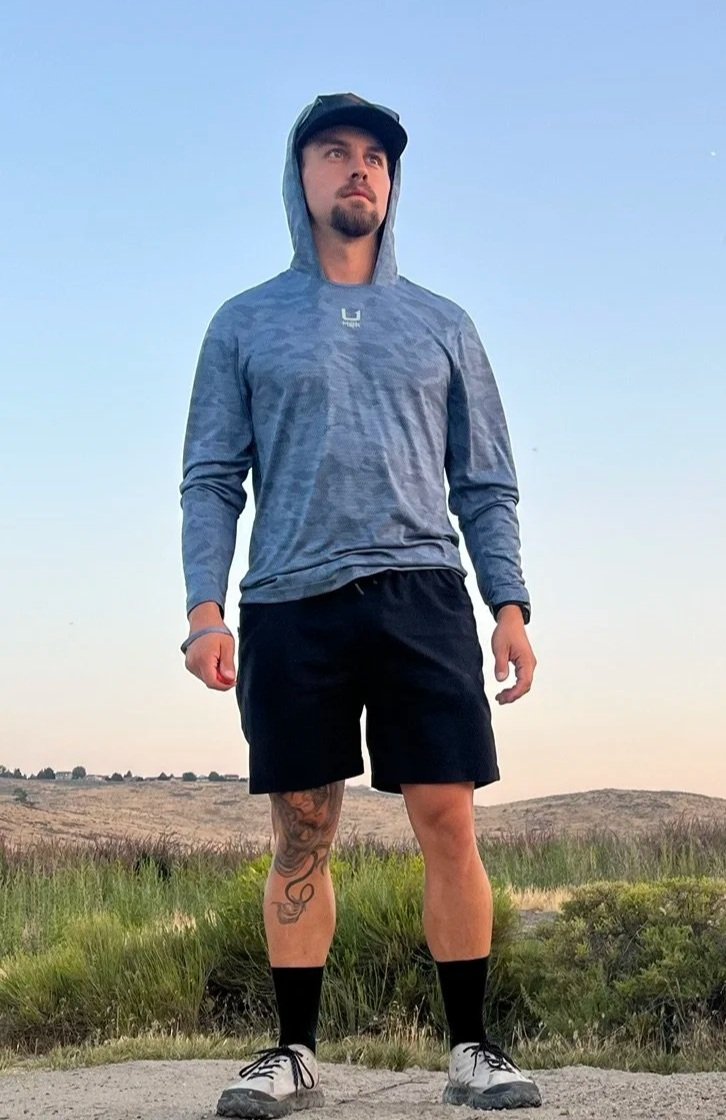
The A1A Pro feels like an airy fishing jersey while standing beneath the sun. It works on a boat or beside a river, but its weight, slow drying, short torso, and basic fabric make it the weakest choice here for hiking or running.
+What We Like
Comfortable, roomy fit
Good airflow while standing or fishing
No snagging, pilling, stretching, or construction problems during testing
-What We Don’t Like
Heaviest hoodie in the test
Short torso rides up beneath a pack
Loose hood exposes more of the neck
The Nitty Gritty
Price: $85
Measured weight: 241 g
Tested color: Stormy Blue
Fabric: 100% polyester jacquard
Sun protection: UPF 40+
Fit: Classic and roomy
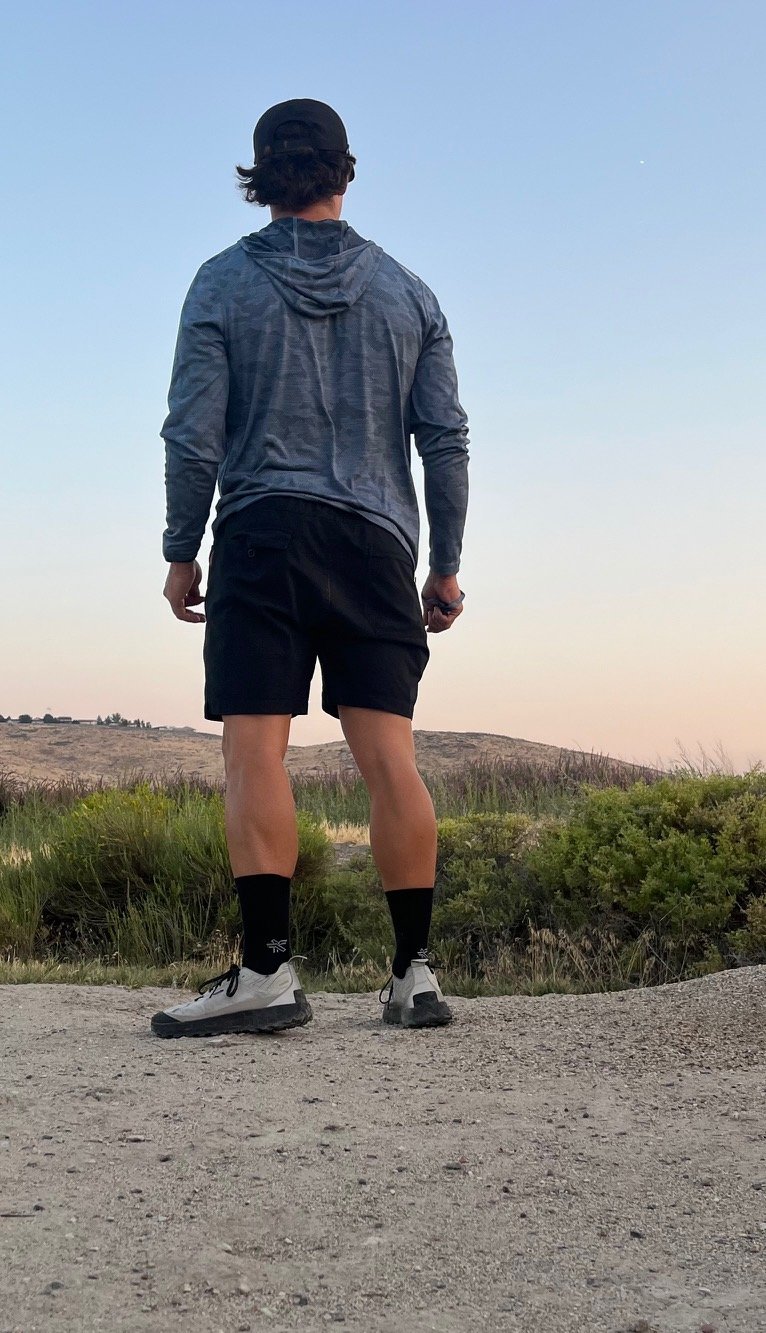
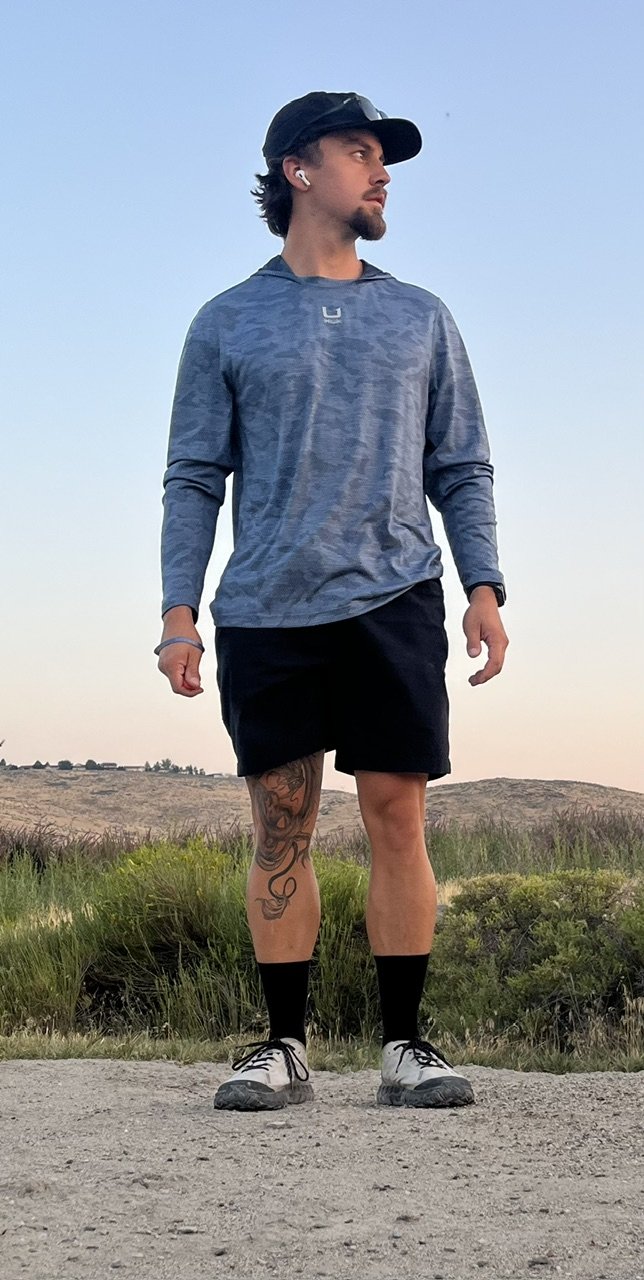
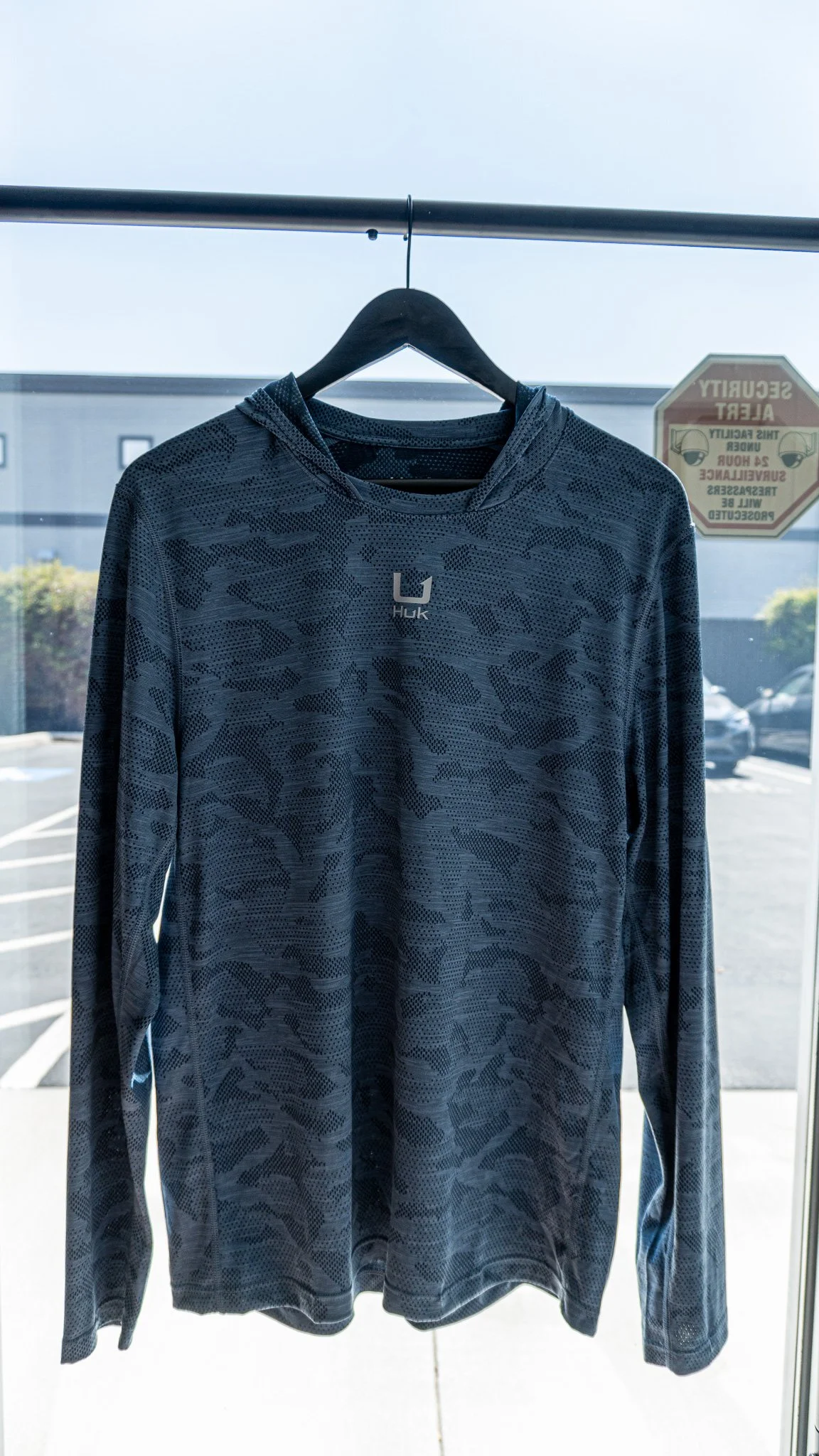
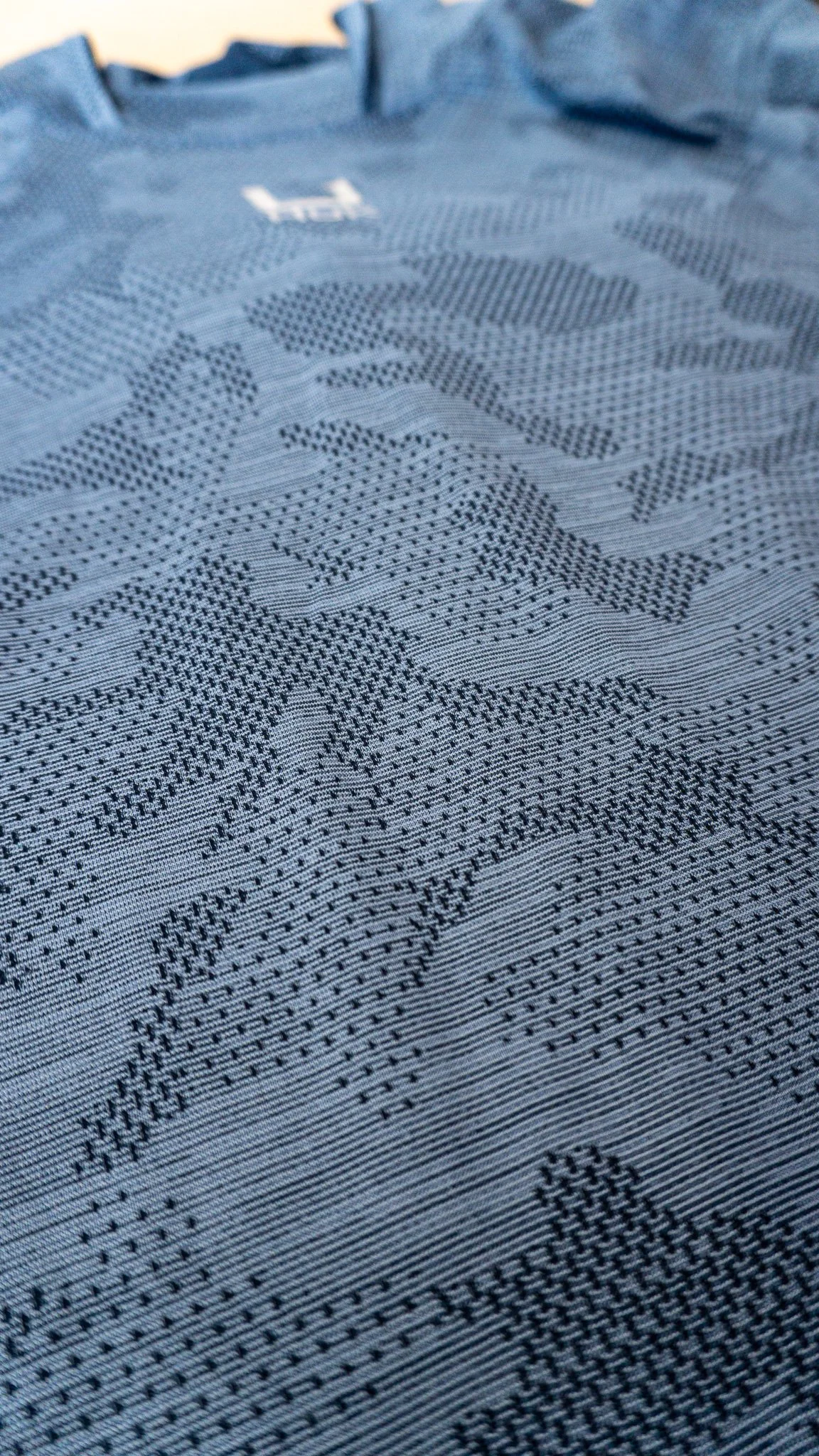
The A1A Pro finished last, but not for comfort. Its roomy fit circulated air while I fished or stood on a boat. The fabric feels soft, managed odor well, and was only slightly clammy when saturated.
At 241 grams, it was easily the heaviest garment tested. Its fabric feels less refined than the other four, and I enjoyed it less for hiking, running and exploring the mountains in general.
The short torso rode up beneath a backpack. Its loose hood exposed more of my neck, caught more wind, and covered less than the other four, though it fit comfortably over a hat and glasses. The fabric was too thick beneath a bike helmet. It took around 30 minutes to dry after the creek soak, the slowest result. It felt slightly better at moving sweat than the Crater Lake, but its weight and loose cut were less pleasant while trail running.
It did not snag, pill, stretch, or develop construction problems. It felt like a casual polyester hoodie competing against garments built for movement. At $85, it is difficult to justify unless you primarily fish or boat.
Who Should Buy It?
Buy it for long days fishing, boating, or standing near water if you want a soft, relaxed hoodie that does not cling.
Who Should Skip It?
Skip it for backpacking or trail running. Its fabric and cut do not suit sustained movement as well.
Which Sun Hoodie Should You Buy?
The KETL NoFry One Snap was the lightest, tied for the fastest drying time, worked across the widest range of activities, and cost the least. It is the best overall here, and I would buy it again at full price.
The Echo was a close second and the other hoodie I would repurchase. Its cut and hood excelled for hiking and backpacking, but the NoFry won on weight, adjustable neck coverage, and price.
Choose the Crater Lake for softness, UPF 50+, and changing high-alpine conditions; the SunRunner for long runs; or the HUK for fishing and boat days.
No UPF number or fabric weight decides this alone. For most hot-weather activities, I would rather wear the NoFry or Echo and keep moving comfortably than pull off a higher-UPF hoodie as soon as the trail gets hot.